
Collecting customer feedback is a pretty standard practice for customer experience (CX) professionals nowadays. However, when it comes to knowing what kind of forms you should use where and how to leverage the data, the road isn’t always clear. In this article, we’ll give you some concrete methods on how to use your customer feedback insights to implement data-driven decisions that will drive business growth.
Considering that 77% of consumers say they view a business that accepts feedback as more favourable, it’s not surprising that collecting thoughts and insights from customers is seen as a must for most CX professionals.
But what do you do with that data once it has been collected, and in what ways can it help you grow your business? That is what we are going to dig into today.
TL;DR – Article Summary
Customer feedback helps you understand why customers behave the way they do, not just what they’re doing. By collecting feedback across key touchpoints, you can identify friction points, prioritise the most impactful improvements, justify business decisions with data and measure results. Using tools like CSAT, NPS, Customer Effort Score and exit surveys reduces churn, improves customer experience, and ultimately drives higher conversions and revenue.
In this article, you’ll find:
- Where should I collect customer feedback?
- How is it beneficial for my business to collect feedback?
- 1. Prioritise based on customer feedback data
- 2. Create clearer business cases based on feedback data
- 3. Measure the impact of your changes
- 4. Raise customer satisfaction and decrease churn
- Ultimately: improve your revenue
Where should I collect customer feedback?
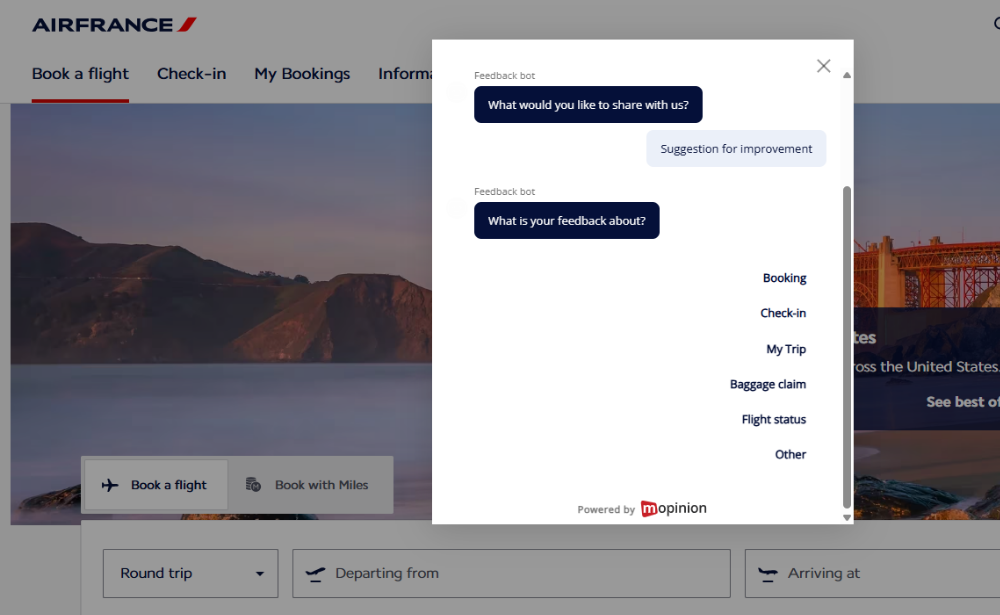
When it comes to customer feedback, it is best to have an omnichannel approach. This means that you identify critical points in your customer journey and implement the option to give feedback there.
This includes both digital channels, like your website, mobile app and email campaigns, but also your physical channels. Including in-store and at customer service touch points.
How is it beneficial for my business to collect feedback?
Customer feedback can be used in many different ways. According to PWC, 32% of customers state that they would leave a brand they loved after just one bad experience.
That doesn’t leave much room for error. However, identifying friction points without some form of consumer insights is pretty much impossible.
Traditional marketing metrics, or operational data, can tell you what is happening. For example, where your customers are abandoning tasks or dropping off your site. But they won’t tell you why it’s happening.
That is where customer feedback comes in. When used correctly, it can help you:
- Identify otherwise hidden issues in your customer journey
- Identify what issues you should dig into first
- And ultimately, make decisions that will drive growth
Gone is the guessing work. With the help of customer feedback, you can implement business decisions that you know will have an impact: you have the data to back it up.
The only question left is: how do you do it? Let’s dive in.
1. Prioritise based on customer feedback data
Collecting and analysing customer feedback data can give you clear indications on:
- Where the friction points in your customer journey are…
- … and which one of them are most pressing when it comes to driving revenue
If you have a customer feedback strategy in place, which addresses all the critical parts of the customer journey, it is not only easy to see what breaks, but also what has the most impact.
By analysing this data, it is easy to make a priority roadmap for your optimisations.
Feedback forms, like Customer Effort Scores, Goal Completion Rates and exit-intent surveys, allows you to identify:
- Why visitors are leaving your page
- How much effort they are spending on a task like completing a purchase or booking a return
- If they even managed to do what they wanted to on your page in the first place
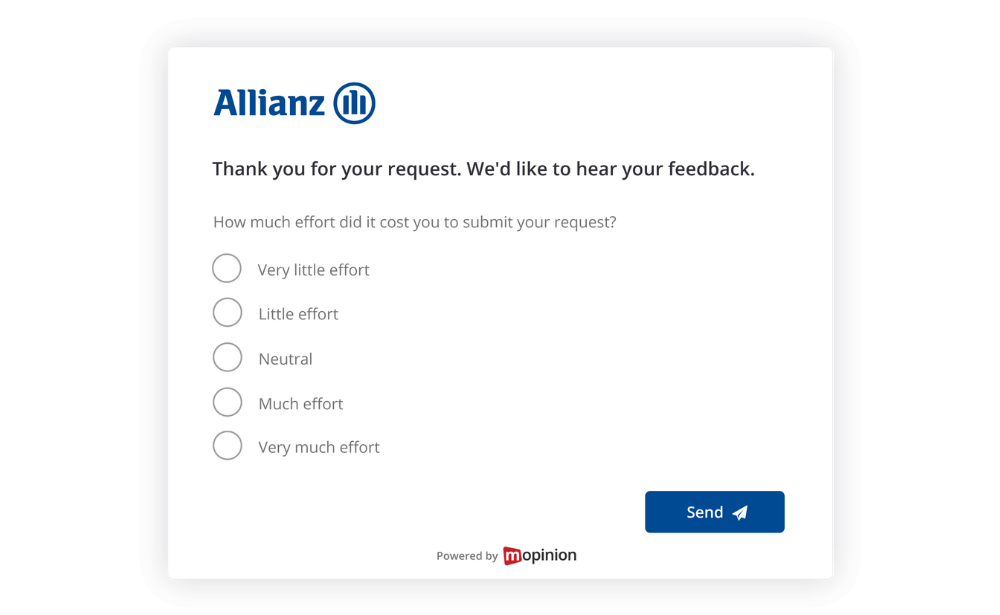
An example of a Customer Effort Score survey from insurance company, Allianz
Implementing these three kinds of feedback forms at strategic places of your customer journey will do wonders when it comes to prioritising urgent issues faster.
For example, multiple people reporting bugs on the checkout page is clearly more pressing than updating an unclear blog article.
2. Create clearer business cases based on feedback data
Justifying business decisions becomes easier if you have the data to back it up.
Let’s say that you are a retail company and you have noticed an uptick in abandoned baskets at the checkout.
To research the issue, you place a feedback form at your check-out, based on exit intent. When your visitor goes to leave the page, the form shows up, asking if they are missing something in the customer journey that made them abandon the basket.
Through this feedback, you see a noticeable trend: your customers are missing a certain payment option.
Having this data in black and white on paper makes it easier for you to justify the decision to your superiors. It gives you the proof to say:
“If we implement this change, it will lead to higher conversion rates”.
This is how collecting and leveraging feedback data helps you drive meaningful change throughout your organisation.
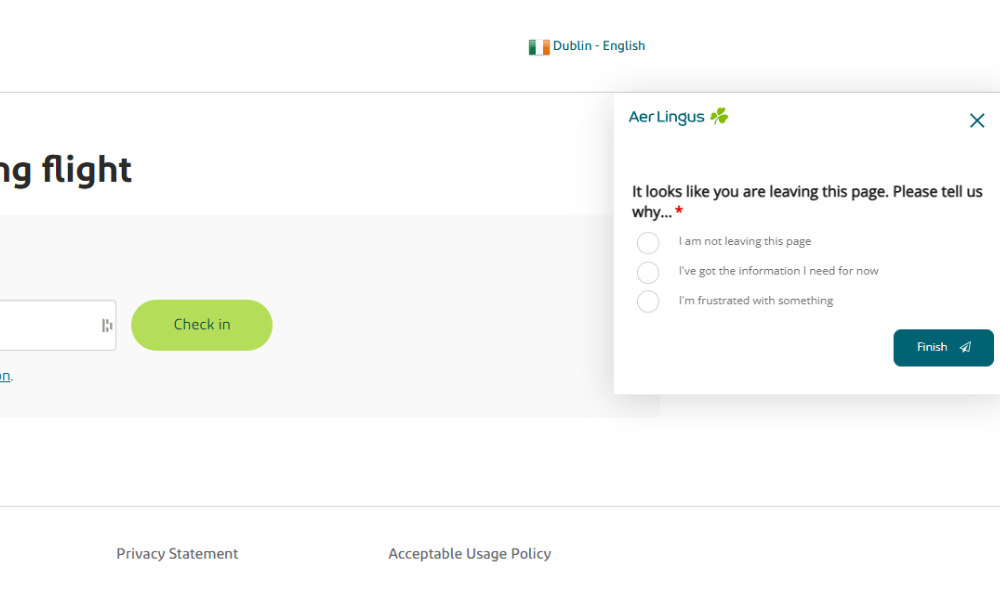
An example of an exit-intent survey on a check-in page from Irish airline, Aer Lingus.
3. Measure the impact of your changes
Collecting feedback shouldn’t stop once a change has been implemented.
To truly learn whether your optimisation efforts have had the desired effect, it’s important to keep listening to the voice of your customers after you’ve made adjustments to your customer journey.
Have you optimised the process of booking a return based on incoming feedback? Make sure to also place a Customer Effort Score survey on the confirmation page after a booked return.
This type of feedback form measures how much effort it took your customer to complete an action. It’s perfect to include both before and after changes to a digital customer journey process, as it clearly shows wether the changes you’ve made have improved it.
To tie this back to our earlier point, this also makes it effortless to show your superiors what impact your action points are having on the customer satisfaction.
Which brings us to…
4. Raise customer satisfaction and decrease churn
Collecting and analysing feedback is an excellent way to track your customer satisfaction. This is usually done with a feedback widget, in the form of a button, available on all pages of your website or mobile app.
To track customer satisfaction, you would usually include a smiley or star question, asking your customers how they would rate your business or website (depending on what you are trying to research) on a scale of 1-5. This measures your Customer Satisfaction Score (CSAT).
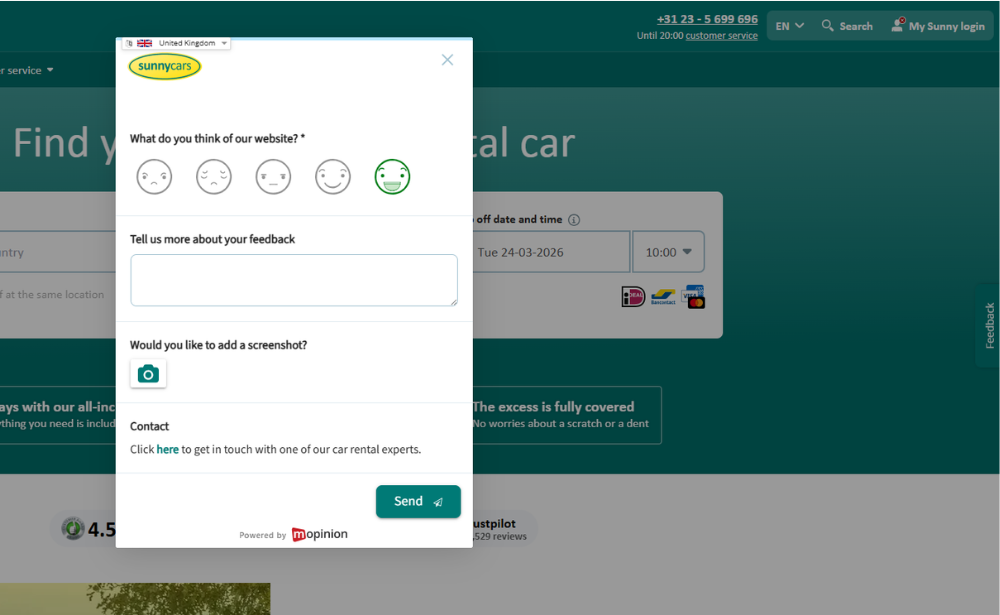
An example of a CSAT survey from car rental service, Sunny Cars.
Of course, this rating by itself doesn’t do anything to raise customer satisfaction or decrease churn; it’s what you do with the findings that will make the difference.
Some specific examples of using feedback to raise customer satisfaction include:
- Follow up questions: Ask why your customers are giving you a high or low CSAT rating. This helps you identify what you are doing well and what you could improve.
- Bug reporting: Asking for general feedback, with an option to report bugs, is an easy way to create a smoother customer journey and reduce churn. Less friction = higher conversion.
- Friction reduction: As mentioned in the previous points, identifying and rectifying friction points in the customer journey is the quickest way to reduce churn. Placing feedback forms at all critical areas is an easy way to do just this.
- Measuring your customer loyalty: This is typically done with a Net Promoter Score (NPS) survey after a conversion has been made. This kind of feedback metric allows you to identify your brand’s cheearleaders as well as the people who are disappointed with their experience. Leveraging this information to rectify bad experiences and encourage loyalty, is a great way to reduce churn.
To conclude, setting up a broad feedback strategy that covers all points of the customer journey, allows you to identify (and rectify) friction points. This information is critical to reduce churn and raise your customer satisfaction.
Ultimately: improve your revenue
What do these above points have in common? Well, implementing them will improve your revenue.
By backing up your business decision with data, you can ensure that the actions you take have the impact you desire. Customer feedback removes the guessing work when identifying what your customers want and why they want it.
As discussed, implementing changes based on feedback data will:
- Improve your customer experience
- Reduce customer churn
- Increase your conversion rates
- Raise your revenue
Now all you have to do is start collecting feedback!
Ready to see Mopinion in action?
Want to learn more about Mopinion’s all-in-1 user feedback platform? Don’t be shy and take our software for a spin! Do you prefer it a bit more personal? Just book a demo. One of our feedback pro’s will guide you through the software and answer any questions you may have.