
Digital customer experience now spans far more than a company’s website. From mobile apps and email campaigns to support portals, chat, social channels and self-service environments, every digital touchpoint shapes how customers experience your brand. The right digital customer experience solutions help teams collect feedback, analyse behaviour, uncover friction and turn customer insights into action.
TL;DR – article summary:
- Digital customer experience solutions help teams understand and improve customer interactions across websites, mobile apps, email, support, chat and other digital touchpoints.
- The right tool depends on your main goal, whether that is collecting feedback, managing Voice of the Customer programmes, analysing behaviour or improving service and engagement.
- Some platforms focus on direct customer feedback, while others specialise in enterprise CX, digital experience analytics or customer service workflows.
- In this guide, we compare 16 of the best digital CX solutions for 2026, including Mopinion by Netigate, Qualtrics, Medallia, InMoment, Survicate, Contentsquare, Fullstory and HubSpot Service Hub.
What are Digital Customer Experience (CX) solutions?
Digital customer experience solutions are tools that help organisations understand, measure and improve how customers interact with their brand across digital channels. This includes websites, mobile apps, email, live chat, support portals and other online touchpoints.
These solutions give teams insight into the full digital customer journey by combining signals such as customer feedback, user behaviour, journey data and experience analytics. With the right digital CX solution, businesses can identify pain points, uncover gaps in the customer experience, prioritise improvements and create smoother, more customer-centric digital journeys.
How to choose the right digital customer experience solution
Choosing the right digital customer experience solution starts with understanding what you want to improve. Some tools are built for collecting customer feedback, while others focus on Voice of the Customer programmes, digital experience analytics, customer service or journey optimisation. Before comparing platforms, it helps to define your main use case, the channels you want to measure and how your team will use the insights.
- Define your main goal. Are you trying to collect direct customer feedback, monitor online journeys, improve conversion rates, reduce friction or manage a wider digital CX programme?
- Choose the right feedback channels. Decide whether you need to collect insights from websites, mobile apps, email campaigns, support portals, live chat or other digital touchpoints.
- Review the survey and feedback options. Look at which survey templates, form types and feedback triggers are available, and whether they support insights such as user experience, engagement, loyalty and customer satisfaction.
- Check the analytics and reporting features. A strong digital CX solution should help you analyse feedback, spot trends, segment responses and turn customer insights into clear action.
- Consider setup, customisation and integrations. Make sure the platform is easy to implement, fits your branding and connects with your existing digital marketing, analytics, CRM or customer service stack.
Best digital customer experience solutions for collecting customer feedback
Customer feedback solutions are designed to help teams collect direct input from users across digital touchpoints. These tools are especially useful when you want to understand what customers think about your website, mobile app, email campaign, product experience or service journey. Rather than relying only on behavioural data, feedback software helps you capture the voice of the customer in the moment and use those insights to improve the digital customer experience.
1. Mopinion by Netigate
Best for: Digital feedback management across websites, mobile apps and email campaigns.
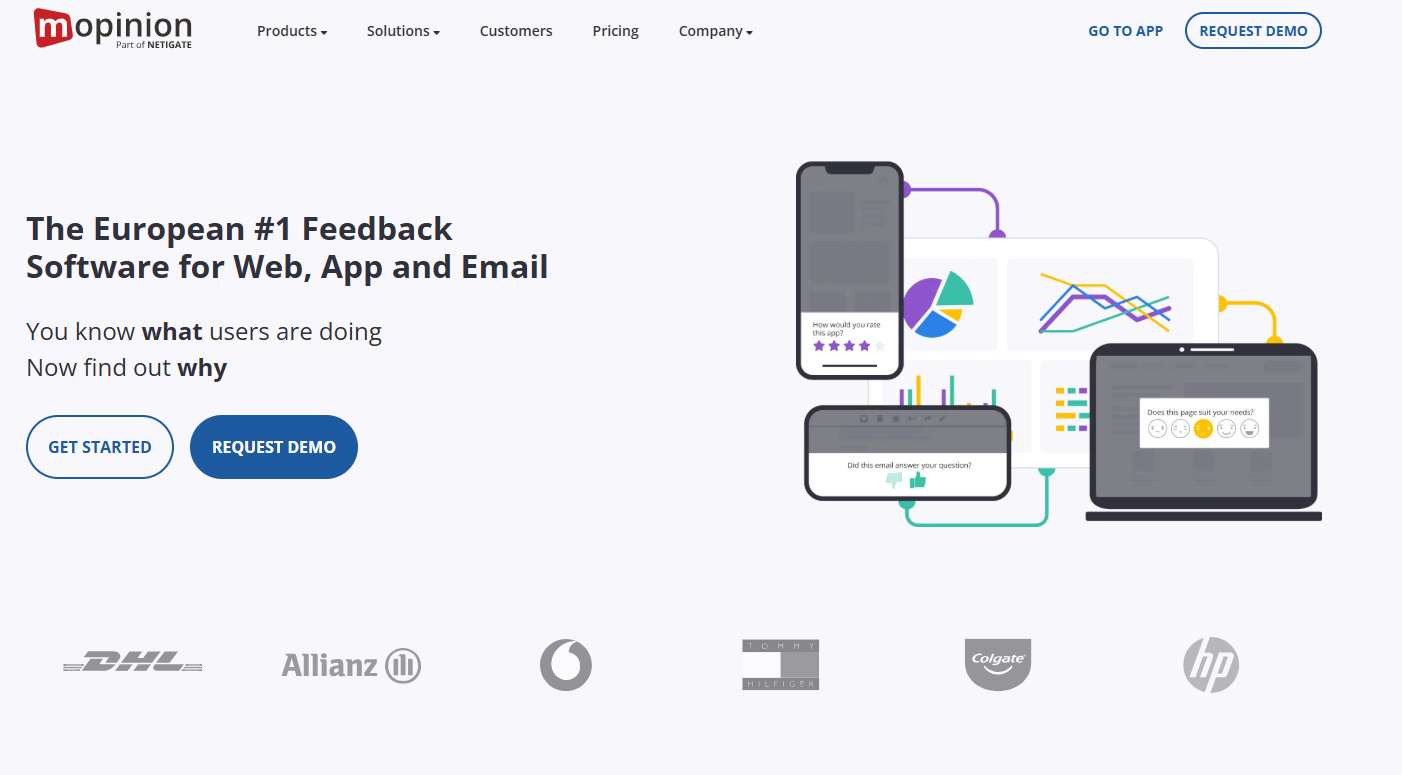
Mopinion by Netigate is a European customer feedback solution for digital-first CX teams. It helps organisations collect, analyse and act on feedback across key online touchpoints, including websites, mobile apps and email campaigns.
Teams can use Mopinion to create website feedback forms, in-app surveys and email feedback forms that appear at relevant moments in the customer journey. Feedback can then be analysed through dashboards and reports, helping teams monitor trends, identify friction and understand where digital experiences can be improved.
Mopinion also supports AI-powered summaries through Smart Recaps, as well as workflows, alerts and feedback routing. This makes it especially relevant for teams that want to move from collecting customer feedback to taking action on it across departments.
Interested? Start your free trial today or request a demo.
2. Survicate
Best for: Lightweight customer feedback surveys across digital touchpoints.
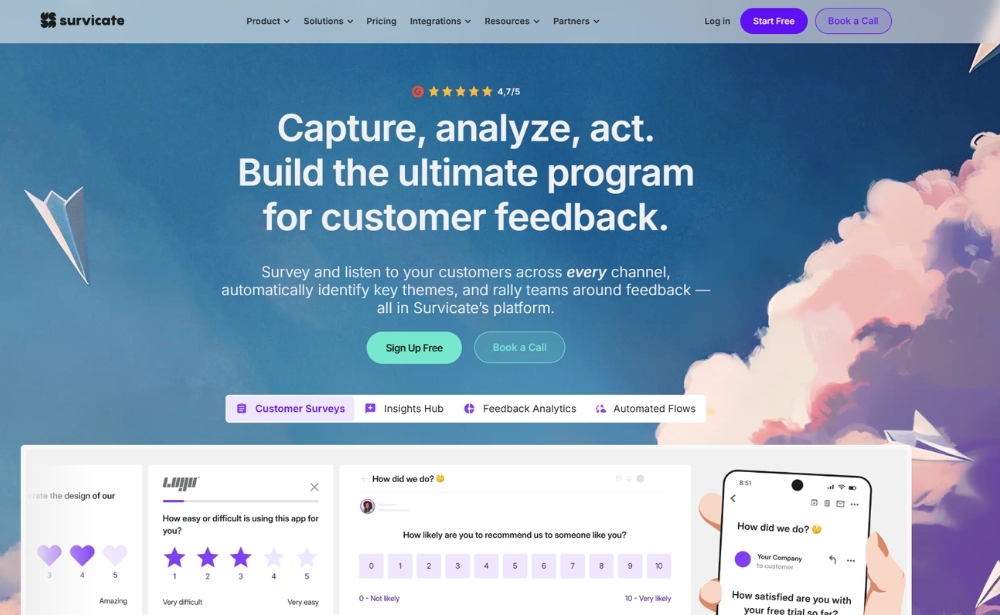
Survicate is a customer feedback platform that helps teams collect insights through website, product, mobile app and email surveys. It is often a good fit for SaaS, product and marketing teams that want an accessible way to gather feedback without a complex enterprise setup.
The platform supports different survey types, including customer satisfaction, product feedback, user research and in-product surveys. Survicate also offers integrations with popular tools, making it easier to connect feedback data with existing marketing, product or customer success workflows.
For teams looking for a flexible digital CX survey tool, Survicate is useful for collecting continuous feedback and understanding customer needs across different stages of the digital journey.
3. GetFeedback by SurveyMonkey
Best for: Digital customer feedback on websites and apps.
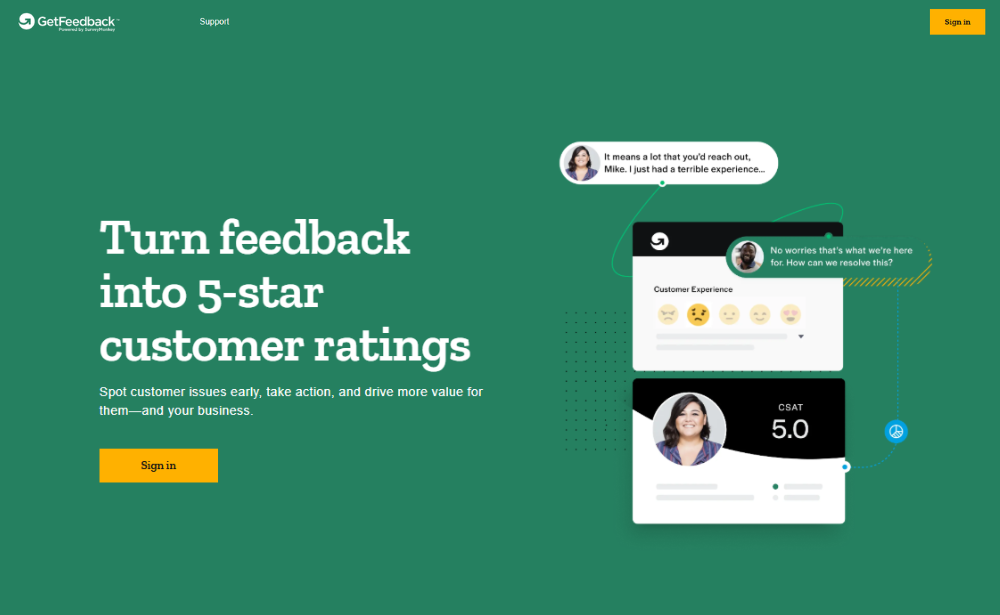
GetFeedback by SurveyMonkey is a digital feedback solution focused on collecting customer input across websites and apps. It is designed to help teams capture in-the-moment feedback, understand user experience issues and improve digital journeys based on direct customer input.
GetFeedback can be used for website feedback, in-app micro-surveys and passive feedback collection. This makes it relevant for teams that want to understand how visitors experience specific pages, journeys or digital products.
It is worth noting that GetFeedback Digital now continues under the GetFeedback name, while GetFeedback Direct is being sunset. For this reason, GetFeedback is most relevant in this list as a digital feedback solution for websites and apps, rather than as a broader Salesforce-connected CX survey platform.
4. AskNicely
Best for: NPS, frontline feedback and service improvement.
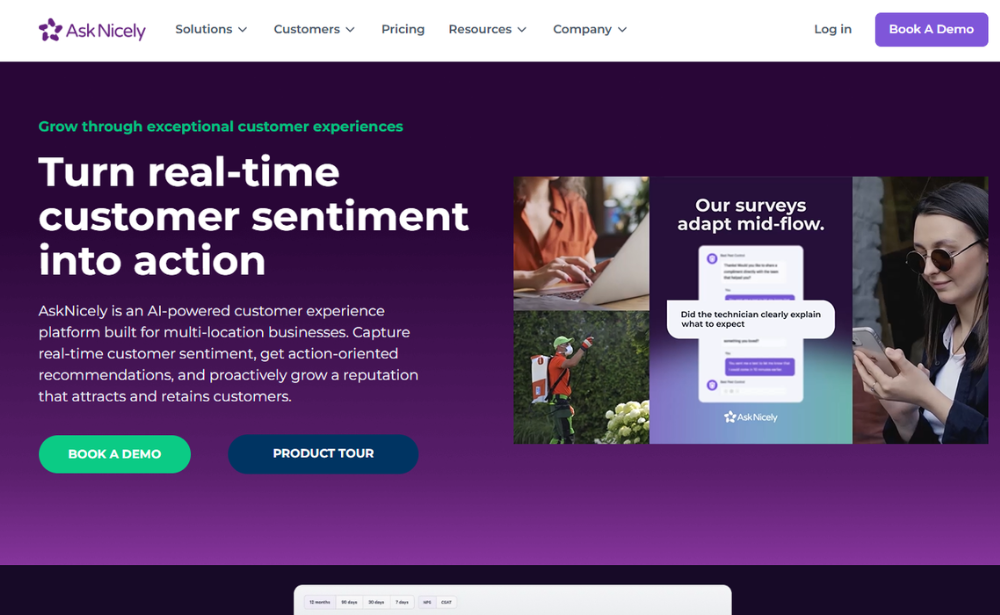
AskNicely is a customer experience platform focused on turning customer feedback into frontline action. It is especially relevant for service-led organisations that want to connect NPS programmes, customer feedback and team coaching.
The platform helps teams collect feedback, monitor customer experience performance and share insights with frontline employees. This makes it useful for organisations where the quality of the customer experience depends heavily on service interactions, local teams or distributed frontline staff.
AskNicely is less of a pure digital feedback tool than some of the other platforms in this category. However, it earns a place on the list because it helps organisations close the loop between customer feedback, service performance and team-level improvement.
Best enterprise VoC and experience management platforms
Enterprise Voice of the Customer and experience management platforms are built for organisations that need to manage customer experience across multiple channels, teams, regions or business units. These tools often go beyond digital feedback collection by bringing together customer signals, operational data, analytics, dashboards and action workflows in one place.
5. Qualtrics XM
Best for: Large enterprise experience management programmes.
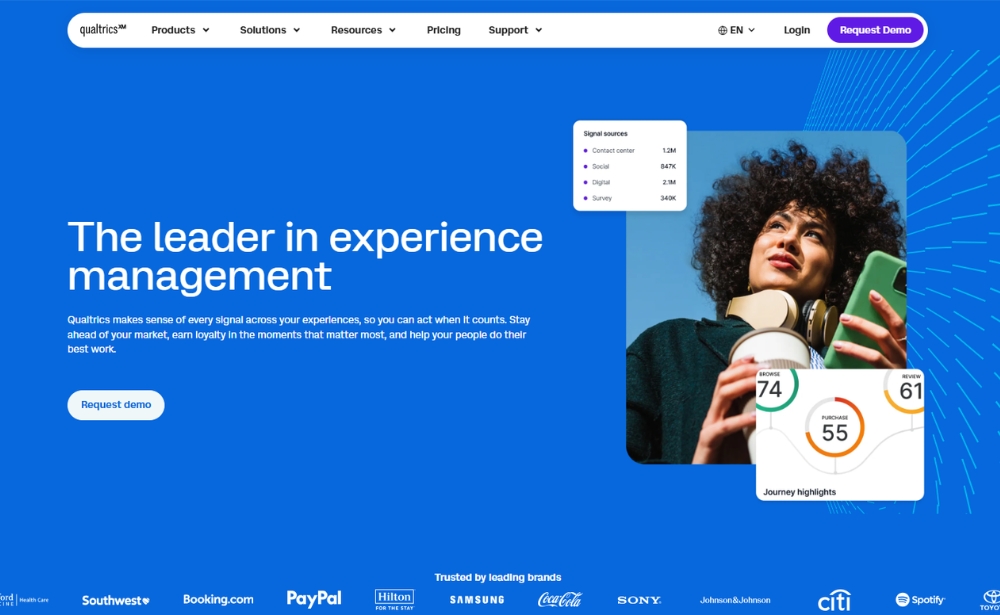
Qualtrics XM is an enterprise experience management platform used to collect and analyse experience data across different areas of the business. While it is often associated with customer experience, the platform also supports broader experience management use cases, including employee experience, brand experience and research.
For digital customer experience teams, Qualtrics can help collect feedback across channels, analyse customer signals and share insights through dashboards and reporting. Its broader XM capabilities make it especially relevant for large organisations that want to connect digital CX insights with wider business, brand and employee experience programmes.
6. Medallia
Best for: Enterprise VoC and omnichannel experience management.
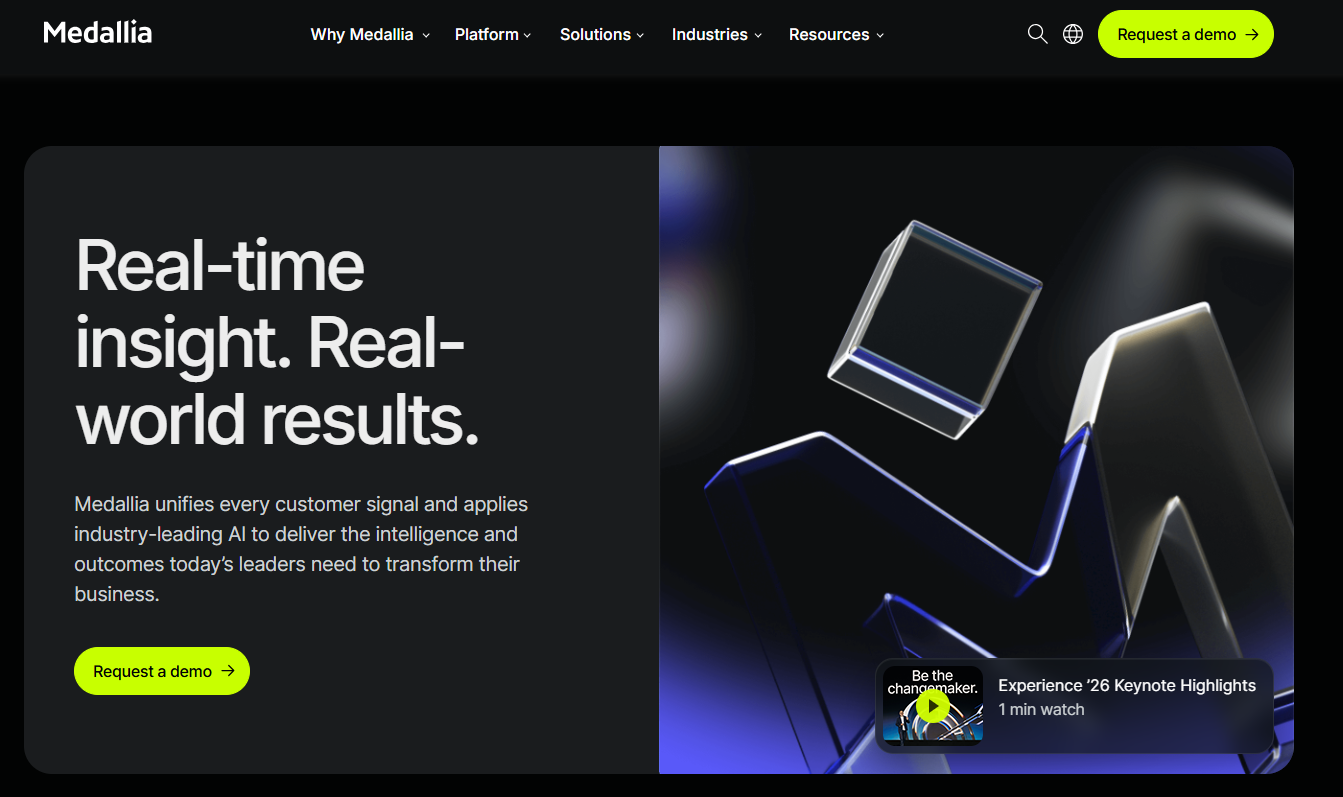
Medallia is an enterprise customer experience and Voice of the Customer platform designed to help organisations collect, analyse and act on feedback across many channels. It is often used by larger CX teams that need to manage customer signals from digital, contact centre, employee and operational touchpoints.
Medallia also offers digital experience analytics capabilities, helping teams understand online behaviour, identify friction and connect behavioural data with customer feedback. This makes it a strong fit for enterprises that want to combine omnichannel feedback, digital journey insights and enterprise-level reporting.
7. InMoment
Best for: Integrated customer experience improvement.
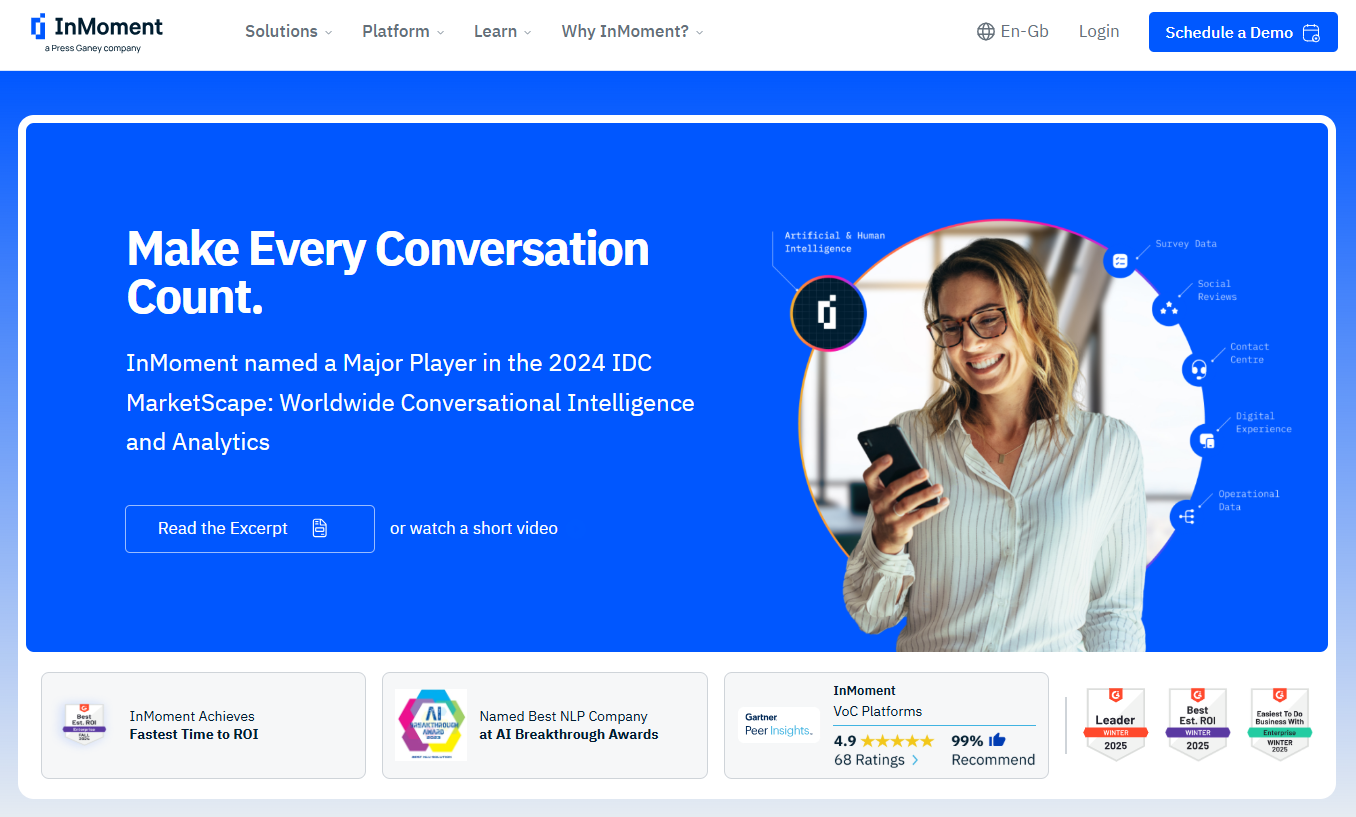
InMoment is a customer experience platform focused on helping organisations bring together feedback, analytics and action management. It supports Voice of the Customer programmes and uses AI-powered insights to help teams understand customer sentiment, identify trends and prioritise improvements.
InMoment is especially relevant for organisations that want a more connected view of the customer journey. By combining feedback from different channels with journey-level insights and action tools, it helps CX teams move beyond measurement and focus on experience improvement.
8. Netigate
Best for: European experience management across customer and employee experience.
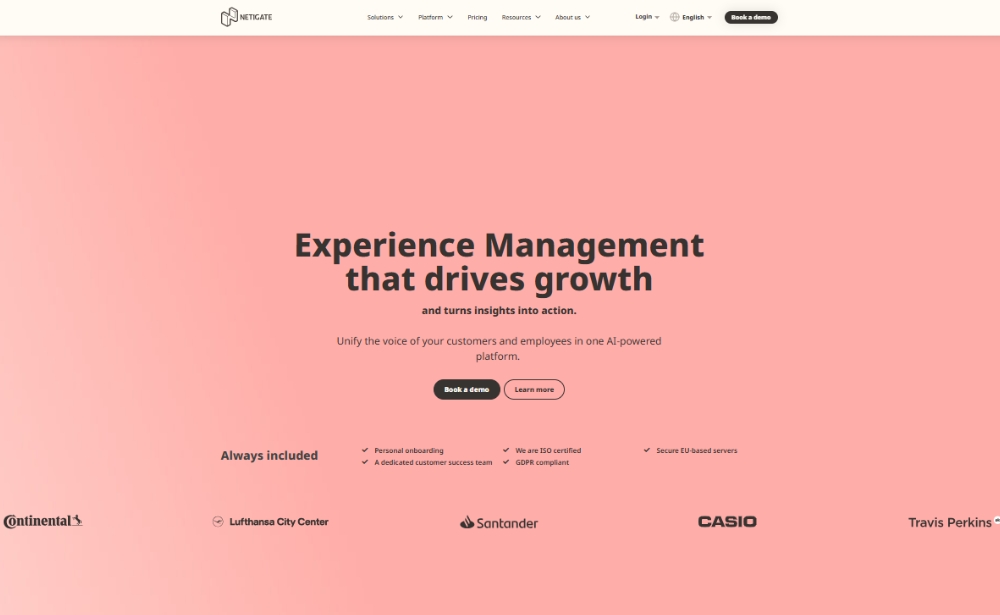
Netigate is a European-born experience management platform that helps organisations collect, analyse and act on feedback from customers and employees. It is especially relevant for teams that want to manage customer experience, employee experience and broader feedback programmes from one platform.
For CX teams, Netigate can support customer surveys, NPS programmes, feedback analysis and reporting. Its experience management approach makes it useful for organisations that want to understand customer sentiment, identify trends and connect feedback insights with business decisions.
Following its acquisition of Mopinion, Netigate also has a stronger digital feedback angle across web, app and email channels. This makes Netigate a relevant option for European organisations looking for an experience management platform that combines broader CX and EX capabilities with digital customer feedback.
9. Verint Voice of the Customer
Best for: Enterprise VoC and contact-centre-connected CX.
Verint Voice of the Customer helps organisations capture, analyse and act on customer feedback across different touchpoints. The platform is particularly relevant for enterprise teams that want to connect customer feedback with contact centre data, service interactions and broader CX automation.
Verint’s capabilities include feedback management, text and speech analytics, reporting and action workflows. This makes it a good fit for service-heavy organisations that want to understand customer needs, uncover pain points and use customer insights to improve interactions at scale.
10. NICE CXone Mpower Feedback Management
Best for: Service-led organisations that want to connect customer feedback with CX operations.
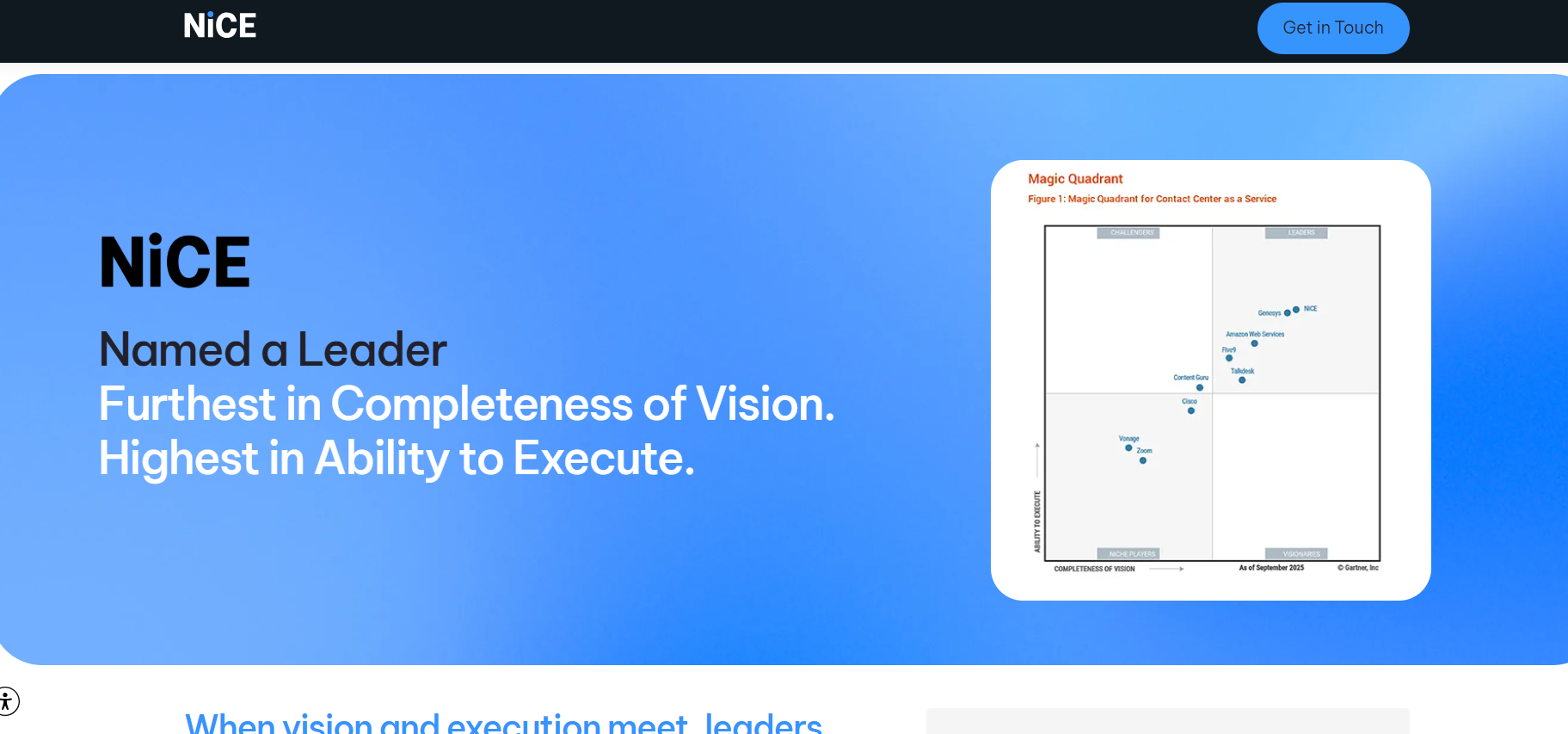
NICE CXone Mpower Feedback Management is a Voice of the Customer and feedback management solution built into the NICE CXone platform. It is designed for organisations that want to collect customer feedback after service interactions and use those insights to improve customer satisfaction, agent performance and operational decision-making.
The platform supports feedback collection, dashboards, text analytics, alerts and workflows. Because it connects customer feedback with contact centre and service operations, NICE CXone Mpower Feedback Management is especially relevant for teams that want to close the loop between VoC insights and day-to-day CX operations.
Best digital experience analytics platforms
Digital experience analytics platforms help teams understand how users behave across websites, mobile apps and digital products. These tools are especially useful when you need more context behind customer actions, such as where users drop off, which journeys cause frustration and what prevents visitors from converting.
11. Contentsquare
Best for: Enterprise digital experience analytics.
Contentsquare is a digital experience analytics platform that helps organisations understand how users behave across websites and apps. It is especially relevant for enterprise teams that want to analyse digital journeys, identify friction and optimise online experiences at scale.
The platform offers behavioural analytics, journey analysis, heatmaps, session replay and frustration detection. These insights can help teams understand where users struggle, which pages or journeys affect conversion and where digital experiences can be improved.
Contentsquare is a strong fit for larger organisations that need to connect digital behaviour insights with conversion optimisation, product improvements and customer experience initiatives.
12. Fullstory
Best for: Product and digital teams that need session-level behavioural insights.
Fullstory is a digital experience intelligence platform that helps teams understand user behaviour through session replay, product analytics, heatmaps and behavioural data. It is often used by product, UX and digital teams that need to investigate how users interact with websites, apps or digital products.
With Fullstory, teams can analyse individual sessions, detect digital friction and identify patterns in user behaviour. This makes it useful for understanding why users abandon certain journeys, encounter usability issues or fail to complete key actions.
Fullstory is especially relevant for teams that want detailed behavioural context behind digital customer experience issues and product performance.
13. Quantum Metric
Best for: Continuous digital product improvement.
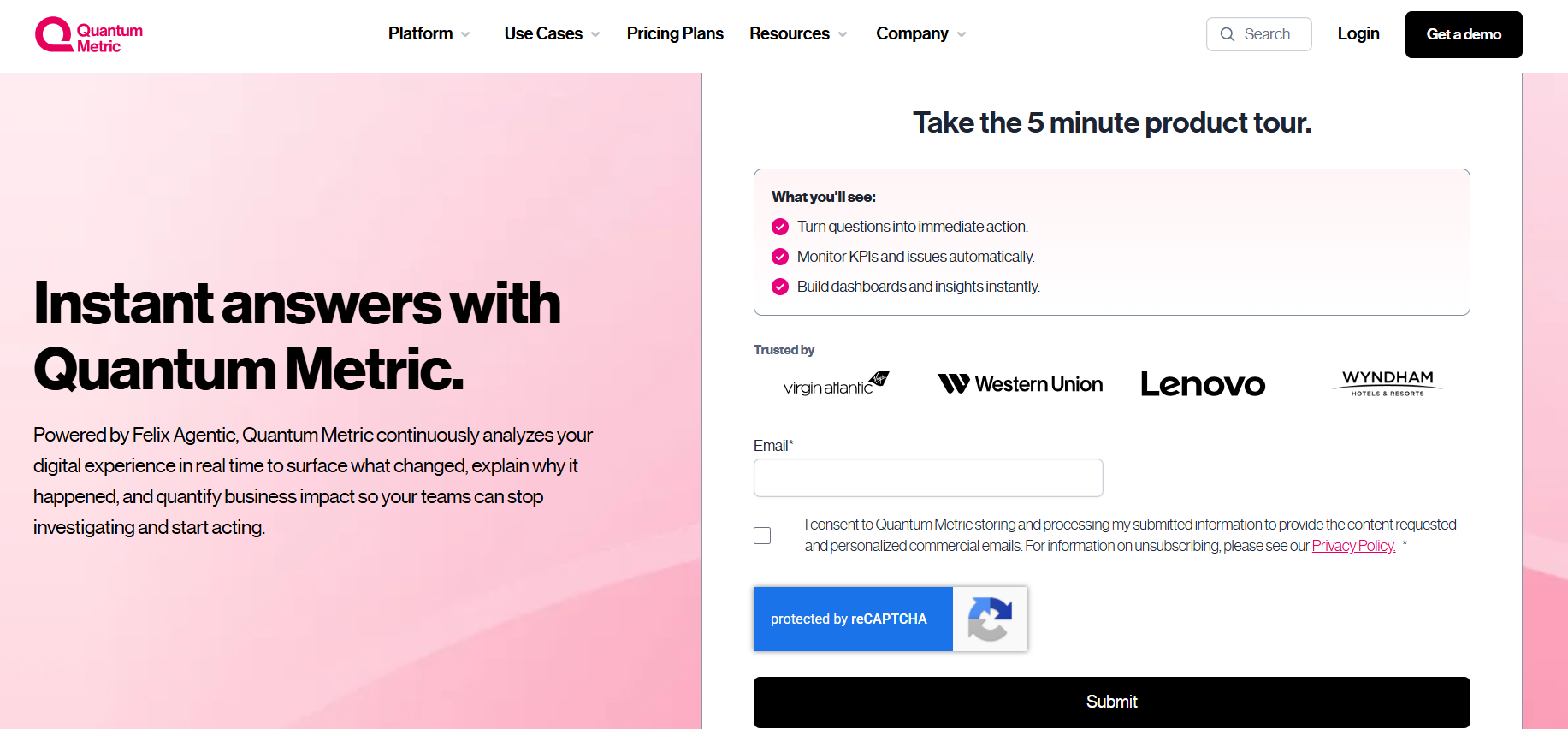
Quantum Metric is a digital analytics platform focused on helping teams improve digital products through continuous product design. It gives product, ecommerce and digital teams insight into how users experience websites and apps, combining behavioural and technical signals to help prioritise improvements.
The platform can help teams identify where users struggle, understand the impact of digital issues and decide which fixes should be prioritised. This is particularly useful for organisations that manage complex digital journeys, such as ecommerce sites, booking flows, financial services platforms or self-service environments.
Quantum Metric is a good fit for teams that want to connect product experience analytics with faster decision-making and continuous optimisation.
14. Glassbox
Best for: Digital journey analytics in enterprise and regulated industries.
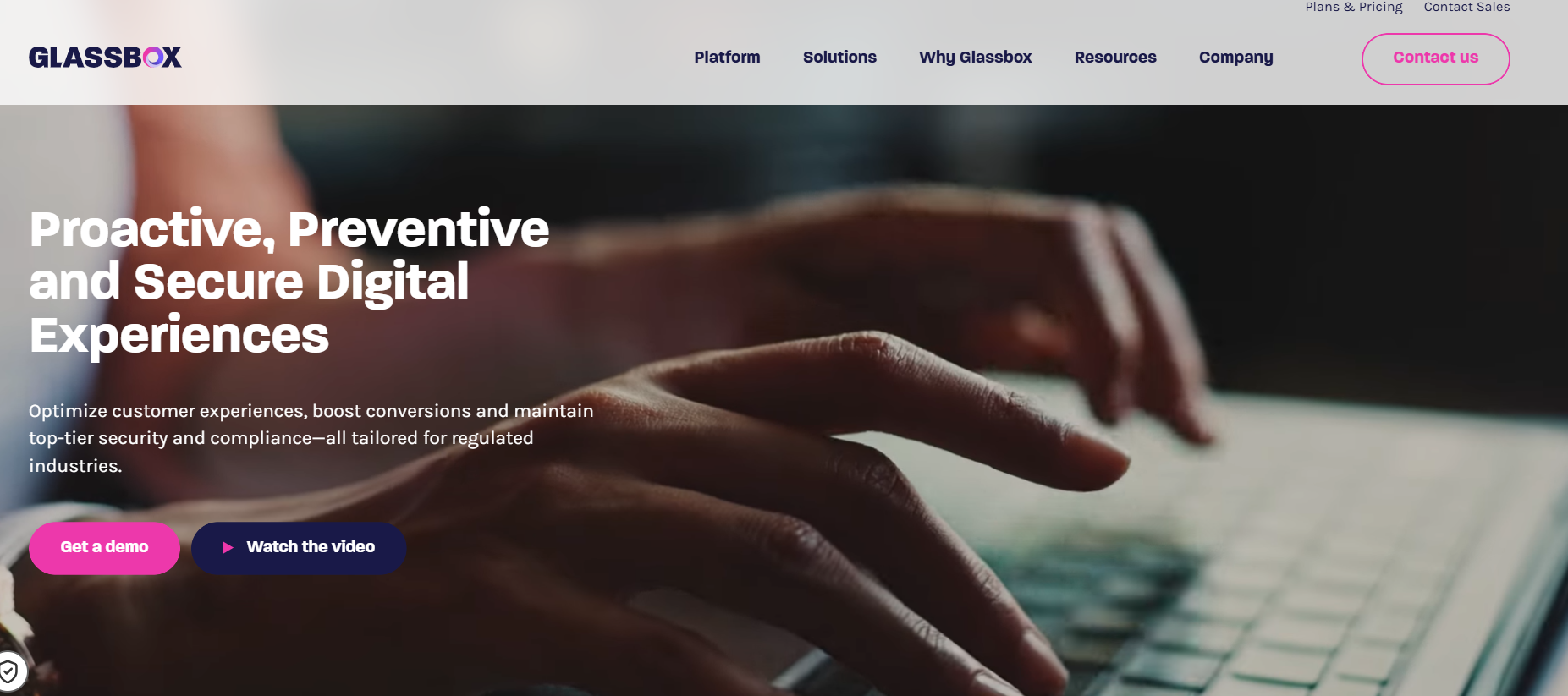
Glassbox is a digital experience analytics platform that helps organisations understand customer journeys across websites and mobile apps. It is designed to give teams visibility into user behaviour, session activity and digital struggle points.
The platform supports capabilities such as session replay, journey analytics, interaction analysis and struggle detection. These features can help teams identify usability issues, technical problems and conversion barriers within digital journeys.
Glassbox is especially relevant for enterprise organisations and compliance-sensitive industries, such as financial services, where teams need detailed insight into digital customer interactions while managing complex journeys and operational requirements.
Best broader customer engagement and service platforms
Customer engagement and service platforms support digital customer experience from a different angle. Rather than focusing only on feedback collection or digital behaviour analytics, these tools help teams manage customer conversations, support requests, service workflows and omnichannel engagement. They are especially useful when customer experience is closely connected to support, communication and retention.
15. HubSpot Service Hub
Best for: SMB and mid-market teams that want customer service, support and feedback in one platform.
HubSpot Service Hub is a customer service platform that helps teams manage support and customer communication from within the HubSpot CRM ecosystem. It includes tools for ticketing, help desk management, customer feedback surveys, knowledge bases and service reporting.
For growing teams, HubSpot Service Hub can be useful because it connects customer support with wider CRM data. This gives service, sales and marketing teams more context around customer interactions and helps them manage customer relationships from one shared platform.
HubSpot Service Hub is best suited to SMB and mid-market organisations that want to bring customer service, feedback and CRM-connected workflows together, rather than manage digital customer experience through separate tools.

16. Sprinklr
Best for: Large organisations managing CX across social, service and digital channels.
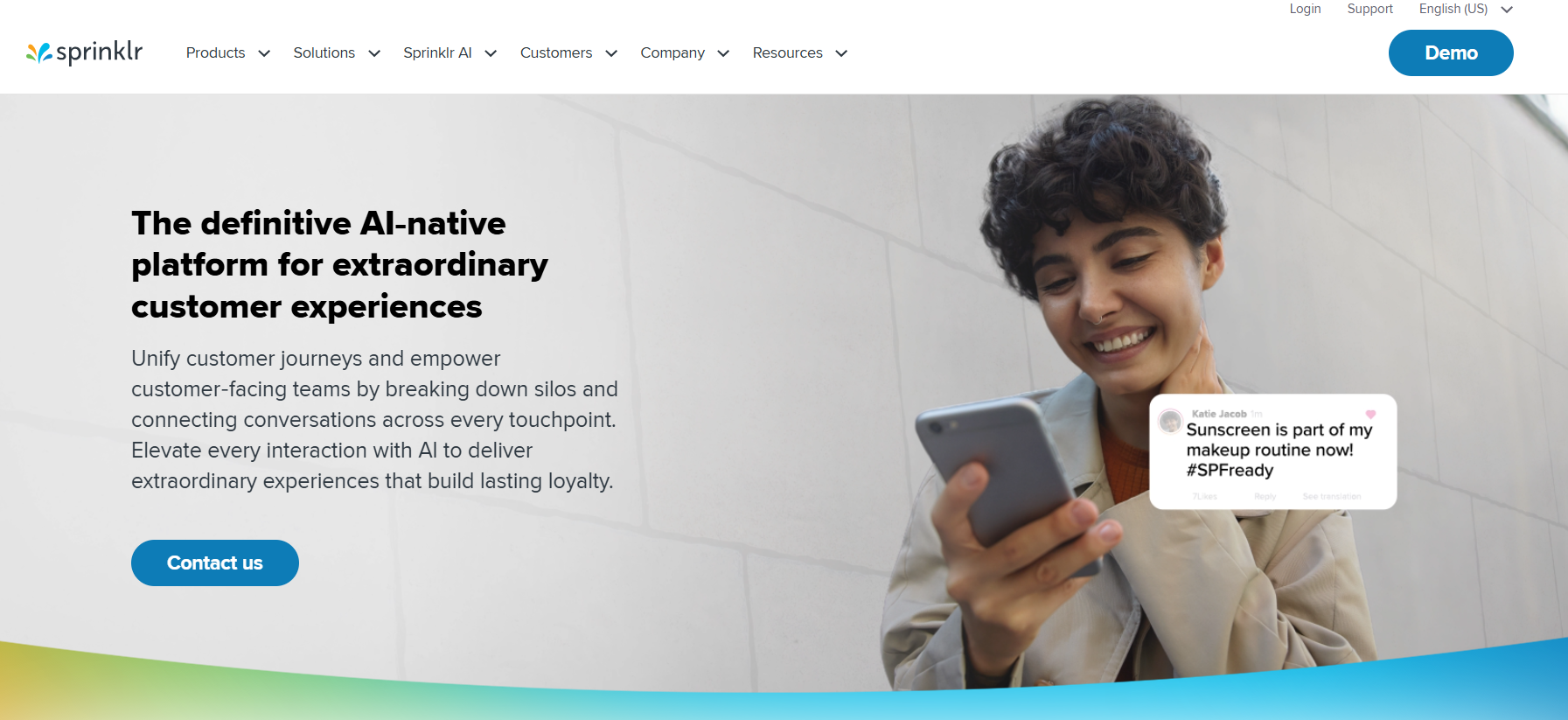
Sprinklr is a unified customer experience management platform built for large organisations that manage customer interactions across many channels. Its platform covers areas such as social listening, customer service, digital engagement, marketing and omnichannel customer communication.
For digital CX teams, Sprinklr is especially relevant when customer experience extends beyond owned channels such as websites and apps. It helps organisations monitor conversations, manage service interactions and engage with customers across social, messaging and other digital channels.
Sprinklr is best suited to enterprise teams that need a broader customer engagement and service platform, especially when social listening, omnichannel communication and unified customer experience management are central to their CX strategy.
Which digital customer experience solution is right for your team?
The right digital customer experience solution depends on what your team needs to improve. Some platforms are best suited for collecting direct customer feedback, while others are designed for enterprise VoC programmes, digital behaviour analytics or customer engagement. Use your main goal as the starting point when comparing tools.
- Choose Mopinion by Netigate, Survicate, GetFeedback or AskNicely if your main goal is to collect direct customer feedback across websites, mobile apps, email campaigns or other digital touchpoints.
- Choose Qualtrics, Medallia, InMoment, Netigate, Verint or NICE if you need an enterprise Voice of the Customer or experience management platform that can support larger CX programmes across teams, regions and channels.
- Choose Contentsquare, Fullstory, Quantum Metric or Glassbox if you want to understand how users behave across your website, app or digital product, including where they click, drop off, struggle or convert.
- Choose HubSpot Service Hub or Sprinklr if your digital customer experience strategy is closely connected to customer service, support workflows, engagement, retention or omnichannel communication.
In short, the best digital CX solution is the one that matches your team’s biggest challenge: listening to customers, managing experience data, analysing digital behaviour or improving the way customers interact with your brand across channels.
Ready to see Mopinion in action?
Want to learn more about Mopinion’s all-in-1 user feedback platform? Don’t be shy and take our software for a spin! Do you prefer it a bit more personal? Just book a demo. One of our feedback pro’s will guide you through the software and answer any questions you may have.
Frequently Asked Questions
Digital customer experience solutions are tools that help organisations understand, measure and improve customer interactions across digital channels. These channels can include websites, mobile apps, email campaigns, live chat, support portals, social media and other online touchpoints. Depending on the platform, they may support customer feedback collection, Voice of the Customer programmes, digital experience analytics, journey analysis or customer service workflows.
Digital customer experience solutions are important because they help teams identify where customers struggle, what they expect and which parts of the digital journey need improvement. Instead of relying only on assumptions or basic web analytics, businesses can use feedback, behaviour data and journey insights to better understand customer needs and improve online experiences.
Customer feedback tools help teams collect direct input from customers through surveys, feedback forms and ratings. Digital experience analytics tools focus more on user behaviour, such as clicks, sessions, drop-offs, frustration signals and conversion issues. Many teams use both types of tools together to understand what customers are doing and why they feel a certain way.
The best digital customer experience solution for collecting feedback depends on your channels, team size and goals. Tools such as Mopinion by Netigate, Survicate, GetFeedback and AskNicely are relevant options for collecting direct customer feedback across websites, mobile apps, email campaigns and other digital touchpoints.
You should choose an enterprise Voice of the Customer or experience management platform if your organisation needs to manage CX insights across multiple teams, departments, countries or channels. Platforms such as Qualtrics, Medallia, InMoment, Netigate, Verint and NICE are typically better suited to larger CX programmes that require advanced reporting, centralised feedback management and enterprise-level workflows.
To choose the right digital customer experience solution, start by defining your main challenge. If you want to ask customers for feedback, choose a feedback solution. If you need to manage CX insights at scale, choose a VoC or experience management platform. If you want to understand user behaviour, choose a digital experience analytics tool. If your CX strategy is tied to service and engagement, choose a customer service or customer engagement platform.