

Customer feedback strategy plays a key role in how businesses understand and improve customer experience. Many teams already collect feedback across surveys, reviews, support conversations and digital touchpoints, but without a clear strategy, those insights often stay scattered and underused.
A structured approach helps teams collect the right feedback, analyse what matters and turn customer insights into practical improvements. In this blog, we will look at what a customer feedback strategy is, why it matters and how to build one that helps improve customer experience in a measurable way.
That matters because better customer experience is closely tied to business performance. McKinsey has reported that improving customer experience can increase sales revenues by 2 to 7% and profitability by 1 to 2%. This makes a strong customer feedback strategy important not only for understanding customer needs, but also for identifying improvements that can support measurable business results.
TL;DR – Article summary
A customer feedback strategy is a structured approach to collecting, analysing and acting on customer input across the customer journey. The most effective strategies focus on asking the right questions at the right moments, combining metrics with context and making sure feedback leads to action. In this guide, we explain how to build a strategy that helps teams improve customer experience in a practical and measurable way.
In this blog, we’ll cover:
- What is a customer feedback strategy?
- Why is customer feedback important for customer experience?
- Key elements of an effective customer feedback strategy
- What does a successful customer feedback strategy look like?
- How to build a customer feedback strategy step by step
- Customer feedback strategy best practices
- Common customer feedback strategy mistakes
- Final thoughts on building a customer feedback strategy
- How Mopinion supports this approach
What is a customer feedback strategy?
A customer feedback strategy is a clear plan for how a business collects, manages and uses customer input to improve customer experience.
It defines what you want to learn, where and when feedback should be collected, how it should be analysed and what should happen afterwards.
Without that structure, feedback often becomes fragmented. Different teams ask different questions, use different tools and review different reports, which makes it harder to spot patterns and act consistently.
A clear strategy helps turn customer input into something useful and actionable. Instead of feedback sitting in dashboards or spreadsheets, it becomes a source of insight that can guide improvements across digital journeys, support experiences, product decisions and customer communication.
Why is customer feedback important for customer experience?
Customer experience cannot be improved properly without understanding what customers are actually going through.
Many businesses already collect feedback through surveys, reviews, support conversations, website forms and app feedback. However, collecting feedback alone does not guarantee useful insight. When those signals remain disconnected, important information gets lost between teams and opportunities for improvement are missed.
A structured approach helps businesses:
- understand customer expectations, needs and frustrations
- uncover pain points across the journey
- improve customer satisfaction and loyalty
- reduce friction in key touchpoints
- support smarter decisions across teams
- prioritise improvements based on customer impact
- show customers that their feedback leads to action
That is what makes a strong strategy valuable. It helps businesses move beyond simply listening and towards making meaningful improvements based on real customer input.
Key elements of an effective customer feedback strategy
For feedback to be useful, the process behind it needs to be clear, relevant and actionable.
1. Clear feedback objectives
The first step is knowing why you are collecting feedback in the first place.
For example, you may want to reduce checkout friction, improve onboarding, understand dissatisfaction after support interactions or learn why users abandon a key page. When the objective is clear, the feedback you collect is far more likely to be useful.
2. Feedback at the right touchpoints
Not every moment in the journey needs feedback. The most valuable insight usually comes from moments where the experience is recent, relevant and easy for the customer to comment on.
This could include:
- after a purchase
- after a customer support interaction
- during onboarding
- on a key webpage
- after using a feature in an app
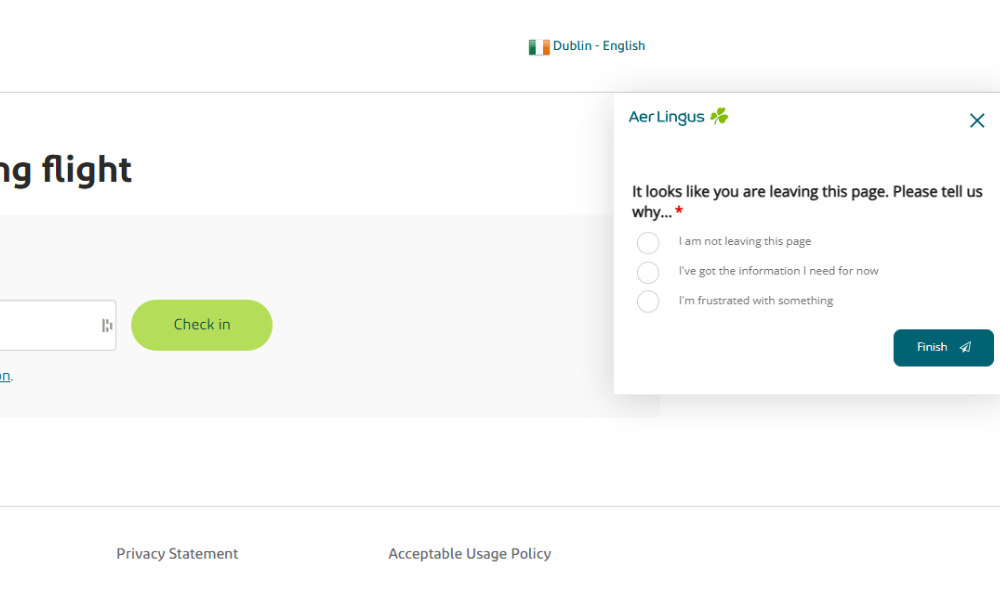
- when a user is about to leave without completing an action
The more relevant the timing, the more meaningful the insight tends to be.
3. A mix of metrics and context
Scores alone rarely tell the full story.
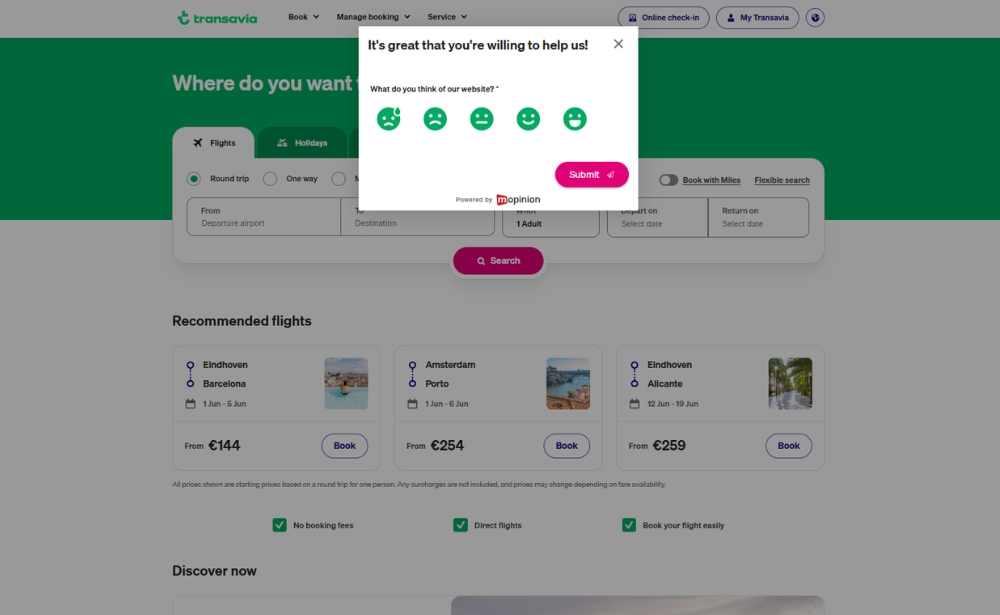
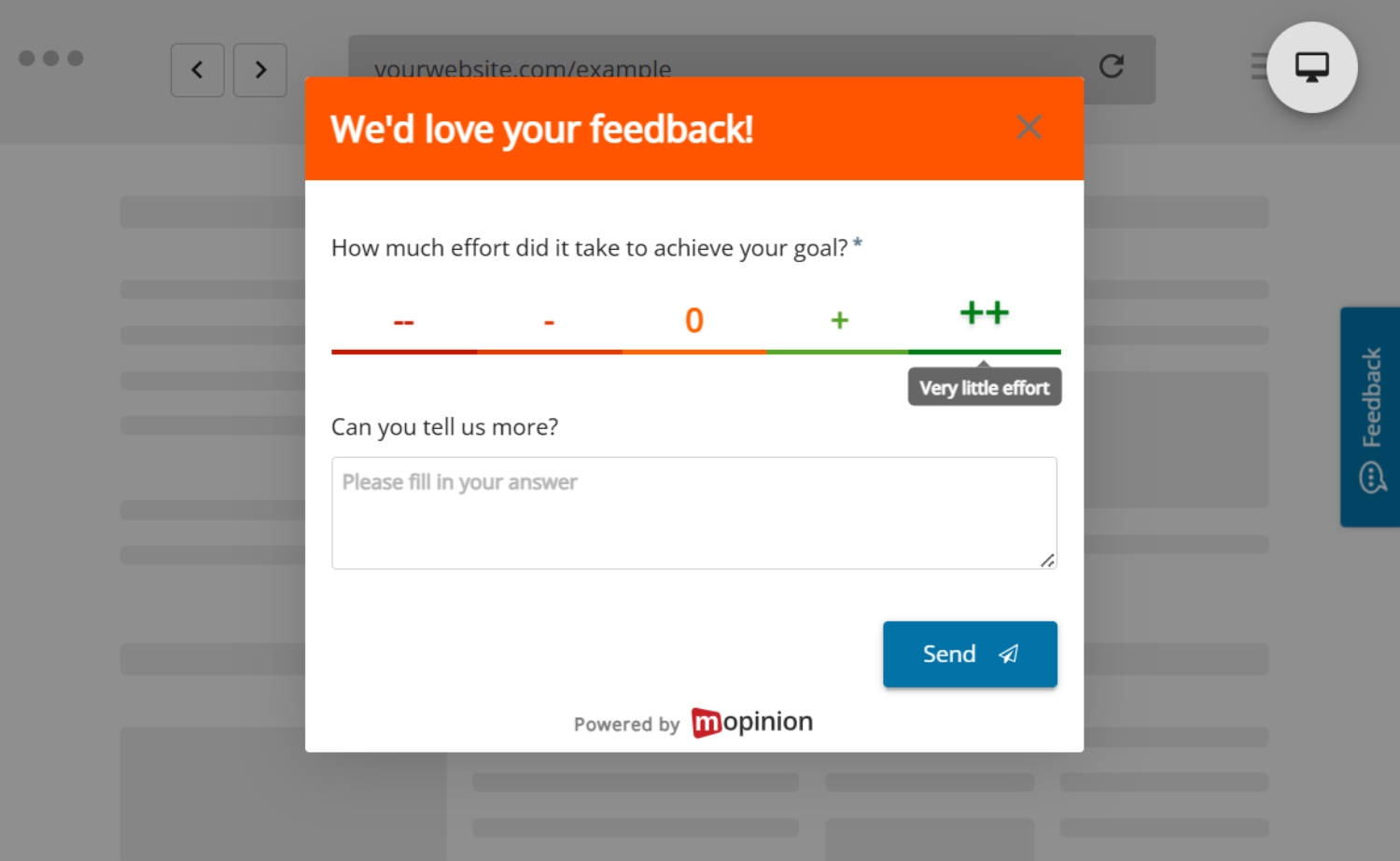
Metrics such as Customer Satisfaction Score (CSAT), Net Promoter Score (NPS), Customer Effort Score (CES) and Goal Completion Rate (GCR) are useful for tracking patterns, but they do not always explain why customers feel the way they do. Open feedback fields add context and help teams understand what is shaping the experience.
This combination of quantitative and qualitative feedback makes insight far more actionable, especially when teams understand which customer feedback tools can help them collect and analyse feedback more effectively.
4. Clear ownership and workflows
One of the biggest weaknesses in many feedback programmes is the gap between insight and accountability.
If no one is clearly responsible for reviewing feedback, escalating issues and tracking follow-up actions, valuable insight can sit untouched for too long. A strong approach should define who reviews feedback, how often it is assessed and how actions are assigned.
5. A structured approach to analysing feedback
Once feedback starts coming in, teams need a reliable way to review it and make sense of what it shows.
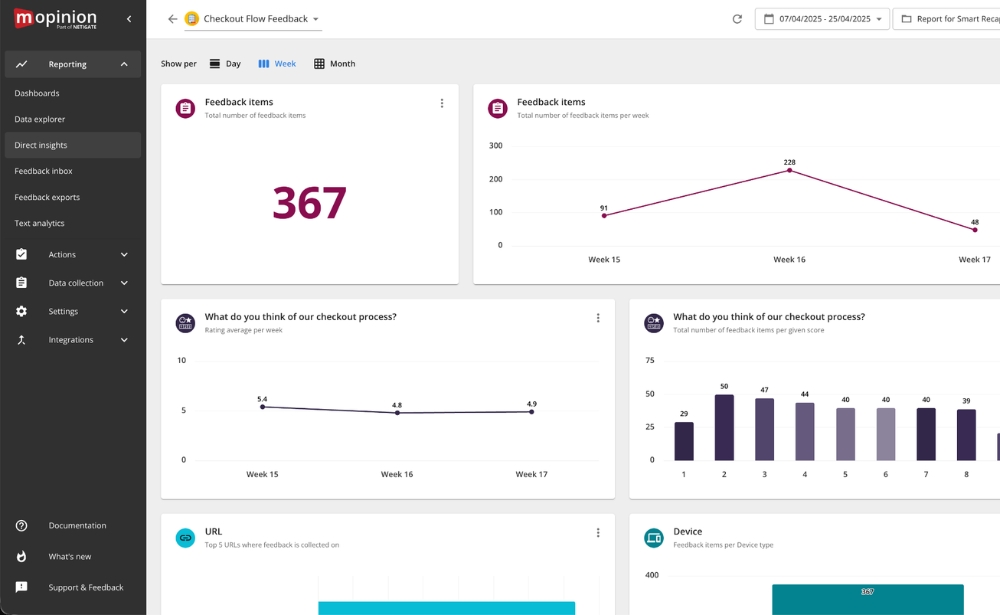
Depending on the volume and type of feedback, this may involve dashboards, charts, trend reporting, text analysis or tagging open comments by theme, touchpoint or issue type. A strong analysis process helps teams identify recurring issues, compare feedback across journeys and understand where action is needed most. It also makes it easier to share insights across teams and prioritise improvements based on customer impact.
6. A clear path from insight to action
Collecting feedback is only one part of the process. The real value comes from what happens next. That might include improving a digital journey, fixing recurring service issues, updating unclear content, adjusting internal processes, testing experience improvements or following up with dissatisfied customers.
For example, if customers repeatedly give a low score on a checkout page and mention unclear delivery costs in the comment field, that is a clear signal to review the checkout experience, improve the messaging and test whether the change increases completion rates.
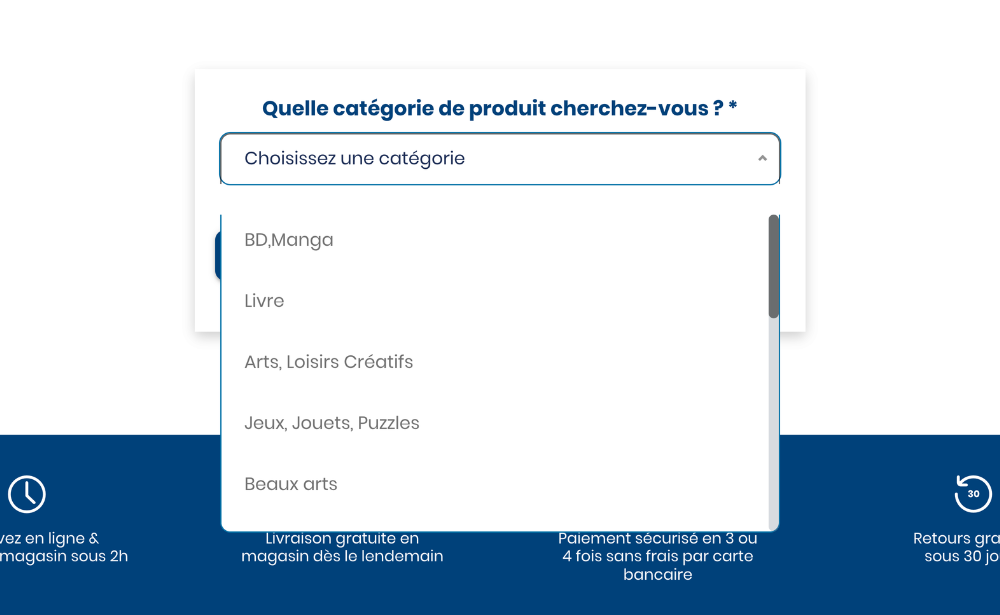
A good example of this in practice comes from French retailer Cultura. This feedback form appears when a visitor searches for a product and sees no results, asking which product category they were looking for. That helps the team identify search gaps, understand unmet intent and improve the experience based on what visitors are actively trying to find.
Want to learn more about Cultura’s feedback strategy? Read our customer story here.
7. Ongoing optimisation
This should never be treated as a one-off setup. Customer expectations change, journeys become more complex and business priorities shift. That is why it is important to review your approach regularly and make sure your questions, timing and processes still fit the experience you want to understand.
What does a successful customer feedback strategy look like?
A successful customer feedback strategy fits naturally into how a business learns and improves. It collects feedback at relevant moments, combines scores with context, helps teams identify patterns and supports better decisions about what to improve next. It also makes ownership clear, so insights do not get lost between departments.
For digital teams, this is especially valuable. Website, app and email experiences can influence satisfaction, conversion and retention very quickly. When feedback is collected in context, it becomes much easier to understand where friction is happening and what needs to be improved first.
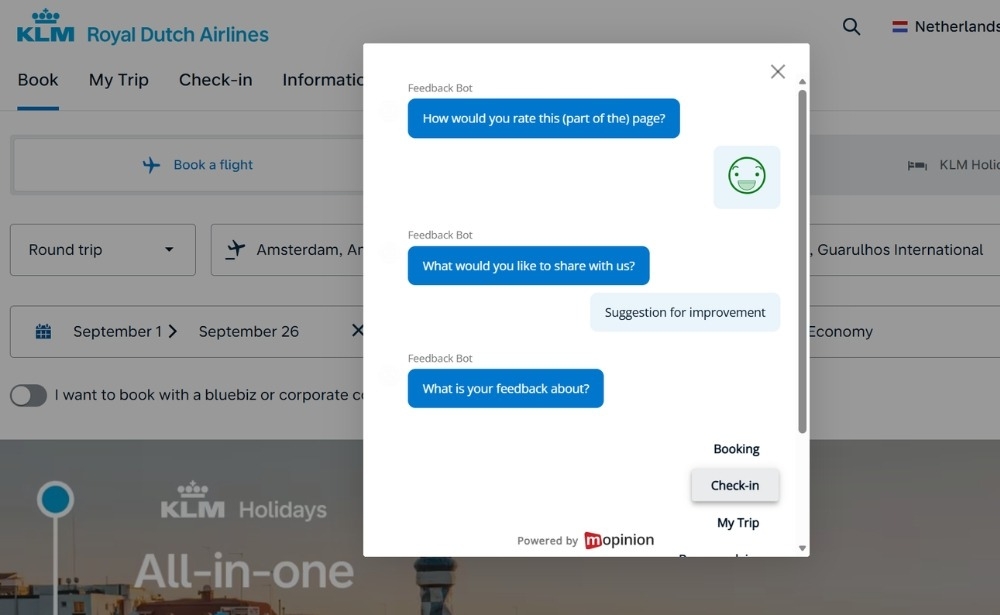
This matters because customers are quick to walk away when experiences fall short. In PwC’s Experience is everything research, 32% of customers said they would stop doing business with a brand they loved after just one bad experience.
That is why a clear feedback strategy matters so much: it helps teams spot friction early, understand what is going wrong and improve the experience before dissatisfaction turns into churn.
A successful strategy is not the one with the most surveys. It is the one that helps teams make better decisions, faster and with more confidence.
How to build a customer feedback strategy step by step
The most effective approach is practical, repeatable and closely tied to the customer journey.
1. Map the customer journey
Start by identifying the most important stages of the customer journey.
Look at where customers are discovering your brand, making decisions, asking for help, experiencing friction or trying to complete an important action. This helps you understand where feedback can create the most value.
2. Identify what you want to learn
At each touchpoint, define the main question you want feedback to answer.
Are you trying to measure satisfaction? Understand effort? Find the cause of drop-off? Learn what is missing from the experience? Defining the learning goal first helps keep the process focused.
3. Choose the right feedback method
Different moments call for different feedback methods.
For example, in-the-moment website or app feedback can reveal friction while it is happening. Post-interaction email surveys can work well after customer service moments. Broader relationship surveys can help track overall sentiment over time.
The key is to match the feedback method to the moment and the type of insight you need.
4. Keep feedback questions short and relevant
The best questions feel natural and easy to answer.
Too many questions can reduce completion rates and weaken response quality. A strong feedback approach focuses on clear, relevant questions that fit the moment and make it easy for customers to respond honestly. Want to learn more about what questions to ask when? Check out our deep dive on survey questions, complete with 80 examples.
5. Centralise customer feedback insights
If feedback is spread across multiple tools and teams, it becomes much harder to identify patterns and prioritise action.
Bringing feedback together in one place helps teams monitor trends, compare touchpoints, identify recurring problems and collaborate more effectively on improvements, which is a core part of effective customer feedback management.
6. Prioritise actions based on impact
Not every issue should be treated with the same urgency.
A practical way to prioritise feedback is to look at:
- how often the issue appears
- how strongly it affects customer experience
- how much business impact it may have
- how much effort it will take to fix
This helps teams focus on the improvements that matter most.
7. Turn insight into action
This is where the strategy starts to prove its value. Customer insight should lead to improvements in experiences, processes, communication and internal priorities. The goal is not to collect more data for the sake of reporting, but to make better decisions and improve the journey based on what customers are actually telling you.
Customer feedback strategy best practices
If you want your customer feedback strategy to stay effective over time, a few best practices make a big difference.
- Focus on relevance rather than volume. Asking for too much feedback can create fatigue and reduce response quality. It is better to collect feedback at meaningful moments than to ask for it at every stage of the journey.
- Make sure feedback is reviewed consistently. A strong strategy depends on regular analysis, not occasional reporting. Teams should have a clear rhythm for reviewing feedback, spotting patterns and deciding what needs attention.
- Always look beyond the score. Ratings help track patterns over time, but comments and context often reveal the real reason behind dissatisfaction, friction or drop-off
- Connect feedback to visible action. When teams can clearly see what changed because of customer feedback, the process becomes more valuable internally and more credible to customers.
Common customer feedback strategy mistakes
Even businesses with good intentions can weaken their approach by making a few common mistakes.
One of the biggest is collecting feedback without a clear purpose. When teams do not know what they want to learn, they often end up with insight that is interesting but not actionable.
Another common mistake is asking for feedback at the wrong moment. If the timing feels random or disconnected from the experience, the feedback is usually less useful.
Some businesses also rely too heavily on one metric and overlook the context behind it. Others collect valuable insight but fail to route it to the people who can act on it. In many cases, feedback is reviewed, but nothing visible changes afterwards.
These are not just process issues. They are strategy issues. The stronger the foundation is, the less likely those problems are to appear.
Final thoughts on building a customer feedback strategy
A strong customer feedback strategy should not be treated as a side initiative. It should be part of how a business listens, learns and improves.
The best strategies are not the ones that collect the most feedback, they are the ones that collect relevant feedback at the right moments and use it to support better decisions.
When customer insight is backed by a clear strategy, it becomes a practical tool for improving customer experience, reducing friction and helping teams focus on what matters most.
How Mopinion supports this approach
For digital teams, Mopinion (part of Netigate) supports a stronger feedback strategy by helping businesses collect, manage and analyse feedback across websites, apps and email.
This makes it easier to understand what customers are experiencing in the moment, identify friction points across the digital journey and connect feedback to actions that improve the experience. Instead of relying only on broad or delayed surveys, teams can gather contextual feedback where it matters most.
That is especially useful for businesses that want to understand not just how customers feel, but why they feel that way at specific points in the journey.
Ready to see Mopinion in action?
Want to learn more about Mopinion’s all-in-1 user feedback platform? Don’t be shy and take our software for a spin! Do you prefer it a bit more personal? Just book a demo. One of our feedback pro’s will guide you through the software and answer any questions you may have.