

To comply with GDPR in customer experience, organisations need to consider what customer data they collect, why they collect it, how transparent they are about its use, where it is stored, who can access it and how long it is retained. They also need to make sure customers can exercise their rights over that data.
This matters because customer experience relies heavily on information. Feedback responses, CRM records, support interactions, behavioural data and customer journey insights can all involve personal data, which means GDPR can affect much more than just the survey or consent stage.
In this article, we’ll focus on the most important GDPR touchpoints for CX teams, from collecting and managing customer feedback to choosing the right tools and keeping customer data secure throughout its lifecycle.
TL;DR – Article Summary
- To comply with GDPR in customer experience, know what personal data you collect, why you need it and how it is used throughout the customer journey.
- Collect only the customer data necessary for your CX goals, and use anonymous feedback where identification is not needed.
- Be transparent about how feedback and other customer data will be processed, stored, shared and retained.
- Protect customer data with appropriate access controls, security measures and clear retention or anonymisation policies.
- Understand where customer data moves across your CX stack, including integrations, subprocessors and international transfers.
- Choose CX and feedback tools that support your GDPR responsibilities with features such as EU data storage, data masking, access management and clear data-processing agreements.
What does it mean to comply with GDPR in customer experience?
Customer experience relies on data. From survey responses and support conversations to CRM records and behavioural insights, businesses use customer information to understand what people need and improve their experiences. When that information relates to an identifiable individual, however, it may fall under the GDPR.
To comply with GDPR in customer experience, organisations need to think beyond simply asking for consent. GDPR sets out principles for how personal data should be handled throughout its lifecycle, including lawfulness and transparency, purpose limitation, data minimisation, storage limitation, and appropriate security. Organisations must also be able to demonstrate that they are following these principles.
For CX teams, this can apply to many different kinds of information, including:
- Customer feedback and survey responses
- Names, email addresses and other contact information
- Customer IDs and CRM data
- Website and app data connected to an individual
- Customer service and support interactions
- Behavioural and customer journey data
- Data shared between feedback, CRM, analytics and other CX tools
The important question, then, isn’t just “Are our surveys GDPR compliant?” It’s also: What customer data are we collecting, why are we collecting it, where does it go and what happens to it afterwards?
For example, organisations need a valid reason for processing personal data and should define the purpose for which it is collected, rather than gathering information simply because it could be useful later. They also need to consider how much data they collect, how long they retain it, who has access to it and whether customers can exercise their data rights.
That makes GDPR compliance a consideration throughout the customer experience data journey, from the moment information is collected to the point where it is analysed, shared, stored or eventually deleted. Below, we’ll focus on the areas where these responsibilities most commonly intersect with customer feedback and CX management.
1. Know what customer data you’re actually collecting
Before you can comply with GDPR, you need a clear picture of what customer data you’re collecting in the first place.
Under the GDPR, personal data includes any information relating to an identified or identifiable individual. That can include obvious identifiers such as a name or email address, but also different pieces of information that, when combined, make it possible to identify someone.
For CX teams, that means personal data can appear in more places than expected. A customer feedback programme, for example, might collect:
- Names and email addresses
- Customer or account IDs
- Contact details
- Survey responses linked to an individual
- Website or app information
- Information submitted through open-text fields
- Contextual data attached to a feedback response
Customer feedback can contain personal data
Not every piece of customer feedback is automatically personal data. An anonymous satisfaction score with no connection to an identifiable person may fall outside the GDPR. Data that has been properly anonymised so that an individual can no longer be identified is not considered personal data under the GDPR.
But feedback can quickly become identifiable.
Imagine a customer responds to an open-ended question with:
“The delivery to my home on Friday was late, so I called customer service about order 45872.”
Even if the survey never directly asks for the customer’s name, the information in that response could potentially be connected back to them.
This is particularly important with open-text feedback. Customers decide what they type, which means they may voluntarily include names, contact details, order numbers or other personal information that you did not specifically ask them to provide.
It is therefore worth looking beyond the questions in your feedback form and considering what customers themselves might submit.
Don’t forget the data around the feedback
The response itself also isn’t necessarily the only information being processed.
Digital feedback tools can collect contextual or technical information alongside a survey response. Depending on how a feedback programme is configured, this could include information such as the page on which feedback was submitted, the time of submission, device or browser information, or identifiers used to connect the response with other customer systems.
Mopinion, for example, can process both information entered into feedback forms and additional information associated with feedback collection. Its data and security documentation explains what information is used and protected within the platform.
This context can be extremely useful for CX. Knowing which page a customer was visiting or which part of a journey they had reached can make feedback much more actionable. But organisations should still understand what information is being captured and whether any of it can be connected to an individual.
A good starting point is therefore to map the information collected across your CX programme, including the data customers actively provide and the information collected around their interactions.
Once you know what you’re collecting, the next question is why you’re allowed to process it in the first place.
2. Establish why you are processing CX data
To comply with GDPR, you need to know not only what customer data you collect, but why you are processing it.
GDPR requires a lawful basis for processing personal data. Consent is one possible basis, but it isn’t automatically required or appropriate for every CX activity. The European Data Protection Board provides further guidance on choosing an appropriate legal basis for processing personal data.
A good starting point is therefore to ask:
Why do we need this customer data, and what are we going to do with it?
You shouldn’t collect personal data simply because it might become useful later. The purpose should be clear from the beginning.
This applies across common CX activities, such as:
- Collecting feedback about a service
- Contacting a customer about a complaint
- Connecting feedback with CRM data
- Using customer information for marketing
- Analysing customer behaviour
Each of these activities may involve different purposes and therefore different GDPR considerations. Connecting feedback to a CRM profile, for example, involves more personal data than collecting an anonymous satisfaction score.
The same principle applies when data is reused. Information collected for one purpose shouldn’t automatically be treated as available for any future CX or marketing activity.
For CX teams, the takeaway is simple: define why you need the data before collecting, connecting or repurposing it. Once that purpose is clear, you can determine how the information should be handled and what customers need to know about its use.
3. Be transparent when asking customers for feedback
Transparency is a core part of GDPR compliance. When you collect personal data through customer feedback, people should be able to understand what is happening to their information.
At the time data is collected, organisations generally need to provide clear information about who is collecting it, why it is being collected, how it will be used, who it may be shared with, how long it will be retained and what rights the individual has.
For CX teams, this means privacy information should be easy to find wherever personal data is collected. A customer shouldn’t have to search through your website to understand what happens to the information they submit in a survey.
Make privacy information accessible from your feedback forms
If a feedback form collects personal data, consider providing relevant privacy information directly alongside the form or linking clearly to your privacy policy.
This is particularly important when you’re asking customers to provide identifiable information, such as their email address or customer details, or when feedback will be connected to information held elsewhere in your CX stack.
The goal isn’t to overwhelm respondents with legal text. GDPR transparency information should be communicated clearly and in an accessible way.
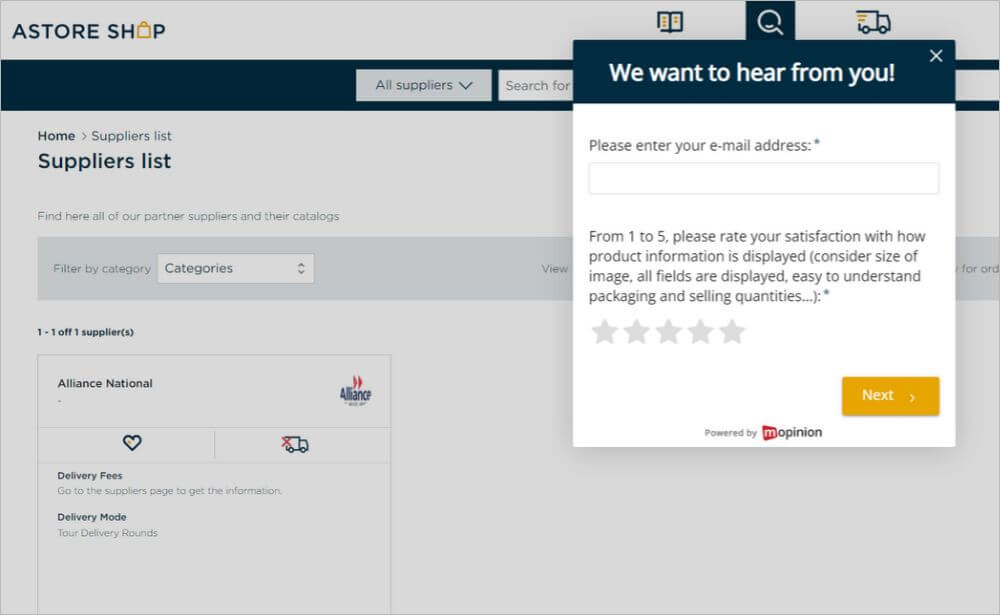
With a feedback platform like Mopinion, organisations can incorporate privacy messaging and links into their feedback forms, making this information available at the point where customers are actually submitting their data.
The principle is simple: customers should know what they’re sharing and what you intend to do with it before they submit their feedback.
4. Collect only the customer data you actually need
Another important GDPR principle for CX teams is data minimisation. According to theEuropean Commission’s guidance on data minimisation, organisations should only collect personal data that is adequate, relevant and necessary for the purpose they have defined.
In practice, this means avoiding unnecessary fields in surveys and feedback forms.
For example, instead of automatically asking for:
Name + email + phone number + customer number + feedback
consider whether:
Rating + feedback
would give you the insight you need.
The less personal data you collect, the less data you also need to store, protect and manage later.
Use anonymous feedback where identification isn’t necessary
Not every feedback programme needs to identify individual respondents. If your goal is to understand overall satisfaction, identify usability problems or spot common frustrations, anonymous feedback may be enough.
Identifiable feedback can still be valuable when you need to follow up with a customer, resolve an issue or connect feedback to a broader customer journey. The important thing is to collect those identifiers intentionally, rather than by default.
Be careful with open-text questions
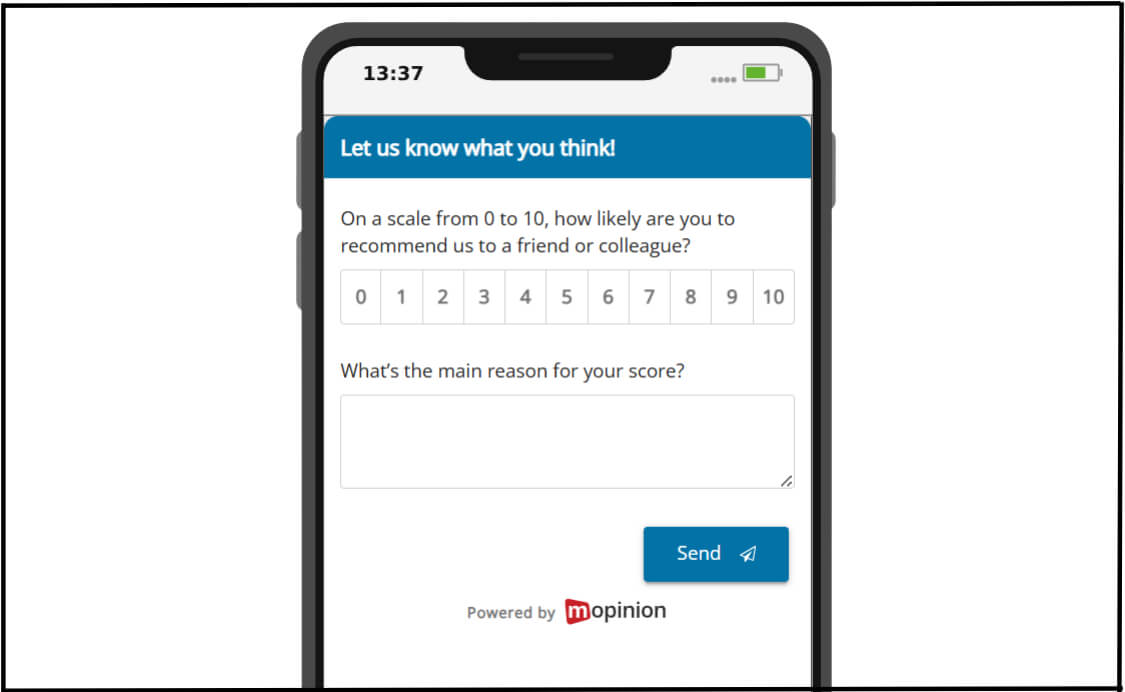
Open-text feedback adds another consideration. Even if you don’t ask for personal information, customers may include names, email addresses, order numbers or other identifiable details in their responses.
That makes it important to consider how this information is handled after submission. Features such as data masking and anonymisation can help limit the amount of identifiable information retained in your feedback environment.
Mopinion, for example, offers data masking and anonymisation options that can help organisations reduce unnecessary exposure of personal information within collected feedback.
The key principle is straightforward: if you don’t need personal data to achieve your CX goal, don’t collect it.
5. Protect customer feedback after you collect it
Once customer feedback has been collected, GDPR responsibilities don’t end. Organisations also need to protect personal data against unauthorised access, loss, alteration or disclosure.
For CX teams, that means thinking about who can access customer feedback and how securely that information moves through your organisation.
Important safeguards can include:
- User roles and permissions
- Strong authentication
- Secure infrastructure
- Encryption
- Audit logs and activity tracking
- Controlled data exports
- Secure integrations with other CX systems
Not every employee needs access to every piece of customer feedback. Restricting access based on role or responsibility can help reduce unnecessary exposure of personal data.
Pay attention to where feedback goes next
Your responsibility also doesn’t stop when feedback leaves your feedback platform.
Customer data may be exported into spreadsheets, transferred through APIs or sent to CRM, analytics and customer support systems. Once that happens, those environments also become part of how the data needs to be managed and protected.
Mopinion, for example, allows customers to export feedback through files, APIs and integrations. Once data is exported, account holders are responsible for ensuring that those copies are stored and handled securely.
This makes it important to look beyond the security of the feedback platform itself. Every system, export and person that touches customer data becomes part of your wider CX data environment.
6. Don’t keep customer data forever
Another important GDPR principle is storage limitation. Personal data should generally only be kept for as long as it is necessary for the purpose for which it was collected.
For CX teams, this is easy to overlook. Survey responses can remain in feedback platforms, spreadsheets, CRM systems or dashboards for years, even when there is no longer a clear reason to keep identifiable information attached to them.
A good retention strategy can include:
- Defined retention periods
- Automatic deletion where appropriate
- Anonymisation of older feedback
- Periodic reviews of stored customer data
The right retention period depends on the purpose of the data and your organisation’s requirements. The important thing is to avoid keeping personal data indefinitely simply because storage is available.
Mopinion’s data-management and anonymisation capabilities can support organisations in reducing the amount of identifiable information retained in their feedback environment.
For CX teams, the principle is simple: keep customer data for as long as you need it, not as long as you can.
7. Make it possible to act on customer data rights
GDPR gives individuals a number of rights over their personal data, including the right to access, correct and, in certain circumstances, delete their information or object to how it is being used.
For CX teams, this means customer feedback shouldn’t become an isolated dataset that is difficult to trace once it has been collected.
You should be able to:
- Locate feedback associated with an individual
- Export relevant personal data
- Correct information where applicable
- Delete or anonymise data when required
- Understand where that information has been transferred or shared
This becomes particularly important when feedback is connected to CRM, support or analytics systems. A customer’s information may exist in several places, so organisations need a clear understanding of how data moves across their CX environment.
Good data organisation makes it easier to respond to customer requests without having to manually search through disconnected systems.
The key is to make customer data traceable and manageable throughout its lifecycle, rather than treating feedback as a separate pool of information once it has been collected.
8. Know where your customer data goes
Modern CX stacks rarely rely on a single platform. Customer feedback may move between your feedback software, CRM, customer support tools, analytics platforms, BI systems and marketing automation.
Each connection creates another place where personal data may be processed, so complying with GDPR means understanding the full journey your customer data takes.
Check your integrations
GDPR-conscious data management shouldn’t stop once feedback leaves your feedback platform.
If survey responses are automatically sent to a CRM or support system, for example, you should understand what information is transferred, why it is needed and how it will be protected in the receiving system.
This also applies to exports and APIs. Mapping these connections helps prevent customer data from becoming scattered across systems without clear oversight.
Check where data is processed and stored
Data location matters too. Keeping data processing within the EU/EEA can simplify some aspects of data governance, but European hosting alone doesn’t make an organisation GDPR compliant. You still need to understand who processes your data, where processing takes place and what safeguards apply throughout the chain.
Mopinion states that customer data is stored within the EU by default. It also publishes information about the subprocessors used to deliver its services and their data-processing locations.
Where transfers outside the EU/EEA occur, organisations also need to consider the applicable safeguards. The European Commission’s guidance on international data transfers explains the rules and mechanisms available for protecting personal data when it is transferred outside the EEA.
The main takeaway is to know where your CX data goes, not just where it starts.
9. Make sure your CX vendors support your GDPR responsibilities
The tools you use to collect and manage customer data also play an important role in GDPR compliance.
In many customer-feedback scenarios, your organisation acts as the data controller because it determines why and how customer data is collected. Your feedback or CX software provider typically acts as a data processor, handling that information on your behalf.
Both roles come with GDPR responsibilities, which means choosing the right CX vendor is about more than features and usability.
When evaluating a platform, consider areas such as:
- Data Processing Agreements
- Where customer data is stored and processed
- Subprocessors
- Security standards and certifications
- User access controls
- Data deletion and anonymisation options
- Secure data exports
- Incident management procedures
- Safeguards for international data transfers
Your vendor should make it easier to understand how customer data is handled and give you the controls you need to manage it responsibly.
This doesn’t mean that choosing a GDPR-conscious platform automatically makes your organisation compliant. Your own processes, configurations and use of customer data still matter.
For a closer look at what to evaluate when choosing feedback software, see our guide on how to ensure GDPR compliance in digital feedback.
How Mopinion helps you collect customer feedback with GDPR in mind
GDPR compliance ultimately depends on how your organisation collects, processes and manages personal data. But your feedback technology should make those responsibilities easier, not harder.
Mopinion provides a range of data security and privacy measures designed to support privacy-conscious feedback collection, including:
- EU-based data storage by default, helping organisations maintain greater control over where customer feedback is stored.
- ISO 27001 certification, providing an established framework for information security management.
- Data masking and automated anonymisation, helping reduce the amount of identifiable customer information retained within feedback data.
- Advanced user management, allowing organisations to control who can access particular reports, data and areas of the platform.
- Data Processing Agreement that sets out how personal data is processed and protected.
- Transparent subprocessor information, helping organisations understand which third parties are involved in delivering Mopinion’s services.
- Control over feedback collection, allowing teams to decide which questions, fields and customer information their forms collect.
These measures can support your organisation in meeting its GDPR responsibilities, but technology is only one part of compliance. Your organisation remains responsible for defining why customer data is collected, choosing an appropriate lawful basis and configuring your feedback programme accordingly.

GDPR compliance and good CX go hand in hand
Complying with GDPR isn’t only about meeting legal requirements. Many of the same practices also contribute to a better customer experience.
Collecting only the information you need, being transparent about how it will be used, keeping it secure and giving customers greater control over their data all help build trust. And trust is an important part of any strong customer relationship.
For CX teams, that means privacy and customer experience shouldn’t be treated as separate priorities. A well-designed feedback programme can deliver useful insights while still respecting how customer data is collected and managed.
Want to collect actionable customer feedback while maintaining control over your customer data?
Discover how Mopinion approaches data security and privacy and supports GDPR-conscious feedback collection.
Ready to see Mopinion in action?
Want to learn more about Mopinion’s all-in-1 user feedback platform? Don’t be shy and take our software for a spin! Do you prefer it a bit more personal? Just book a demo. One of our feedback pro’s will guide you through the software and answer any questions you may have.
Frequently Asked Questions
To comply with GDPR in customer experience, organisations should understand what personal data they collect, establish a lawful basis for processing it, collect only what is necessary, explain how it will be used, protect it appropriately and avoid keeping it longer than needed. CX teams should also know where customer data is transferred and be able to respond when individuals exercise their data rights.
Customer feedback falls under GDPR when it contains or can be connected to personal data about an identifiable individual. This could include a name, email address, customer ID or information within an open-text response that makes someone identifiable. Feedback that has been genuinely anonymised so that the individual can no longer be identified is not considered personal data under GDPR.
Not necessarily. Consent is one lawful basis for processing personal data under GDPR, but it is not the only one. Depending on why the survey is being conducted and how the information will be used, another lawful basis may be appropriate. If consent is used, it must be freely given, specific, informed and unambiguous, and people must be able to withdraw it.
Yes. Customer feedback can be collected anonymously when there is no need to identify the respondent. However, genuinely anonymous data must not allow an individual to be identified or re-identified. Simply removing a customer’s name may not be enough if other information can still be used to identify them. Properly anonymised information falls outside the GDPR.
GDPR does not set one fixed retention period for customer feedback. Personal data should generally be kept only for as long as necessary for the purpose for which it was collected. Organisations should therefore define appropriate retention periods and regularly review whether identifiable feedback still needs to be stored, deleted or anonymised.
No. GDPR does not require all personal data to be hosted within the EU or EEA. Personal data can be transferred outside the EEA, but organisations must ensure that the applicable GDPR requirements and safeguards for international transfers are met. These can include an adequacy decision or other approved transfer mechanisms, depending on the destination and circumstances.