

Customer feedback is everywhere, from website surveys and app reviews to support tickets and open-text comments. The challenge is no longer collecting more feedback, but understanding what it means fast enough to act on it.
n this guide, we compare the top AI-powered customer feedback analytics tools that help teams summarise responses, detect themes and uncover the issues that matter most.
TL;DR – Article Summary
- AI-powered customer feedback analytics tools help teams analyse large volumes of open-text feedback faster, from surveys and app reviews to support tickets and website comments.
- The best tool depends on where your feedback comes from, how much you collect and how your team plans to act on the insights.
- Mopinion by Netigate is a strong choice for digital teams that want to collect and analyse feedback across websites, mobile apps and email campaigns.
- Chattermill, Thematic, Kapiche and Enterpret are strong options for analysing large volumes of qualitative feedback across multiple sources.
- Qualtrics, Medallia, InMoment and Sprinklr are better suited to larger enterprise customer experience programmes.
- Survicate and SurveySparrow are useful options for teams with a more survey-focused feedback setup.
Shortlist:
- Mopinion by Netigate: Best for digital feedback analytics
- Chattermill: Best for enterprise feedback intelligence
- Thematic: Best for adding AI analysis to an existing CX stack
- Kapiche: Best for open-text feedback analysis
- Enterpret: Best for product feedback intelligence
- unitQ: Best for product quality signals
- Qualtrics: Best for large enterprise XM programmes
- Medallia: Best for omnichannel VoC programmes
- InMoment: Best for advanced text analytics
- Sprinklr: Best for social and contact centre feedback
- Survicate: Best for survey-based research insights
- SurveySparrow: Best for AI survey text analytics
This article delves into:
- What are AI-powered customer feedback analytics tools?
- Why AI matters in customer feedback analytics
- How to choose the right AI customer feedback analytics tool
- Quick comparison: Top AI-powered customer feedback analytics tools
- The top 12 AI-powered customer feedback analytics tools
- Which AI customer feedback analytics tool is right for your team?
- FAQs about AI-powered customer feedback analytics tools
What are AI-powered customer feedback analytics tools?
AI-powered customer feedback analytics tools help businesses collect, centralise, categorise and analyse customer feedback using artificial intelligence. Instead of manually reading through survey responses, reviews, support tickets or in-app comments, these tools use AI to detect recurring topics, sentiment, pain points and trends.
They are especially useful for teams that need to understand what customers are saying at scale and turn that feedback into product, CX or retention improvements.
Why AI matters in customer feedback analytics
Customer feedback is only useful if your team can understand it quickly enough to act on it. But as feedback pours in from websites, apps, surveys, reviews, support tickets and social channels, manually analysing every open-text response becomes slow, inconsistent and difficult to scale.
AI-powered customer feedback analytics tools help teams move from raw comments to clear insights faster. Instead of spending hours sorting through feedback manually, teams can use AI to:
- Summarise large volumes of open-text feedback
- Detect recurring topics, complaints and customer needs
- Identify sentiment, urgency and potential friction points
- Group similar responses into actionable categories
- Track feedback trends over time
- Prioritise the issues that affect customer experience, conversion or retention
In other words, AI helps teams spend less time organising feedback and more time improving the customer experience.
How to choose the right AI customer feedback analytics tool
Customer feedback is only useful if your team can understand it quickly enough to act on it. But as feedback pours in from websites, apps, surveys, reviews, support tickets and social channels, manually analysing every open-text response becomes slow, inconsistent and difficult to scale.
AI-powered customer feedback analytics tools help teams move from raw comments to clear insights faster. Instead of spending hours sorting through feedback manually, teams can use AI to:
- Summarise large volumes of open-text feedback
- Detect recurring topics, complaints and customer needs
- Identify sentiment, urgency and potential friction points
- Group similar responses into actionable categories
- Track feedback trends over time
- Prioritise the issues that affect customer experience, conversion or retention
In other words, AI helps teams spend less time organising feedback and more time improving the customer experience.
The top 12 AI-powered customer feedback analytics tools
1.Mopinion by Netigate
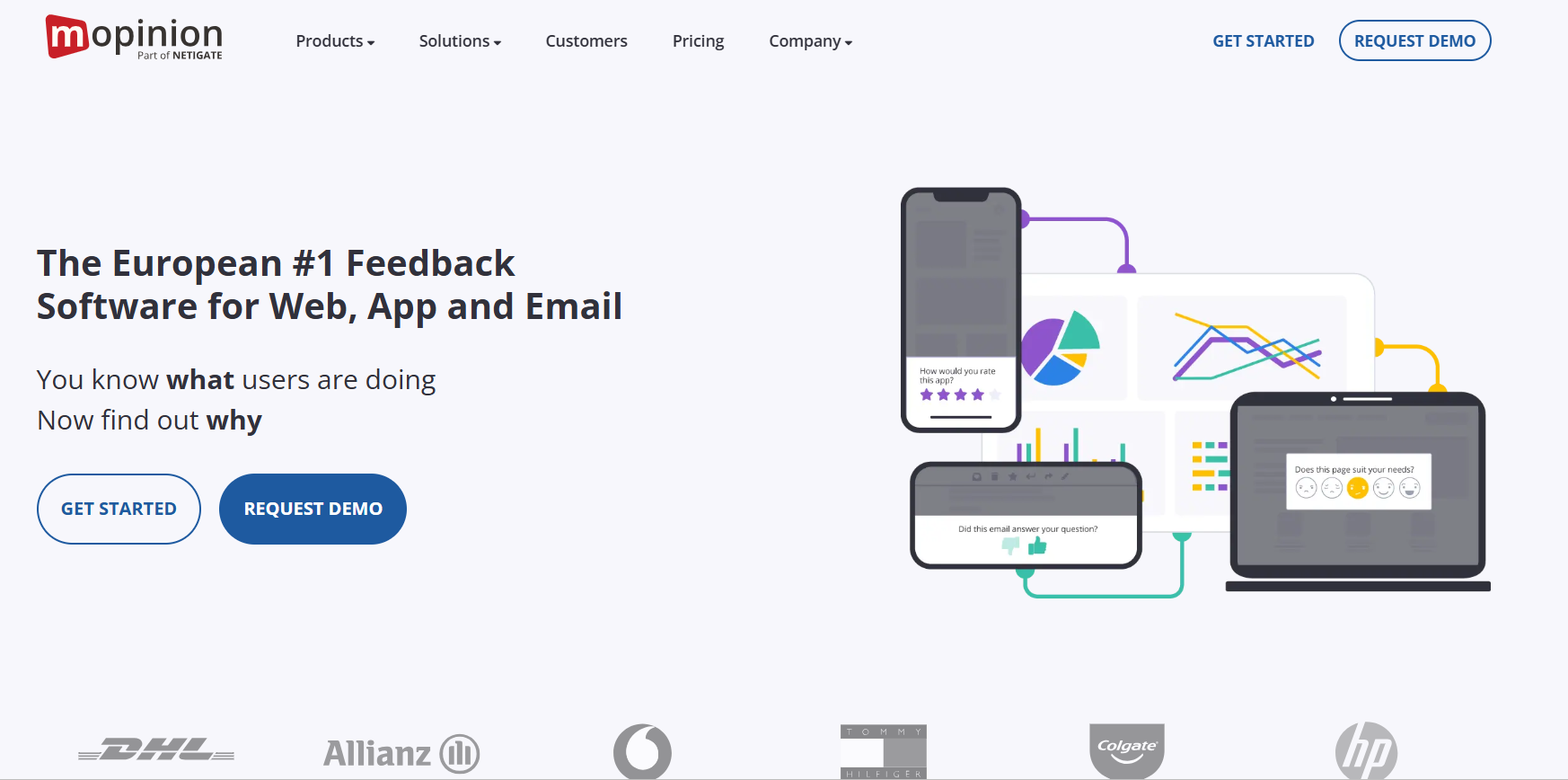
Mopinion by Netigate is an AI-powered customer feedback analytics platform for digital teams that want to collect, analyse and act on feedback across websites, mobile apps and email campaigns.
How Mopinion uses AI for customer feedback analytics
Mopinion’s AI capabilities help teams analyse open-text feedback faster. With features such as Smart Recaps, teams can summarise large volumes of responses, identify recurring topics and understand the overall sentiment behind customer comments.
This makes it easier to move from scattered feedback to clear, actionable insights without manually reading every response.
What makes Mopinion useful
Mopinion combines feedback collection with dashboards, alerts and action management. That means teams can not only spot patterns in customer feedback, but also follow up on them.
As part of Netigate, Mopinion is also relevant for organisations that want to connect digital feedback analytics with broader experience management needs.
Best for: Digital teams, CX teams, product teams and marketers that want to understand feedback from websites, mobile apps and email campaigns.
Key strengths:
- Collects feedback across websites, mobile apps and email
- Uses AI to summarise and analyse open-text feedback faster
- Helps teams detect recurring topics, sentiment and friction points
- Combines dashboards, alerts and action workflows
- Supports both digital feedback analytics and broader experience management through Netigate
Consider Mopinion if:
You want to collect feedback directly from digital users and use AI to understand what they are saying, where they are experiencing friction and which improvements should be prioritised.
2. Chattermill
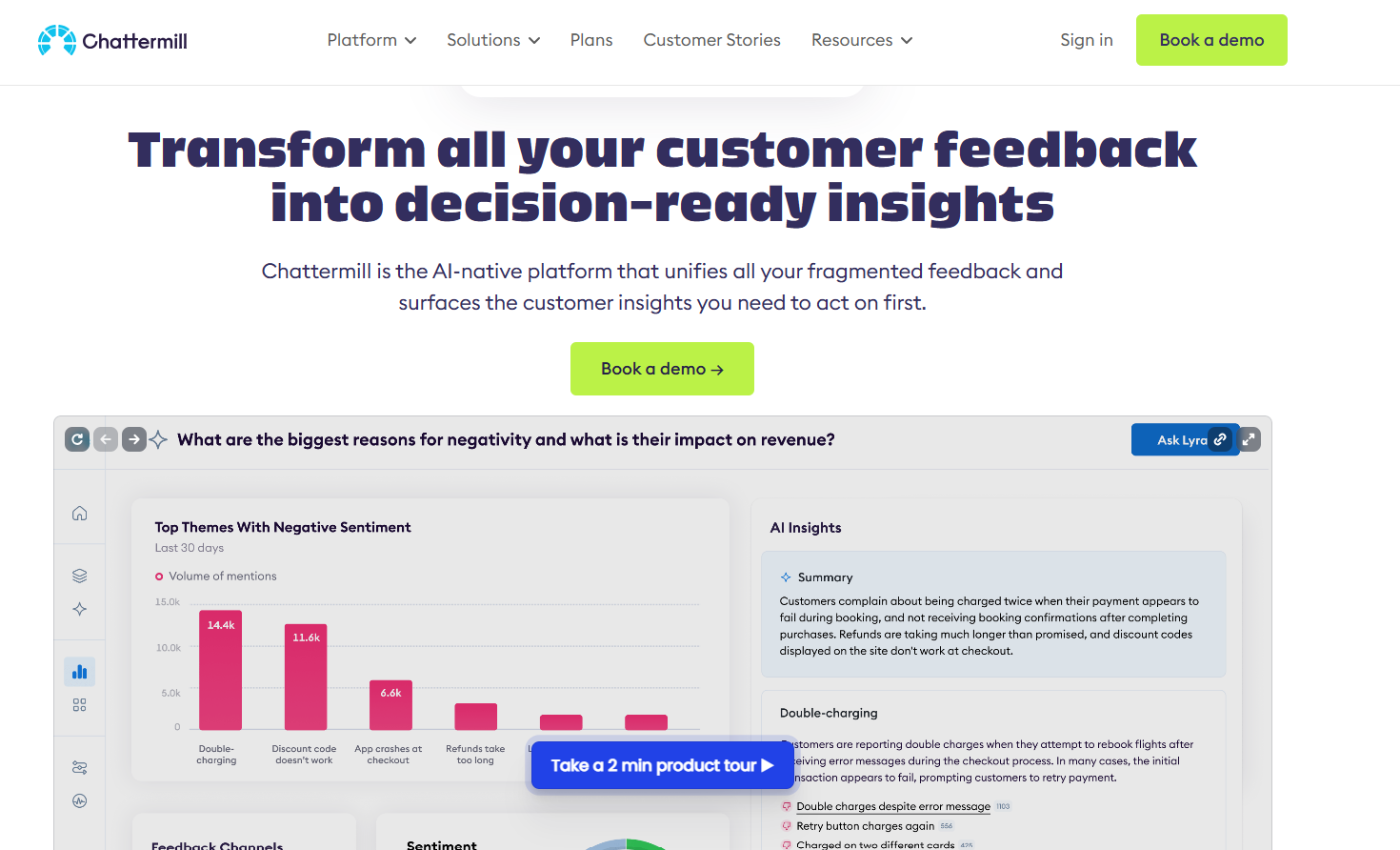
Chattermill is an AI-powered customer feedback analytics platform that helps teams bring feedback from different channels into one place.
It is built for organisations that want to understand customer experience trends across sources such as surveys, reviews, support tickets and other customer conversations.
How Chattermill uses AI for customer feedback analytics
Chattermill uses AI to analyse large volumes of customer feedback and surface recurring themes, sentiment and trends. Instead of looking at each feedback source separately, teams can use Chattermill to connect feedback across the customer journey and understand where issues appear most often.
This makes it easier to spot patterns, compare customer segments and identify which parts of the experience need attention.
What makes Chattermill useful
Chattermill is especially useful for teams that already collect feedback across several channels but need a dedicated analytics layer to make sense of it. It helps CX, support, product and insights teams understand what customers are saying at scale and turn those patterns into clearer priorities.
Best for: Enterprise CX, support, product and insights teams analysing feedback across multiple channels.
Key strengths:
- Unifies customer feedback from multiple sources
- Uses AI to detect themes, sentiment and trends
- Helps teams connect feedback to customer journey insights
- Useful for analysing large volumes of qualitative feedback
- Supports cross-functional teams working on CX, support and product improvements
Consider Chattermill if:
You already collect feedback from several sources and need a dedicated AI analytics layer to reveal recurring themes, sentiment patterns and customer journey friction.
3. Thematic
Thematic is an AI-powered feedback analytics platform that helps teams analyse large volumes of unstructured customer feedback.
It is often used by enterprise CX and insights teams that already collect feedback through surveys, reviews, support conversations or existing customer experience platforms, but need a stronger way to understand what customers are saying in their own words.
How Thematic uses AI for customer feedback analytics
Thematic uses AI to identify recurring themes, sentiment and drivers behind customer experience metrics. This helps teams go beyond scores such as NPS, CSAT or CES and understand the reasons behind those numbers.
By analysing open-text feedback at scale, Thematic can help teams uncover what is driving satisfaction, frustration, loyalty or churn across different customer segments and touchpoints.
What makes Thematic useful
Thematic is especially useful for organisations that already have a customer experience programme in place, but need deeper text analytics to make sense of qualitative feedback. Instead of replacing the existing CX stack, it can act as an AI analysis layer that helps teams find patterns, validate trends and prioritise improvements.
Best for: Teams that already use a CX platform but need stronger AI text analytics.
Key strengths:
- Analyses large volumes of unstructured customer feedback
- Identifies themes, sentiment and feedback drivers
- Helps explain the reasons behind CX metrics
- Useful for enterprise CX and insights teams
- Can support existing customer experience programmes with deeper AI analysis
Consider Thematic if:
You want to add deeper feedback analysis to an existing customer experience programme and better understand the themes behind your customer experience scores.
4. Kapiche
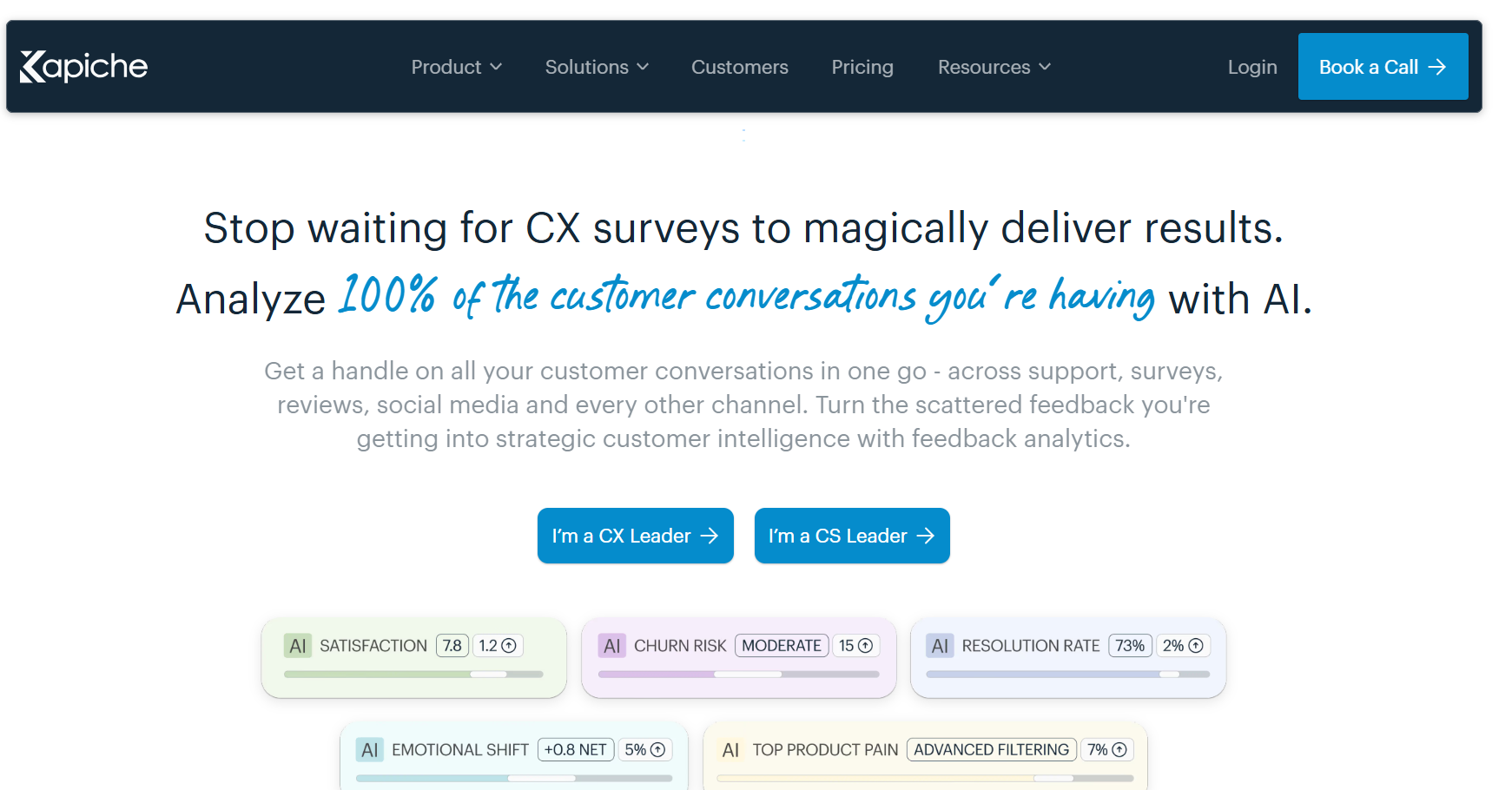
Kapiche is an AI-powered customer feedback analytics platform designed to help teams analyse large volumes of qualitative feedback.
It is especially useful for CX and research teams that need to understand open-text responses from sources such as surveys, reviews, support tickets and customer conversations.
How Kapiche uses AI for customer feedback analytics
Kapiche uses AI to detect themes, sentiment and patterns in open-text feedback. Its focus is on helping teams discover what customers are talking about without relying on manual tagging or predefined categories.
This makes it easier to identify emerging issues, understand customer pain points and generate insights from qualitative feedback faster.
What makes Kapiche useful
Kapiche is useful for teams that have plenty of customer feedback, but struggle to turn it into clear, reliable insights. By analysing feedback at scale, it helps teams move beyond individual comments and see the bigger patterns behind customer satisfaction, frustration or churn.
Best for: CX and research teams working with large volumes of survey responses, reviews or support feedback.
Key strengths:
- Analyses open-text feedback at scale
- Uses AI to detect themes, sentiment and trends
- Helps teams discover insights without manual tagging
- Useful for surveys, reviews and support feedback
- Supports faster qualitative research and customer understanding
Consider Kapiche if:
Your biggest challenge is making sense of qualitative feedback at scale and turning large volumes of customer comments into clear themes and priorities.
5. Enterpret
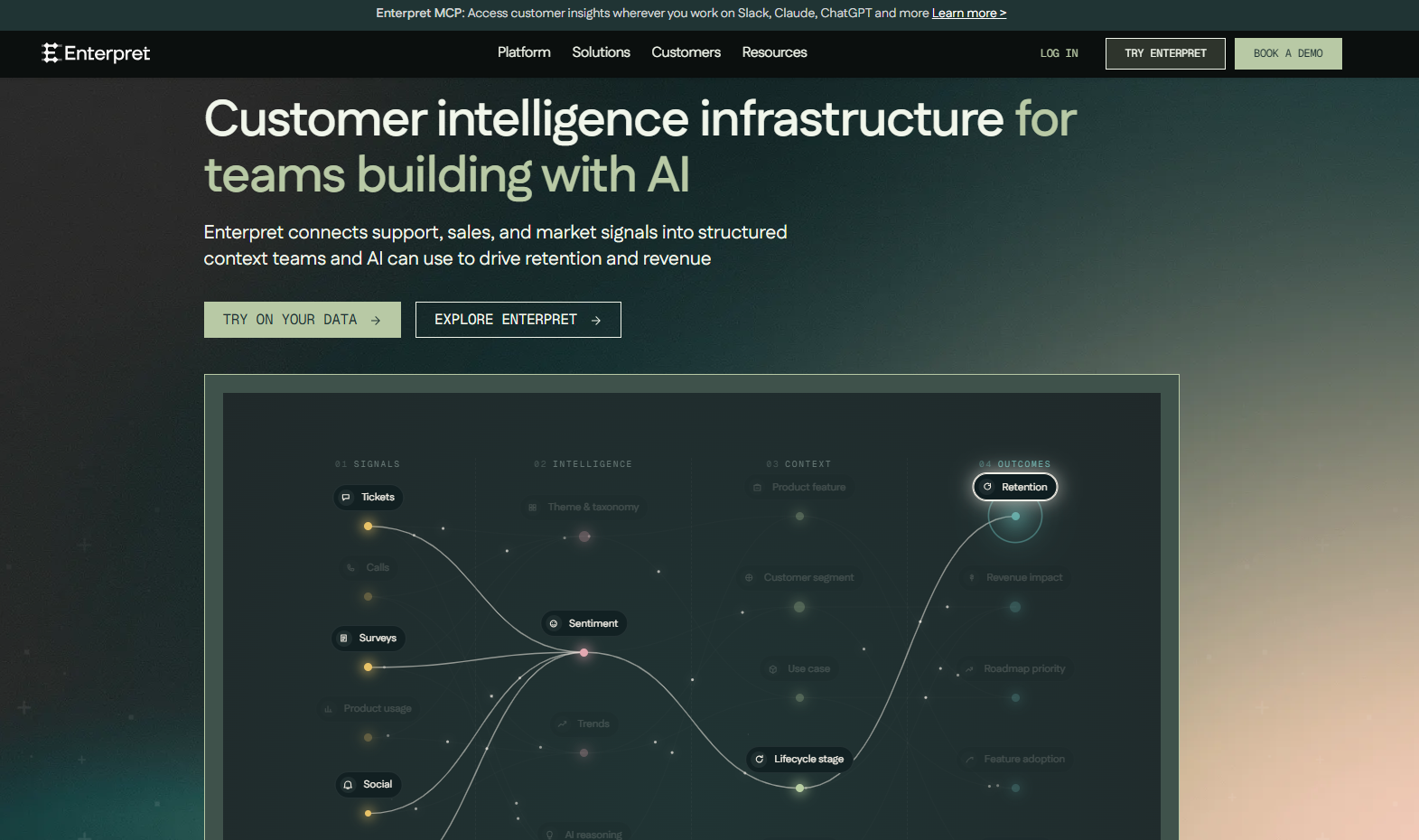
Enterpret is an AI-powered customer feedback analytics platform built for product-led teams that want to connect customer feedback to product decisions.
It helps teams analyse feedback from different sources and understand which product issues, feature requests or customer needs are showing up most often.
How Enterpret uses AI for customer feedback analytics
Enterpret uses AI to analyse unstructured customer feedback and organise it into themes, trends and product-related insights. This helps product and CX teams detect recurring issues, understand what customers are asking for and identify where the product experience may be falling short.
By turning feedback into structured insights, Enterpret can support roadmap planning, prioritisation and cross-functional decision-making.
What makes Enterpret useful
Enterpret is especially useful for product-led companies that want to make customer feedback part of the product development process. Instead of treating feedback as scattered comments, teams can use it to understand demand, validate priorities and make more informed roadmap decisions.
Best for: Product-led companies that want to connect feedback to product priorities.
Key strengths:
- Analyses customer feedback from multiple sources
- Helps detect product issues, feature requests and recurring needs
- Turns qualitative feedback into structured product insights
- Supports roadmap planning and prioritisation
- Useful for product, CX and research teams
Consider Enterpret if:
You want customer feedback analytics to support product roadmap planning, prioritisation and better product decision-making.
6. unitQ
unitQ is an AI-powered customer feedback analytics platform focused on product quality intelligence.
It helps product, engineering and quality teams analyse feedback from sources such as app reviews, support tickets, surveys and other user comments to detect issues affecting the product experience.
How unitQ uses AI for customer feedback analytics
unitQ uses AI to categorise customer feedback and identify product quality signals, such as bugs, usability issues, performance problems and recurring friction points. By analysing feedback from multiple sources, it helps teams understand which issues are affecting users most often and where improvements are needed.
This makes it easier for teams to detect product problems faster, monitor issue trends and connect customer feedback to product quality improvements.
What makes unitQ useful
unitQ is especially useful for teams that need to move quickly when customers report problems. Instead of waiting for issues to escalate through support or manual reporting, product and engineering teams can use customer feedback to spot recurring bugs, technical issues and user experience problems closer to real time.
Best for: Product, engineering and quality teams.
Key strengths:
- Analyses feedback from app reviews, support tickets, surveys and user comments
- Uses AI to detect product quality signals and recurring issues
- Helps teams identify bugs, usability problems and friction points
- Supports faster issue detection and prioritisation
- Useful for product, engineering and quality improvement workflows
Consider unitQ if:
You want to detect product issues, bugs and friction points from customer feedback in near real time and connect those insights to product quality improvements.
7. Qualtrics
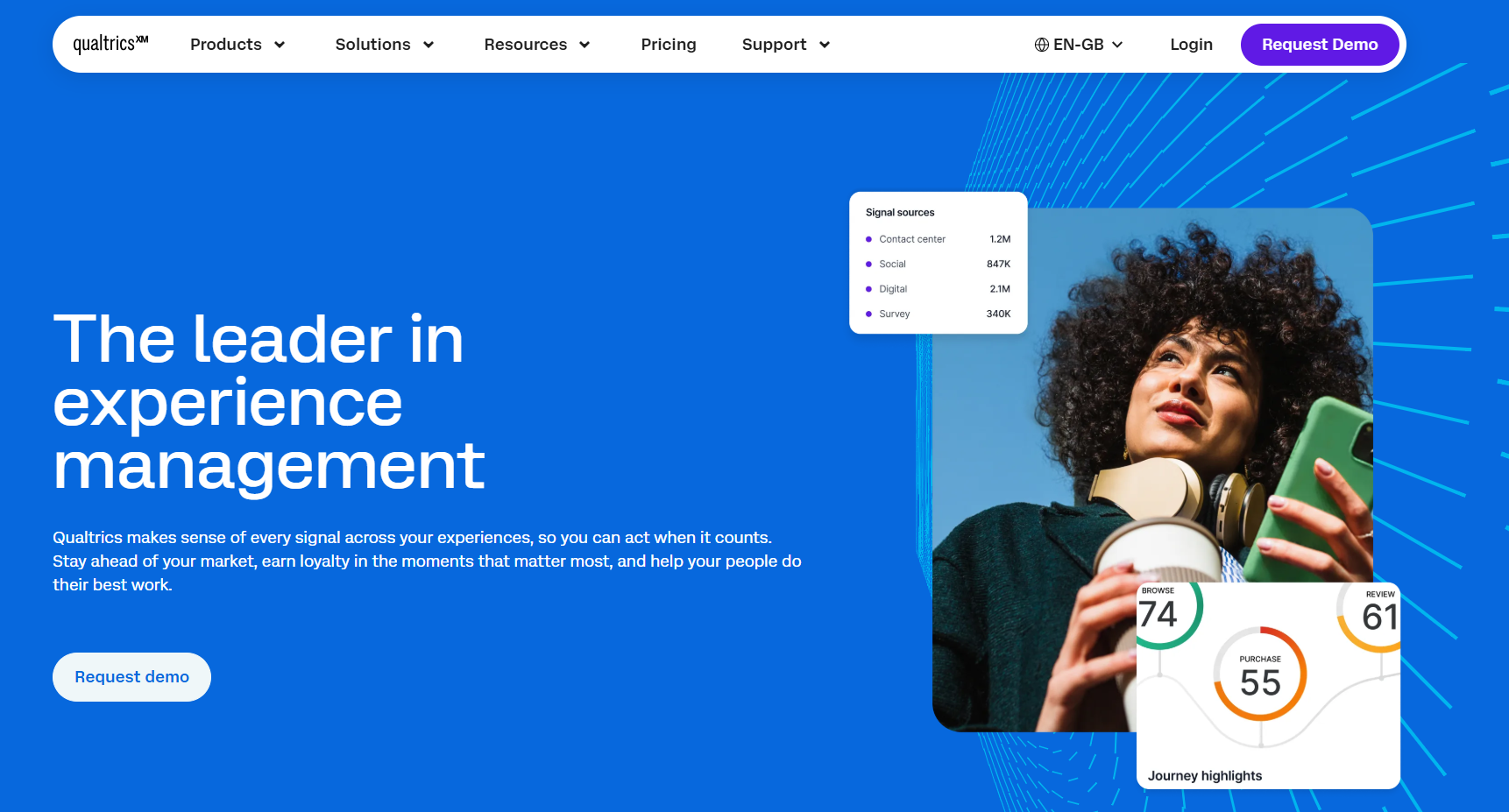
Qualtrics is an enterprise experience management platform that helps organisations collect, analyse and act on customer, employee, product and brand experience data.
For customer feedback analytics, it is best suited to large organisations that need a broad platform for managing feedback, insights and action across multiple departments and regions.
How Qualtrics uses AI for customer feedback analytics
Qualtrics uses AI-powered text analytics to help teams analyse open-text feedback, detect sentiment and uncover patterns across customer responses. It can help teams understand the reasons behind customer experience metrics and identify which issues are most likely to affect satisfaction, loyalty or retention.
Its AI capabilities also support enterprise workflows, helping teams move from feedback analysis to recommended actions, alerts and experience improvement programmes.
What makes Qualtrics useful
Qualtrics is useful for organisations that need more than a standalone customer feedback analytics tool. It can support large-scale experience management programmes where feedback needs to be collected, analysed and shared across different teams, markets and business units.
Because of its broad XM focus, Qualtrics may be more than smaller teams need, but it can be a strong fit for enterprises with complex customer experience programmes.
Best for: Large enterprise experience management programmes.
Key strengths:
- Supports broad customer experience and experience management programmes
- Uses AI-powered text analytics to analyse open-text feedback
- Helps identify sentiment, patterns and drivers behind CX metrics
- Supports enterprise workflows, alerts and reporting
- Suitable for large organisations with complex feedback and experience management needs
Consider Qualtrics if:
You need a broad enterprise XM platform that covers more than customer feedback analytics alone and can support experience management across multiple teams, regions and business functions.
8. Medallia
Medallia is an enterprise customer experience management platform built for large organisations running mature Voice of the Customer programmes.
It helps teams collect and analyse customer signals across multiple touchpoints, including surveys, digital channels, contact centres, reviews and other customer interactions.
How Medallia uses AI for customer feedback analytics
Medallia uses AI to analyse omnichannel customer signals and detect recurring topics, sentiment and experience trends. This helps teams understand what customers are saying across different channels and where the biggest experience gaps are appearing.
Its AI capabilities can also support prioritisation and action management, helping organisations identify which issues need attention and route insights to the right teams.
What makes Medallia useful
Medallia is especially useful for large organisations that need to manage customer feedback at scale. Rather than focusing only on feedback analysis, it supports broader CX programmes where insights need to be shared, prioritised and acted on across departments, regions and customer touchpoints.
Because of its enterprise focus, Medallia is best suited to organisations with complex feedback ecosystems and established VoC processes.
Best for: Large organisations running mature VoC programmes across many customer touchpoints.
Key strengths:
- Analyses customer signals across multiple channels
- Uses AI to detect topics, sentiment and experience trends
- Supports prioritisation and action management
- Helps large teams connect feedback to CX improvement workflows
- Suitable for mature enterprise VoC programmes
Consider Medallia if:
You need enterprise-scale customer experience management with AI-powered feedback intelligence, omnichannel signal analysis and workflows for turning insights into action.
9. InMoment
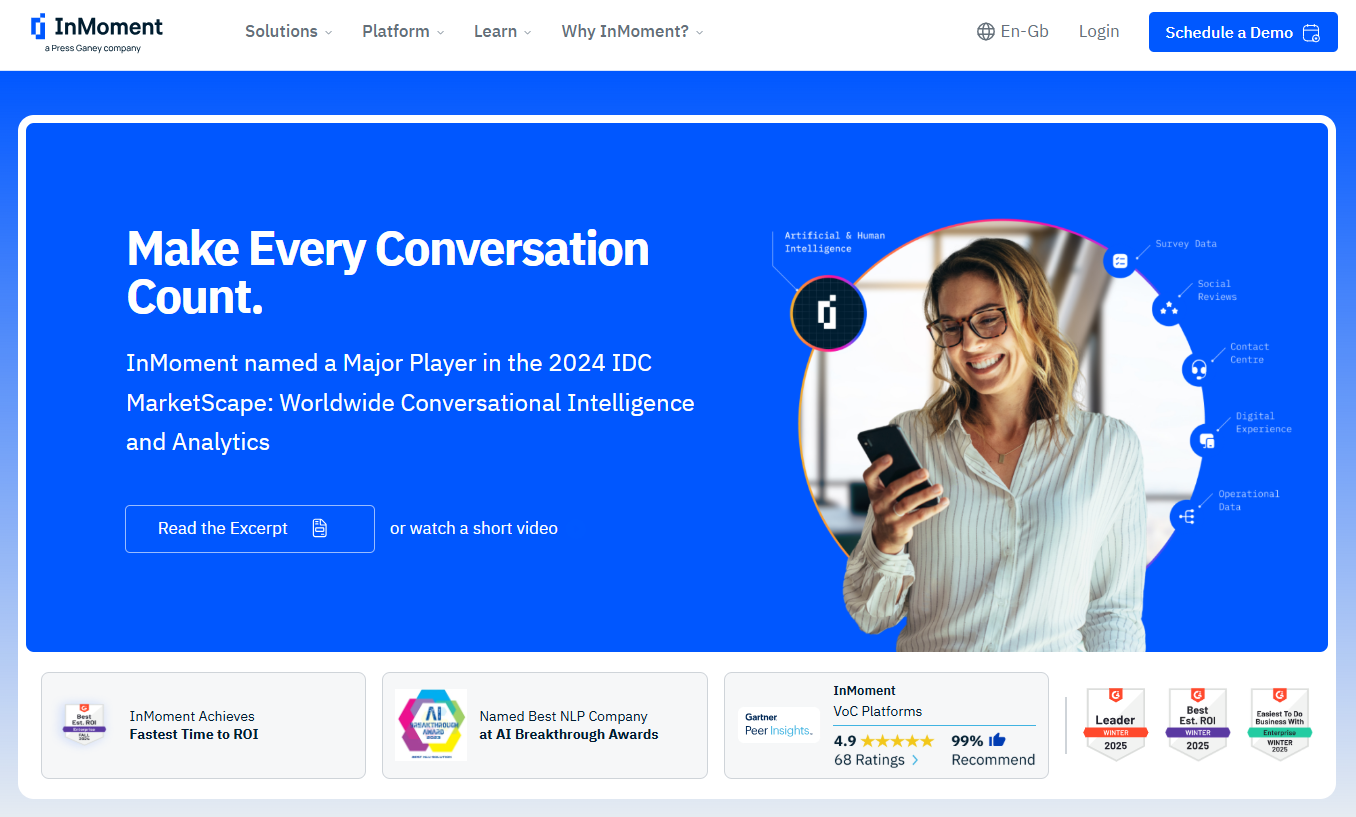
InMoment is an experience improvement platform that helps organisations collect, analyse and act on customer feedback across different channels.
It is especially relevant for CX teams that need advanced analytics for customer comments, survey responses and other forms of unstructured feedback.
How InMoment uses AI for customer feedback analytics
InMoment uses AI, natural language processing and text analytics to analyse open-text feedback at scale. This helps teams detect sentiment, identify recurring topics and understand the meaning behind customer comments.
Its analytics capabilities can also support predictive experience insights, helping organisations spot patterns that may affect satisfaction, loyalty, churn or overall customer experience.
What makes InMoment useful
InMoment is useful for CX teams that want to go deeper than basic reporting. By analysing unstructured feedback, it helps teams understand not only what customers are saying, but also which issues are likely to have the biggest impact on the customer experience.
It is best suited to organisations that want to connect feedback analysis with broader experience improvement programmes.
Best for: CX teams that want advanced text analytics and experience improvement programmes.
Key strengths:
- Analyses customer comments, survey responses and other unstructured feedback
- Uses AI and natural language processing for text analytics
- Helps detect sentiment, topics and recurring customer issues
- Supports predictive experience insights
- Useful for broader customer experience improvement programmes
Consider InMoment if:
You need robust analytics for customer comments, survey responses and other unstructured feedback, and want to connect those insights to experience improvement initiatives.
10. Sprinklr
Sprinklr is an enterprise customer experience management platform with a strong focus on social, service and omnichannel customer signals.
It is especially relevant for organisations that receive large volumes of feedback through public channels, contact centres, support interactions, reviews and social media conversations.
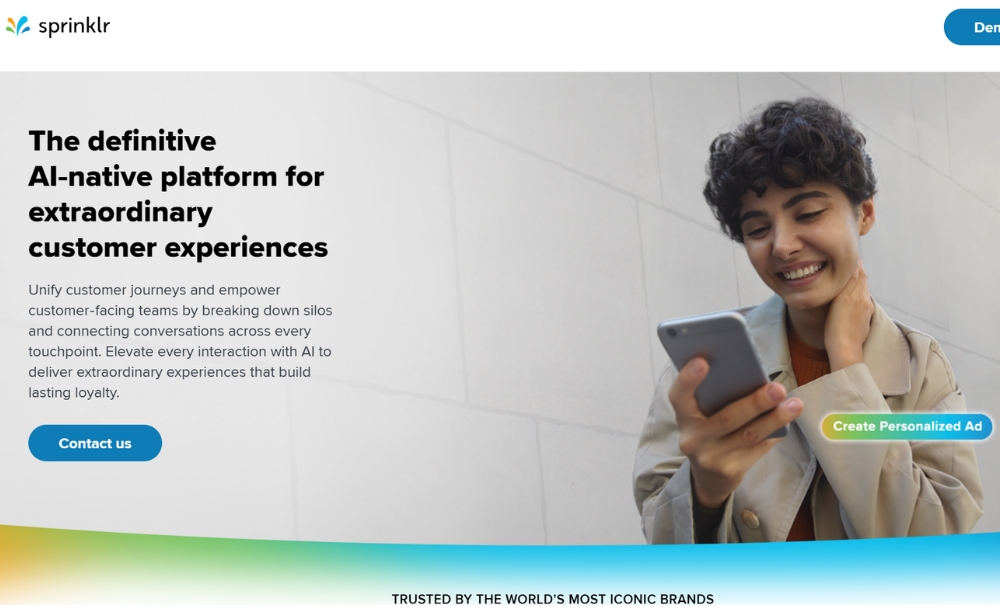
How Sprinklr uses AI for customer feedback analytics
Sprinklr uses AI to analyse customer feedback across social, support and service channels. Its capabilities include social listening, contact centre intelligence and omnichannel Voice of the Customer analysis, helping teams understand what customers are saying across both public and private touchpoints.
By using AI-assisted insights, teams can detect recurring themes, sentiment, emerging issues and customer experience trends across large volumes of conversations.
What makes Sprinklr useful
Sprinklr is useful for enterprise teams that need to analyse customer feedback beyond traditional surveys. It helps organisations bring together signals from social media, service interactions and contact centre conversations, making it easier to understand customer perception and respond to issues at scale.
Because of its broad enterprise focus, Sprinklr is best suited to teams with complex customer engagement channels and high volumes of customer conversations.
Best for: Enterprise teams analysing feedback from social, support and contact centre channels.
Key strengths:
- Analyses feedback from social, support and service channels
- Supports social listening and omnichannel VoC analysis
- Uses AI to detect themes, sentiment and emerging issues
- Helps teams understand feedback from public and private customer conversations
- Useful for large organisations with high-volume customer engagement channels
Consider Sprinklr if:
A large part of your customer feedback comes from public, social or service channels and you need an enterprise platform to analyse those signals at scale.
11. Survicate
Survicate is a customer feedback and survey platform that helps teams collect feedback across different customer touchpoints.
It is especially useful for product, marketing and research teams that want a flexible way to gather survey responses and centralise customer insights.
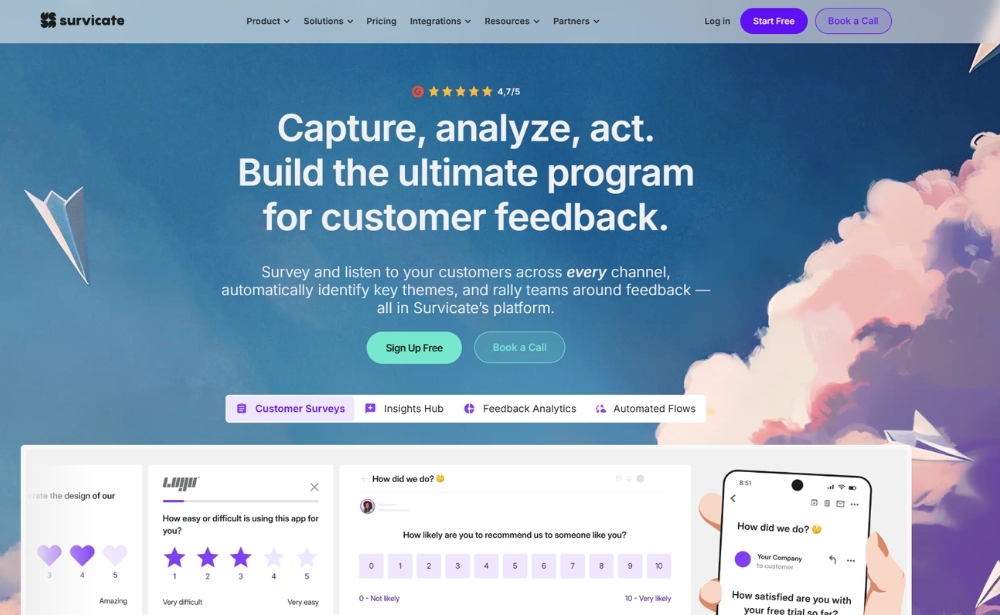
How Survicate uses AI for customer feedback analytics
Survicate uses AI-assisted features to help teams summarise survey responses and make sense of customer feedback faster. Its research hub can bring insights from different sources into one place, helping teams organise findings and identify recurring customer needs, questions or pain points.
This makes it easier to move from individual survey responses to broader research insights that can support product, marketing and customer experience decisions.
What makes Survicate useful
Survicate is useful for teams that want to collect feedback without adopting a heavy enterprise platform. It supports different survey types and feedback channels, making it a good fit for teams that want to run customer research, gather product feedback or understand customer satisfaction in a more lightweight setup.
Best for: Product, marketing and research teams that collect feedback through surveys.
Key strengths:
- Helps teams collect survey-based customer feedback
- Supports product, marketing and research use cases
- Uses AI-assisted summaries to analyse feedback faster
- Centralises research insights in one place
- Lightweight compared with larger enterprise CX platforms
Consider Survicate if:
You want a lightweight way to collect surveys, centralise research insights and use AI-assisted summaries to understand customer feedback faster.
12. SurveySparrow
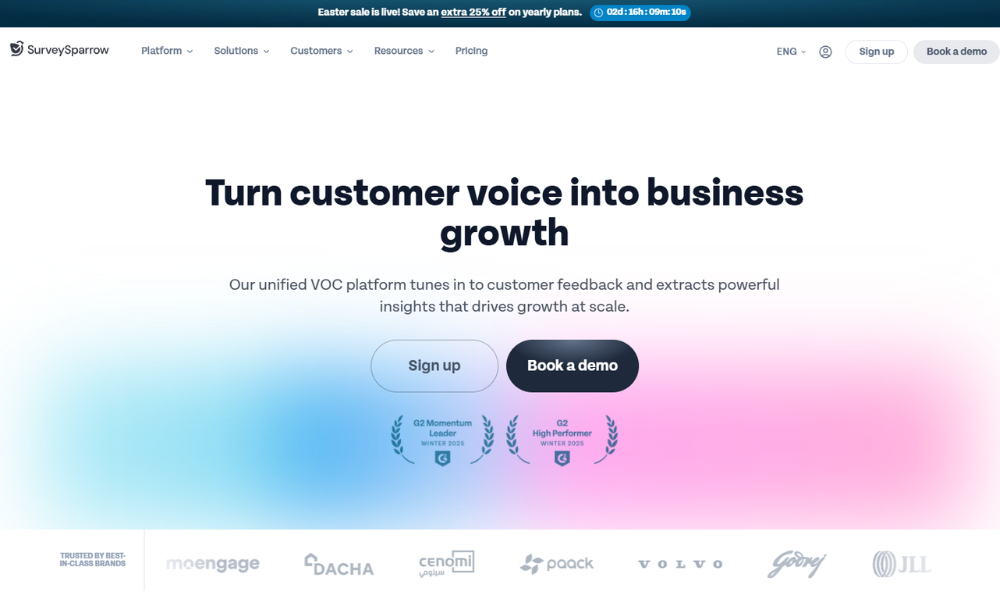
SurveySparrow is a survey and experience management platform that helps teams collect customer feedback through conversational surveys, NPS, CSAT and other survey formats.
It is especially relevant for teams that rely heavily on surveys and want a faster way to analyse open-ended responses.
How SurveySparrow uses AI for customer feedback analytics
SurveySparrow uses AI text analytics to help teams analyse written survey responses. Its capabilities can support sentiment analysis, topic detection and the categorisation of open-text feedback, making it easier to understand what customers are saying without reviewing every comment manually.
This helps teams move beyond survey scores and uncover the themes, frustrations or customer needs behind the numbers.
What makes SurveySparrow useful
SurveySparrow is useful for teams that already have a survey-based feedback programme and want to make better use of qualitative responses. Instead of focusing only on ratings or scores, teams can analyse written feedback to understand recurring topics and customer sentiment.
It is best suited to teams looking for survey collection and AI-assisted response analysis in one platform.
Best for: Survey-heavy teams that want to analyse open-ended responses faster.
Key strengths:
- Supports survey-based customer feedback collection
- Uses AI text analytics for open-ended responses
- Helps identify sentiment, topics and recurring customer themes
- Useful for NPS, CSAT and other survey programmes
- Combines survey collection with AI-assisted feedback analysis
Consider SurveySparrow if:
Your feedback programme is mainly survey-based and you want AI support for analysing open-ended responses faster.
Which AI customer feedback analytics tool is right for your team?
The right AI customer feedback analytics tool depends on what kind of feedback you collect, where it comes from and how your team plans to use the insights.
If your focus is digital feedback, Mopinion by Netigate is a strong choice. It helps teams collect and analyse feedback across websites, mobile apps and email campaigns, making it especially useful for understanding friction in digital journeys.
If your main challenge is analysing large volumes of unstructured feedback from multiple sources, tools like Chattermill, Thematic and Kapiche may be a better fit. These platforms are designed to help teams detect themes, sentiment and recurring patterns across customer comments.
For product-led teams, Enterpret and unitQ are worth considering. Enterpret is useful for connecting feedback to roadmap priorities, while unitQ is more focused on product quality signals, bugs and user experience issues.
For larger organisations running enterprise-wide CX or VoC programmes, Qualtrics, Medallia, InMoment and Sprinklr offer broader experience management capabilities. These platforms are better suited to teams that need to analyse feedback across departments, regions and customer touchpoints.
If your feedback programme is mostly survey-based, Survicate and SurveySparrow offer more accessible ways to collect responses and use AI to analyse open-ended feedback.
Final thoughts
AI-powered customer feedback analytics tools help teams move from raw feedback to clear, actionable insight faster. The best choice depends on where your feedback comes from, how much of it you collect and how your team wants to act on it.
FAQs about AI-powered customer feedback analytics tools
An AI-powered customer feedback analytics tool uses artificial intelligence to analyse customer feedback from sources such as surveys, website forms, app feedback, reviews, support tickets and social media. These tools can summarise responses, detect sentiment, identify recurring topics and help teams prioritise improvements.
There is no single best AI customer feedback analytics tool for every business. Mopinion by Netigate is a strong option for digital feedback analytics, while Chattermill, Thematic, Kapiche and Enterpret are useful for analysing large volumes of open-text feedback. Enterprise teams may also consider Qualtrics, Medallia, InMoment or Sprinklr.
AI analyses customer feedback by using natural language processing and machine learning to detect topics, sentiment, patterns and trends in open-text responses. This helps teams understand what customers are saying without manually reading every comment.
AI customer feedback analytics tools can analyse website feedback, in-app feedback, email feedback, survey responses, NPS comments, CSAT comments, customer reviews, support tickets, chat transcripts, call notes and social media comments, depending on the platform.
Companies use AI for customer feedback analytics because it helps them process large volumes of qualitative feedback faster. AI can reveal recurring issues, summarise customer comments, identify sentiment and help teams decide which improvements to prioritise.
Customer feedback collection is the process of gathering feedback from customers. Customer feedback analytics is the process of analysing that feedback to understand patterns, sentiment, trends and priorities. Some platforms, such as Mopinion by Netigate, support both collection and analysis.
AI can speed up feedback analysis, but it should not fully replace human judgement. AI is useful for summarising comments, identifying trends and detecting sentiment, while human teams are still needed to interpret context, make decisions and take action.
Want to learn more about Mopinion’s all-in-1 user feedback platform? Don’t be shy and take our software for a spin! Do you prefer it a bit more personal? Just book a demo. One of our feedback pro’s will guide you through the software and answer any questions you may have.
Ready to see Mopinion in action?