

NPS survey software helps businesses collect, analyse and act on customer loyalty feedback across websites, apps, email campaigns and other customer touchpoints.
A simple NPS survey asks customers how likely they are to recommend your company, product or service. But the real value comes from what happens next. The right NPS software helps you understand why customers gave a certain score, identify trends over time and follow up with the right actions.
NPS is not just a number, it gives teams a clear way to measure customer loyalty, understand customer sentiment and connect feedback to retention, product experience and customer experience improvements.
In this blog, we’ll look at what NPS software is, what to look for in an NPS survey tool and which software options are worth considering.
TL;DR – Article Summary
- NPS survey software helps businesses collect, analyse and act on Net Promoter Score feedback.
- A good NPS survey tool should help teams collect feedback across relevant channels, understand the reasons behind each score and follow up with customers.
- NPS surveys are most useful when teams combine the score with open-text feedback, segmentation and customer journey context.
- When choosing NPS software, consider your feedback channels, reporting needs, integrations, data security and how your team will act on the insights.
In this blog, we’ll cover:
- What is NPS software?
- Why use NPS software?
- What to look for in NPS software
- Best NPS software and NPS survey tools
- How to choose the right NPS software
- NPS survey best practices
- Common mistakes to avoid with NPS surveys
- Final thoughts
What is NPS software?
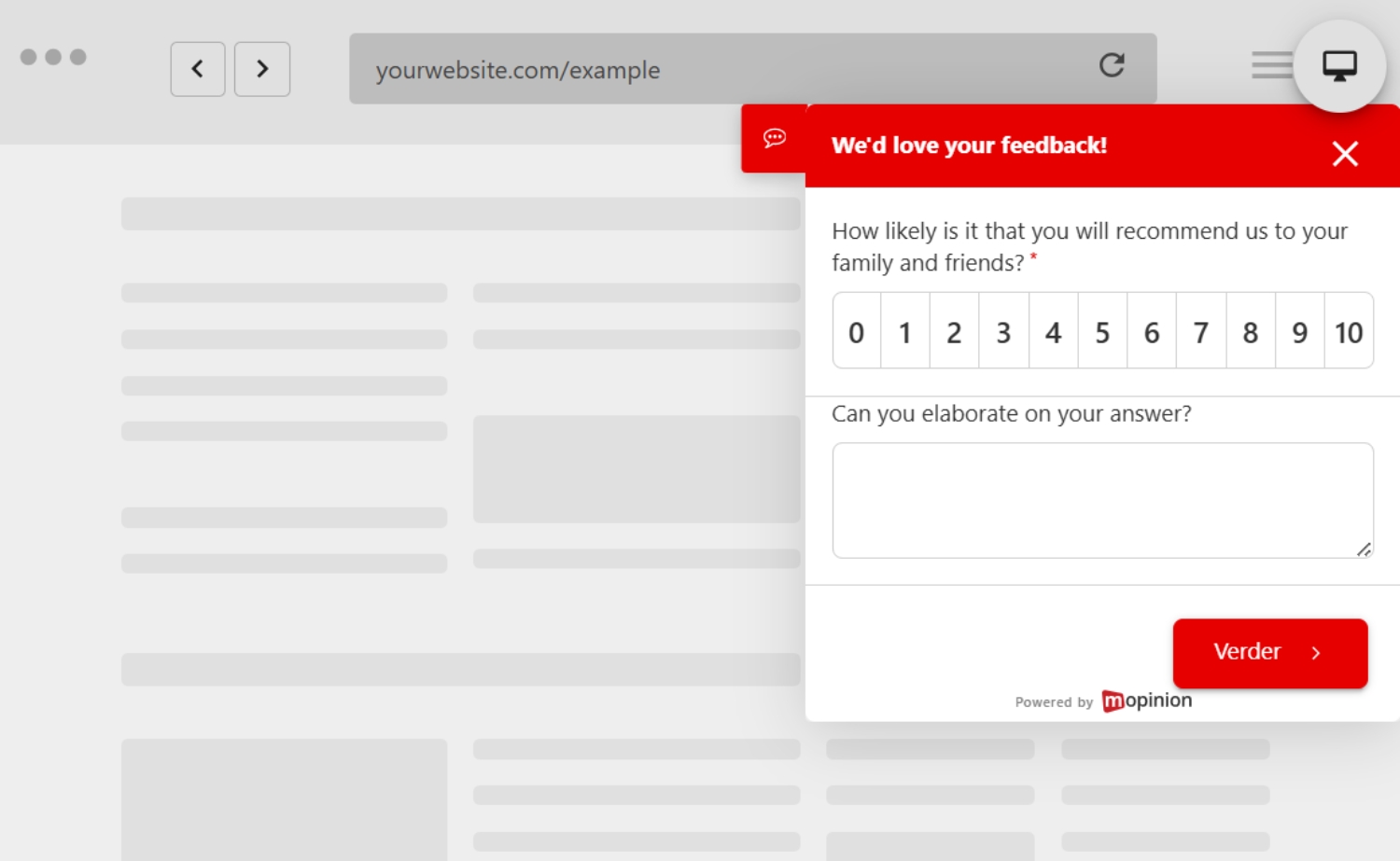
NPS survey software is a tool that helps businesses create, distribute and analyse Net Promoter Score surveys.
A standard NPS survey asks:
How likely are you to recommend our company, product or service to a friend or colleague?
Respondents answer on a scale from 0 to 10 and are grouped into three categories:
Promoters give a score of 9 or 10. These customers are usually loyal, satisfied and more likely to recommend your brand.
Passives give a score of 7 or 8. These customers are generally satisfied, but not necessarily loyal.
Detractors give a score between 0 and 6. These customers may be unhappy, frustrated or at risk of leaving.
The Net Promoter Score is calculated by subtracting the percentage of detractors from the percentage of promoters. According to the official Net Promoter System, NPS is designed to help organisations understand customer loyalty and use that feedback to improve customer relationships.
However, the score alone does not tell the full story. A good NPS survey tool also helps you collect follow-up comments, segment responses, identify trends and understand what is driving loyalty or frustration.
Why use NPS software?
You can run a basic NPS survey with a simple form or spreadsheet, but this quickly becomes difficult to manage when feedback comes in from different channels, customer segments and touchpoints.
NPS software makes the process easier by helping teams collect feedback at key moments in the customer journey, analyse responses in one place and share insights with the people who can act on them.
This is especially useful when different teams need to work with the same feedback. CX teams may want to understand overall loyalty. Product teams may want to know whether certain features influence satisfaction. Customer success teams may want to follow up with detractors. Marketing teams may want to understand what turns customers into promoters.
In other words, NPS software helps organisations move from simply measuring customer loyalty to improving it.
What to look for in NPS software
Before choosing an NPS survey tool, it helps to look at more than whether it can ask the NPS question.
The best NPS software should help your team collect the right feedback, understand the meaning behind the score and act on the insights.
Multi-channel feedback collection
Your customers interact with your brand across different channels, so your NPS survey software should support the channels that matter most to your customer journey.
This could include your website, mobile app, product interface, email campaigns, customer portal or post-support communication.
For digital teams, this is where website feedback surveys and email feedback can be especially useful. They help teams collect feedback in the channel where the customer experience is actually happening.
Customisable NPS surveys
Your NPS survey should match your brand, tone of voice and customer experience. Look for software that lets you customise the survey design, wording, follow-up questions and targeting rules.
This helps the survey feel like a natural part of the customer journey rather than a generic interruption.
Follow-up questions
The score tells you what customers feel. The open-text answer tells you why.
A good NPS survey usually includes a follow-up question such as:
What is the main reason for your score?
This gives customers the chance to explain their answer and gives your team more useful context.
Segmentation and reporting
NPS becomes much more useful when you can break it down by customer type, product, lifecycle stage, location, channel or behaviour.
For example, your overall NPS may look stable, while new customers are struggling during onboarding. Or one product line may be performing much better than another.
Segmentation helps teams understand where loyalty is strong and where improvement is needed.
Open-text analysis
Open-text responses are often where the most useful insights are hidden.
For example, two customers may both give a score of 6, but for completely different reasons. One may be frustrated by delivery. Another may be unhappy with unclear product information. Another may have struggled with your website checkout.
That is why scores should be combined with open feedback. As explained in our blog on customer feedback strategy, metrics such as NPS, CSAT and CES are useful for tracking patterns, but open feedback adds the context teams need to understand what is shaping the experience.
Integrations and workflows
NPS feedback becomes more valuable when it connects to the tools your team already uses, such as CRM systems, analytics platforms, customer support tools, project management tools and collaboration platforms.
This helps teams connect feedback to customer profiles, product behaviour, support history and business outcomes.

Best NPS software and NPS survey tools
We selected the NPS survey software options below based on their relevance to customer feedback, NPS survey collection, digital experience, customer experience and product experience use cases.
This list does not rank tools by price or claim that one platform is objectively better than another. Instead, it highlights where each NPS survey tool may fit depending on your team’s needs.
1. Mopinion – NPS survey software for digital feedback across websites, apps and email
Mopinion is a user feedback platform that helps digital teams collect feedback across websites, mobile apps and email campaigns.
Teams can use Mopinion to create and manage NPS surveys alongside other feedback forms and customer experience metrics.
For digital-first teams, Mopinion is especially useful because teams can collect NPS feedback in context. Organisations can ask for feedback on specific website pages, inside digital journeys, in mobile apps or through email campaigns, rather than relying only on general customer surveys.
Mopinion also offers customisable feedback forms, targeting options, dashboards and integrations. These features help teams analyse NPS feedback and connect it to wider digital experience improvements.
As part of Netigate, Mopinion also fits into a broader experience management ecosystem, helping organisations connect digital feedback with wider customer and employee experience insights.
Mopinion is a good fit for digital CX, UX, product and marketing teams that want to collect NPS feedback where the customer experience actually happens.
Interested? Start your free trial today or request a demo.
2. Netigate – NPS survey software for broader experience management
Netigate is a survey and experience management platform that helps organisations collect and analyse feedback from customers, employees and other stakeholders.
For NPS surveys, Netigate can help organisations measure loyalty across different relationships, including customer NPS, employee NPS and product NPS. This makes it relevant for organisations that want to measure loyalty across the wider experience, rather than treating NPS as a standalone score.
Netigate is a good fit for organisations that want to measure NPS as part of a broader feedback programme. This may include customer experience, employee experience and wider survey initiatives.
This makes it relevant for teams that want to combine NPS surveys with other feedback methods, reporting and AI-supported analysis.
Website: www.netigate.net
3. Qualtrics – NPS survey software for enterprise customer experience programmes
Qualtrics is an experience management platform with customer experience solutions that support NPS surveys and broader CX programmes.
It is often a strong fit for larger organisations with more complex customer experience needs. This may include multiple teams, advanced reporting requirements, governance needs and large-scale feedback programmes.
As a broad experience management platform, Qualtrics may be best suited to teams that want to manage NPS as part of a wider customer experience strategy.
For organisations looking for a simpler way to collect NPS feedback, a more focused survey tool may be a better fit for their day-to-day needs. However, Qualtrics can be a strong option when NPS is part of a larger customer experience programme.
Website: www.qualtrics.com
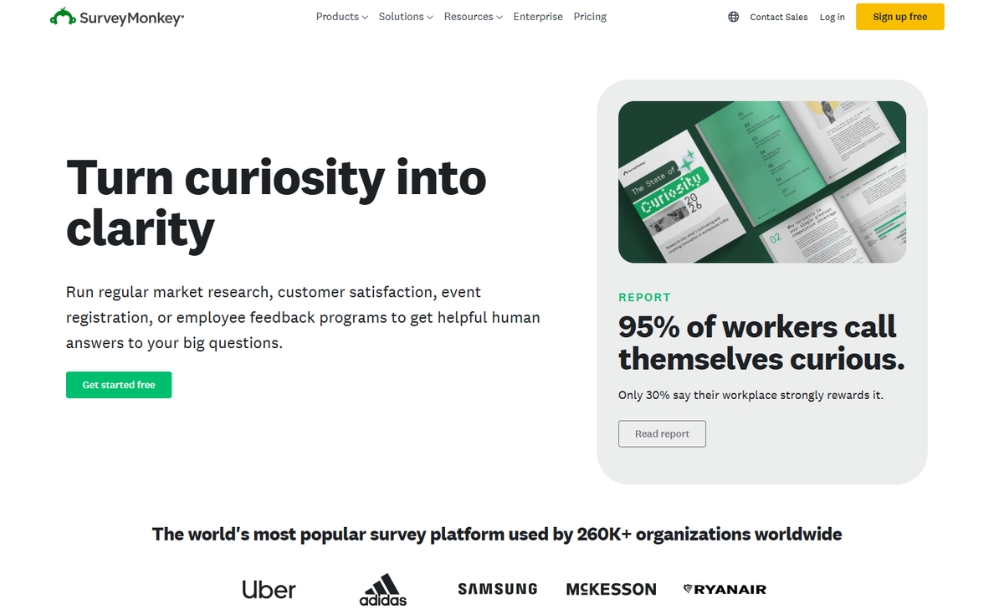
4. SurveyMonkey – NPS survey software for general survey creation
SurveyMonkey is a well-known survey platform that can be used to create NPS surveys, customer feedback surveys and other types of questionnaires.
For teams that need a familiar and easy-to-use survey tool, SurveyMonkey can be a practical option. It offers survey creation, templates, analytics and team collaboration features.
SurveyMonkey may be useful for teams that want to run NPS surveys alongside other research or feedback projects. It can work well for general NPS collection, especially for teams already using SurveyMonkey for other survey needs.
Teams with more specific digital feedback, journey-based targeting or in-product feedback requirements may want to compare SurveyMonkey with tools that focus more specifically on those use cases.
Website: www.surveymonkey.com
5. AskNicely – NPS survey software for service and frontline teams
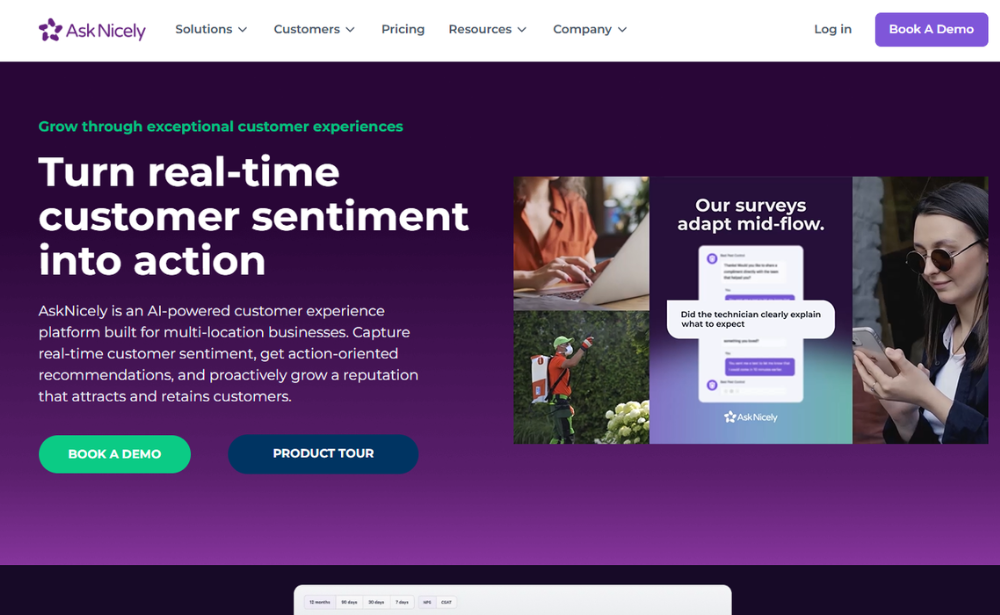
AskNicely is customer experience software focused on helping service businesses collect feedback and turn it into action.
Its NPS software focuses on automated surveys, real-time feedback and helping teams close the feedback loop. This makes AskNicely relevant for service-led businesses and frontline teams that need fast visibility into customer feedback.
For example, teams can use NPS feedback to understand how customers experience individual interactions, locations, teams or service moments.
AskNicely may be a good fit for organisations that want customer feedback to be visible to the people closest to the customer, so they can act quickly and improve the experience.
Website: www.asknicely.com
6. Survicate – NPS survey software for multiple digital channels
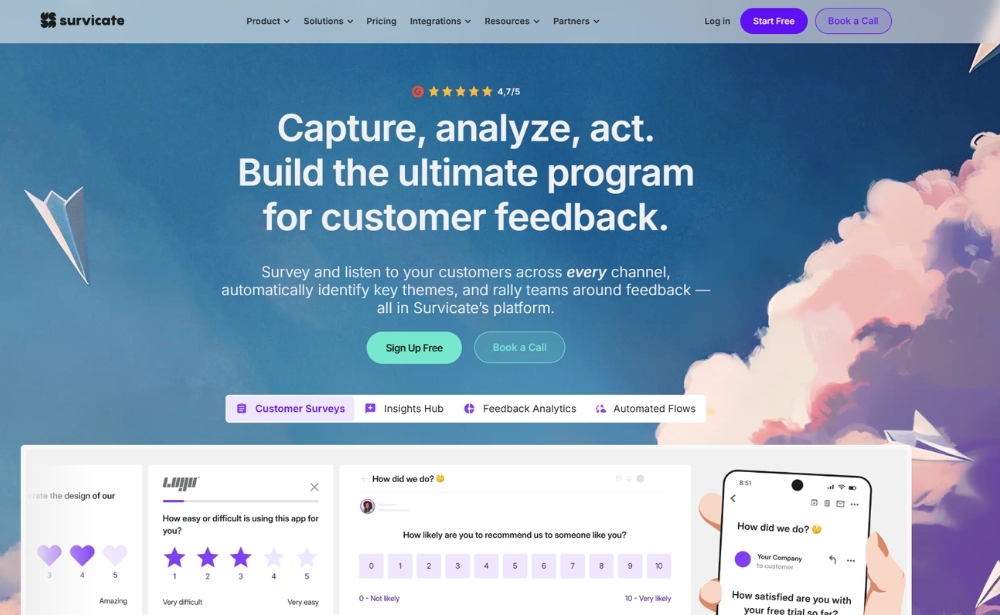
Survicate is a customer feedback platform that supports NPS surveys across multiple digital channels, including website, email and product experiences.
Its NPS survey software focuses on contextual surveys, multichannel feedback collection and no-code integrations. This makes it relevant for product, marketing and customer experience teams that want to collect feedback across different digital touchpoints.
Survicate can be used to collect NPS feedback at different digital touchpoints, such as when users are browsing a website, using a product or receiving an email.
This flexibility makes it a practical option for teams that want to run NPS surveys in more than one channel.
Website: www.survicate.com
7. Retently – NPS survey software for ecommerce and retail feedback
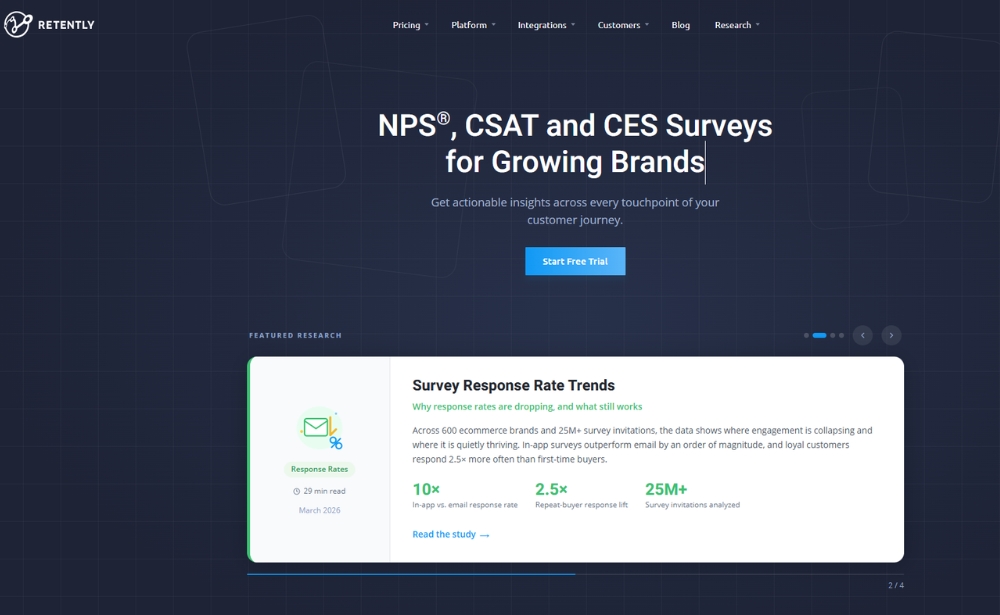
Retently is a customer feedback platform focused on NPS, CSAT and CES surveys.
Retently’s website highlights use cases for customer feedback, including NPS, CSAT and CES surveys, feedback collection across customer touchpoints and AI-supported analysis of customer responses.
Retently may be a good fit for teams that want to connect NPS surveys with post-purchase feedback, customer satisfaction, customer effort and other customer journey insights.
For example, teams may use Retently to collect feedback after purchase, delivery, support interactions or other important customer journey moments.
Website: www.retently.com
8. Medallia – NPS software for enterprise experience management
Medallia is an experience management platform that supports a range of customer and employee experience programmes.
For NPS, Medallia positions the metric as a way to measure customer loyalty and understand how likely customers are to recommend a company, product or service. Its wider platform focuses on capturing feedback and turning it into insights across different experience areas.
Medallia may be a good fit for larger organisations that need NPS as part of a broader enterprise experience management setup. This can include customer feedback, employee feedback, journey insights and operational workflows, depending on the organisation’s setup and needs.
For teams looking for a simpler NPS survey setup, a more focused tool may be a better fit for their day-to-day needs. However, Medallia can be a strong option when NPS is part of a larger enterprise experience management strategy.
Website: www.medallia.com

How to choose the right NPS software
The best NPS survey software depends on how your team collects feedback, who needs to use the insights and what you want to do with the results.
Start by looking at your main feedback channels.
If your main focus is digital experience, look for software that supports website, app and email feedback collection. This helps you ask for feedback in context, instead of only sending a generic survey after the customer journey has already happened.
Next, consider whether you need more than NPS.
Many teams also use CSAT to measure satisfaction after a specific interaction. CES can help teams understand how easy it was to complete a task, while open-text feedback explains what customers actually experienced.
You can read more about this in our guide to customer experience metrics.
NPS survey best practices
Choosing the right NPS survey software is only part of the process. You also need to ask the right question at the right time and use the results properly.
Keep the survey short. Start with the score question, then ask one clear follow-up question, such as:
What is the main reason for your score?
This gives customers the chance to explain their answer without making the survey feel too long.
Timing also matters. Avoid asking customers for NPS feedback too early, before they have had enough experience with your product or service.
Good moments to ask include after onboarding, after a purchase, after delivery, after a support interaction or after using a key product feature.
Once the feedback comes in, do not focus only on the score.
Look at the follow-up comments, recurring themes and customer segments behind the number. This is where you will find the insights that help your team take action.
It is also important to close the loop with customers.
If someone gives a low score and explains why, follow up when appropriate. This shows customers that your team takes their feedback seriously. It also gives you a chance to fix issues before they lead to churn.
For more examples of how to ask better feedback questions, read our guide to customer feedback survey questions.
Common mistakes to avoid with NPS surveys
NPS surveys are simple to launch, but a few common mistakes can reduce the quality of your insights.
One mistake is asking too often. If customers receive too many survey requests, they may ignore them or give rushed answers. Set clear rules around survey frequency so customers are not asked for feedback too often.
Another mistake is asking without context.
A generic NPS survey can be useful, but contextual feedback is often more actionable. For example, asking for feedback after a specific product interaction, support moment or digital journey can help your team understand exactly what influenced the customer’s response.
It is also important not to ignore passives. Promoters and detractors often get the most attention, but passives can still reveal valuable opportunities. They may be satisfied for now, but not loyal enough to recommend you.
The biggest mistake is measuring without acting. Customers take the time to share their opinion. If your team never follows up, never analyses the comments and never uses the insights to improve the experience, the survey loses its value.
Final thoughts
NPS software helps businesses understand customer loyalty, but the real value comes from how teams use the feedback.
The best NPS tools make it easy to collect feedback across the right channels, understand the reasons behind each score and turn insights into action.
For digital-first teams, Mopinion is a strong choice because it helps collect NPS feedback across websites, apps and email campaigns. For broader experience management, Netigate is a good option for organisations that want to connect NPS with customer and employee feedback programmes.
Whichever tool you choose, remember that NPS is not just about tracking a number. It is about understanding your customers, improving their experience and building stronger long-term relationships.
Frequently Asked Questions – NPS Survey
NPS software helps businesses create, send and analyse Net Promoter Score surveys. These surveys ask customers how likely they are to recommend a company, product or service. The software also helps teams review comments, segment responses, spot trends and follow up with customers.
The best NPS software depends on your feedback goals, channels and team needs. For digital-first teams, Mopinion is a strong choice because it helps collect NPS feedback across websites, mobile apps and email campaigns. Other tools, such as Netigate, Qualtrics, SurveyMonkey, AskNicely, Survicate, Retently and Medallia, may also be useful depending on your use case.
A good NPS survey tool should support the channels where your customers interact with your brand, such as your website, app, product interface, email campaigns or customer portal. It should also offer customisable surveys, follow-up questions, segmentation, reporting, open-text analysis, integrations and secure data handling.
NPS software is useful because it helps teams understand more than the score. It shows why customers give certain ratings, reveals recurring issues, compares feedback across segments and helps teams take action based on customer insights.
NPS surveys should be sent often enough to track customer loyalty, but not so often that customers feel overwhelmed. The best timing depends on the customer journey. Common moments include after onboarding, after a purchase, after delivery, after a support interaction or after a customer has used a key product feature.
General survey software can be used to create many types of surveys, including NPS surveys. NPS software focuses more specifically on collecting, analysing and acting on Net Promoter Score feedback. Depending on the tool, this may include automated surveys, dashboards, segmentation, trend analysis and workflows for closing the feedback loop.
Ready to see Mopinion in action?
Want to learn more about Mopinion’s all-in-1 user feedback platform? Don’t be shy and take our software for a spin! Do you prefer it a bit more personal? Just book a demo. One of our feedback pro’s will guide you through the software and answer any questions you may have.