

Choosing the right product feedback tool can make the difference between simply collecting customer opinions and actually using them to build a better product.
The best product feedback software helps teams capture feedback at the right moment, understand what users need or struggle with, identify recurring issues and turn those insights into product decisions. But not every tool approaches this in the same way. Some specialise in website and in-app feedback, while others focus on feature requests, product analytics, roadmapping or usability testing.
In this guide, we compare the best product feedback tools available in 2026, looking at what each platform does best, the types of feedback it collects, its standout features and pricing.
TL;DR – Article summary
- Product feedback tools help teams collect, analyse and act on feedback throughout the product experience.
- The right platform depends on how and where you want to collect feedback, whether that is directly inside your website or app, through feature requests, customer conversations or user research.
- Look beyond basic survey functionality. Targeting, integrations, feedback analysis, AI capabilities and ways to turn insights into action can make a major difference.
- Some platforms specialise specifically in product feedback, while others combine feedback with product analytics, customer success, roadmapping or usability testing.
- This guide compares the leading product feedback tools in 2026 to help you find the best fit for your product team.
What is a product feedback tool?
A product feedback tool is software that helps teams collect, organise and analyse feedback about a product or digital experience. Product managers, UX teams and other digital teams can use these insights to understand user needs, uncover friction and make better-informed product decisions.
Product feedback can come from many different sources. Depending on the platform, this might include:
- Website and in-app surveys
- Feature requests and voting boards
- NPS, CSAT and other feedback surveys
- Open-text feedback
- Bug reports and visual feedback
- Customer support conversations
- User interviews and usability tests
- Behavioural and product usage data
What matters is not simply collecting more feedback, but collecting the right feedback from the right users at the right point in their journey and having a way to turn that data into useful insights.
What should you look for in a product feedback tool?
The best product feedback tool for your team depends on what you want to learn and how you intend to use the insights.
For example, a product team that wants to understand why users abandon a particular feature will need something very different from a team looking to manage hundreds of feature requests.
When comparing product feedback software, consider:
- Feedback collection: Can you gather feedback on the channels that matter to you, such as your website, web app, mobile app or email?
- Targeting: Can you ask specific users for feedback based on behaviour, page, device, customer segment or stage in the journey?
- Analysis: Does the platform help you identify themes, sentiment and trends without manually reviewing every response?
- Product context: Can feedback be connected to pages, features, journeys, customer profiles or behavioural data?
- Prioritisation and action: Can teams turn feedback into actions, feature requests, alerts or roadmap decisions?
- Integrations: Does it connect with the analytics, CRM, project management and communication tools your teams already use?
- Scalability and governance: Does it provide the security, user management and data controls required as your feedback programme grows?
The relative importance of these features will depend on your use case.
Which type of product feedback tool do you need?
Product feedback software generally falls into several overlapping categories.
Digital and in-app feedback tools help you capture feedback directly within websites, web applications and mobile apps. They are particularly useful when you want feedback tied to a specific page, feature, interaction or moment in the user journey.
Feature request and product discovery tools focus on gathering ideas, managing feature requests and helping teams understand which improvements customers value most.
Product analytics and engagement platforms combine behavioural data with feedback or in-app engagement, helping teams connect what users say with what they actually do inside the product.
User research and usability testing tools are designed for deeper qualitative research, such as prototype testing, usability studies, interviews and task-based testing.
Some platforms span several of these categories, which is why comparing them based on your specific use case is more useful than looking at features alone.
How we evaluated the best product feedback tools
For this comparison, we looked at how relevant each platform is to product and digital teams, the feedback methods it supports, its analysis and AI capabilities, integrations, targeting and segmentation options, product management features and overall use case.
We also considered what each tool is best suited for, rather than treating every platform as interchangeable. A highly specialised feature request tool, for example, may be an excellent choice for roadmap prioritisation but a poor fit for collecting contextual feedback inside a mobile app.
With that in mind, here are the best product feedback tools to consider in 2026.
15 best product feedback tools in 2026
1. Mopinion – Part of Netigate
Best for: Collecting and analysing contextual feedback across websites, web apps, mobile apps and email.
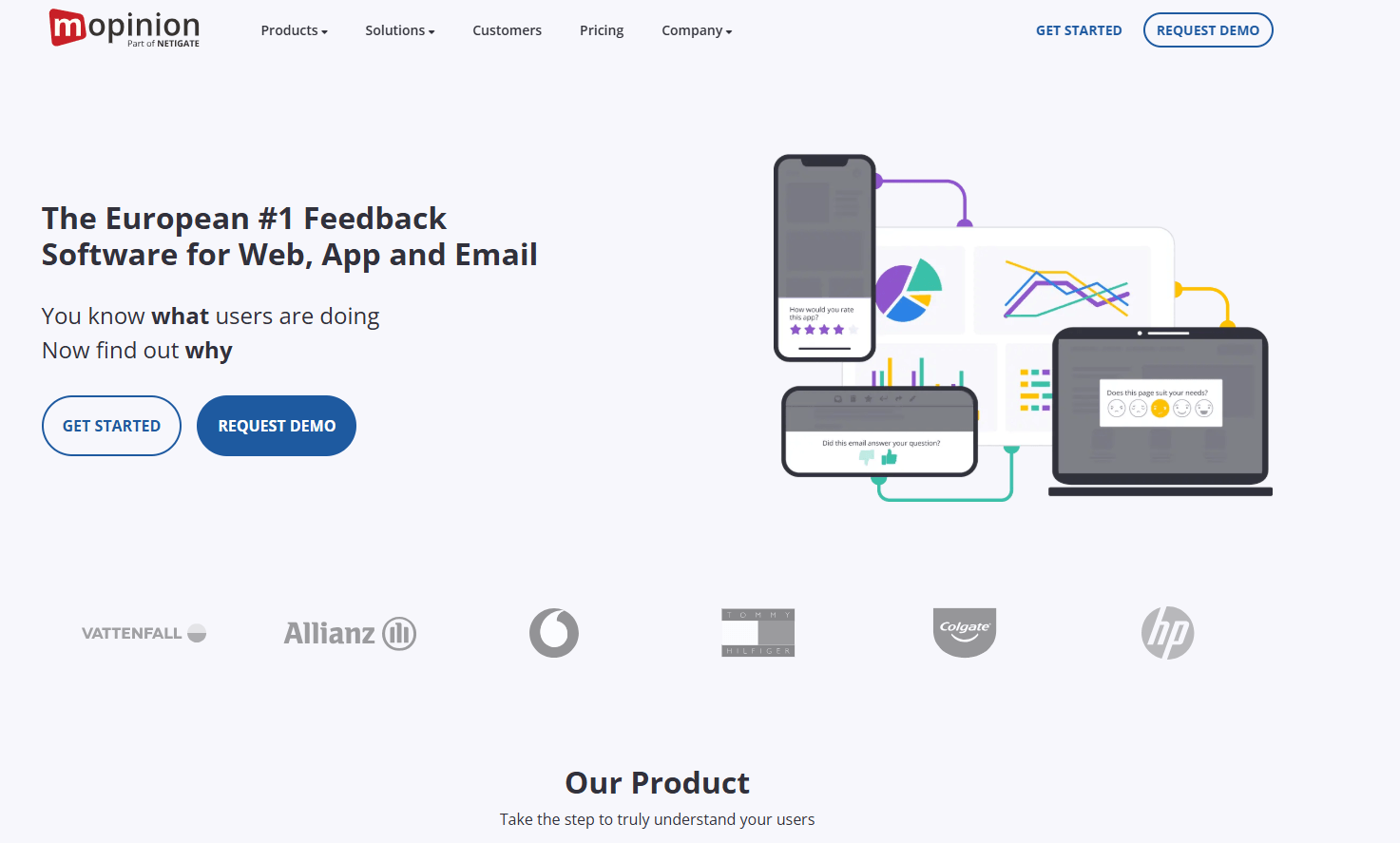
Mopinion is a European digital feedback platform that helps product, UX and digital teams collect feedback directly within the digital experience. Teams can build fully customisable surveys and target them based on factors such as page, URL, user behaviour, device, audience or timing. This makes it particularly useful for gathering feedback on specific features, journeys and moments of friction rather than relying only on general customer surveys.
This kind of advanced feedback form targeting enables teams to ask specific users for feedback at the most relevant point in their journey, while Mopinion’s SDKs and APIs also make it possible to collect contextual mobile in-app feedback.
Once feedback is collected, Mopinion provides real-time reporting, custom dashboards, automated alerts and AI-powered analysis. Features such as Smart Recaps automatically categorise open-text feedback into topics, summarise recurring themes and provide sentiment insights, while Direct Insights automatically builds dashboards based on the questions in a feedback form. This makes it easier to perform AI-powered customer feedback analysis without manually reviewing every individual response.
Mopinion also supports visual feedback, conversational surveys and native mobile feedback through its SDKs, helping teams collect both quantitative and qualitative insights across the digital customer journey.
Pricing: Standard plans start from €279 per month, while Enterprise plans start from €999 per month. Pricing varies according to channels, usage and requirements. See the latest plans on the Mopinion pricing page.
Website: Mopinion
Standout features:
- Advanced behavioural, page and audience targeting
- Website, mobile app and email feedback
- Customisable and conversational feedback forms
- Visual feedback
- AI-powered summaries, topic detection and sentiment analysis
- Automatic and custom dashboards
- Real-time alerts and integrations
- EU-based data storage by default
Interested? Start your free trial today or request a demo.
2. Luciq
Best for: Mobile product teams that want to connect user feedback with bugs, crashes and app performance issues.
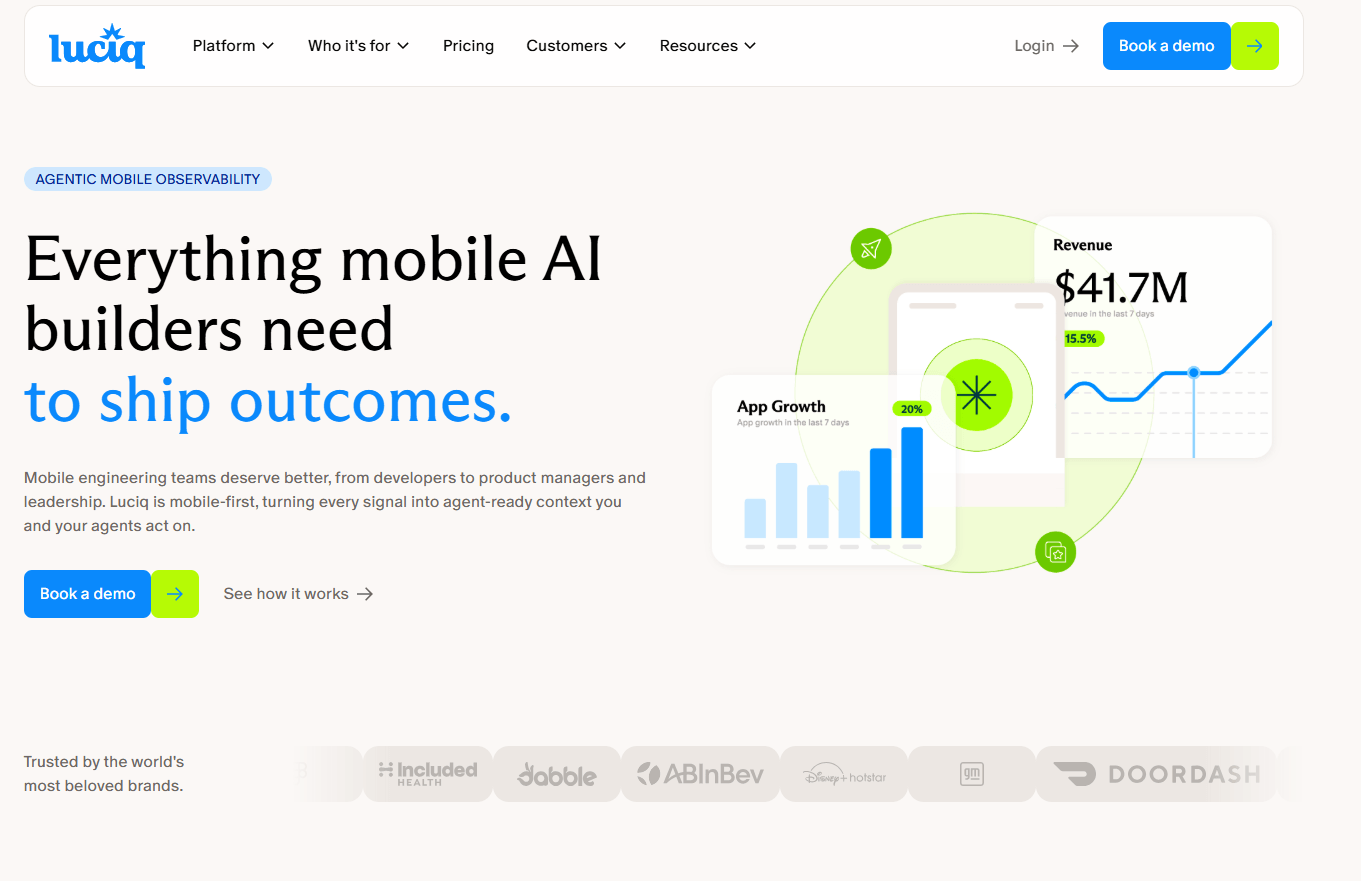
Luciq is a mobile-first platform that combines product feedback with mobile observability. Teams can collect surveys and user feedback directly inside their apps while also capturing technical context around crashes, bugs and performance problems.
This makes Luciq particularly useful when product and engineering teams need to understand not only what mobile users are saying, but also what was happening inside the app when a problem occurred. Its current platform also uses AI to analyse signals such as app reviews, in-app feedback and behavioural issues, helping teams identify and prioritise problems based on their impact.
Pricing: Luciq uses custom pricing based primarily on daily active users and team seats. See the latest details on the Luciq pricing page.
Website: Luciq
3. Intercom
Best for: Product and support teams that want to gather feedback within a broader customer service and in-app communication platform.
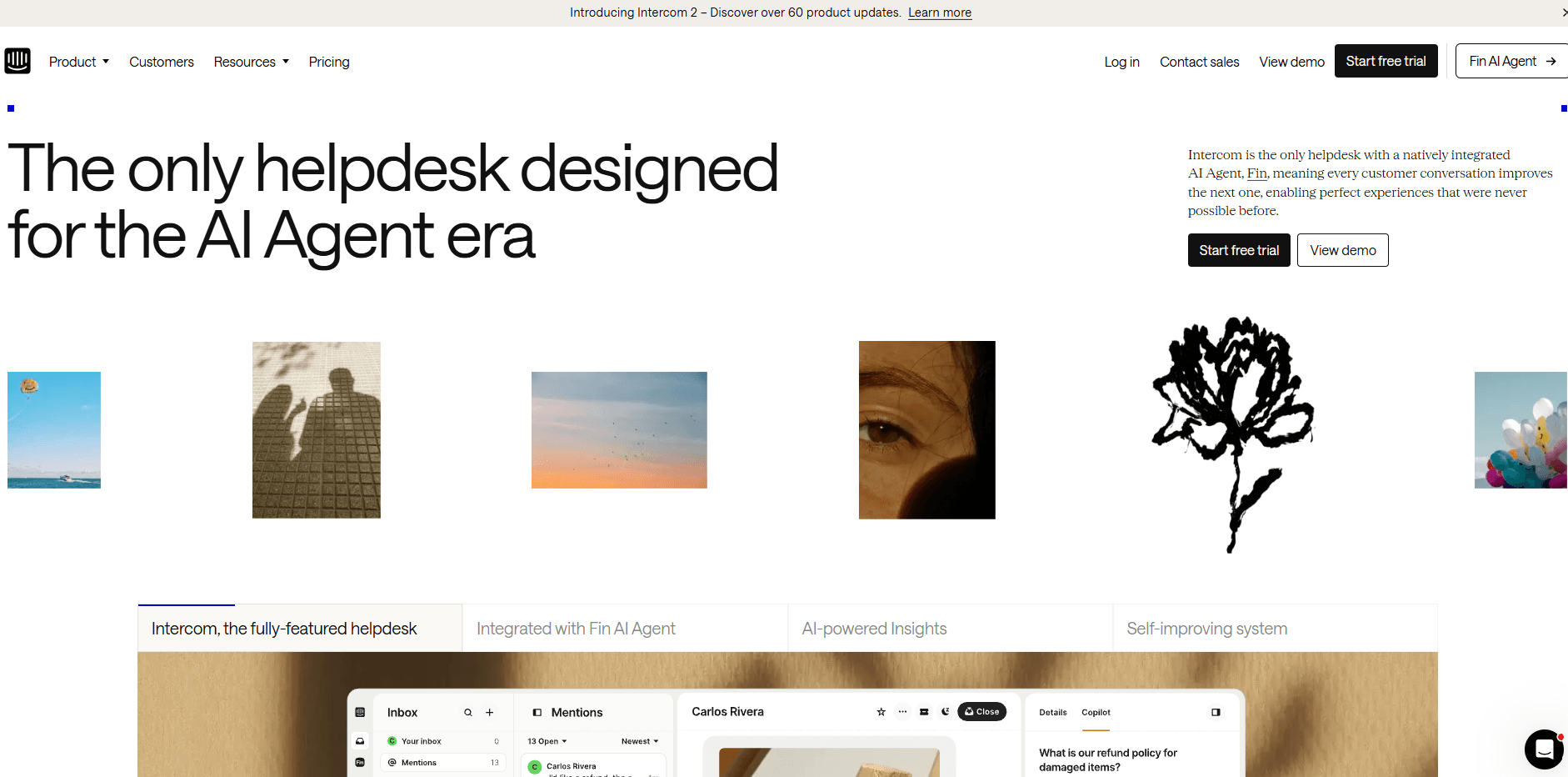
Intercom is an AI-first customer service platform, but its in-app communication capabilities also make it useful for collecting product feedback. Teams can use surveys and targeted in-app messages to ask users about features, onboarding experiences and other parts of the customer journey.
Its main advantage is that feedback can sit alongside customer conversations and support interactions. This can help teams connect survey responses with the wider context of a customer’s relationship with the business. Intercom also offers product tours, posts, checklists and other proactive messaging features, although some of these capabilities are available through additional packages rather than the core helpdesk product.
Pricing: Intercom’s Essential plan starts at $29 per seat per month when billed annually. Additional capabilities such as Surveys and Product Tours are available through Proactive Support Plus. See current plans on the Intercom pricing page.
Website: Intercom
4. Pendo
Best for: Product teams that want to combine customer feedback with product analytics, validation and roadmapping.
Pendo combines product analytics and in-app engagement with its qualitative feedback and discovery capabilities. Its Pendo Listen solution helps teams centralise feedback from sources such as in-product surveys, NPS, support systems, sales conversations and customer-facing idea portals.
AI can be used to summarise qualitative feedback, surface themes and identify duplicate ideas. Product teams can then turn these findings into product ideas, validate them with users and connect them to their broader roadmap.
Because these capabilities sit within the wider Pendo platform, teams can also connect qualitative feedback with product usage, segmentation and behavioural data. This makes Pendo particularly useful for teams looking to combine what users say with what they actually do inside a product.
Pricing: Pendo offers a free tier for smaller deployments, while paid pricing scales based on monthly active users and the functionality included in the plan. See the latest options on the Pendo pricing page.
Website: Pendo
5. Productboard
Best for: Product teams that want to connect customer feedback directly with prioritisation, product strategy and roadmaps.
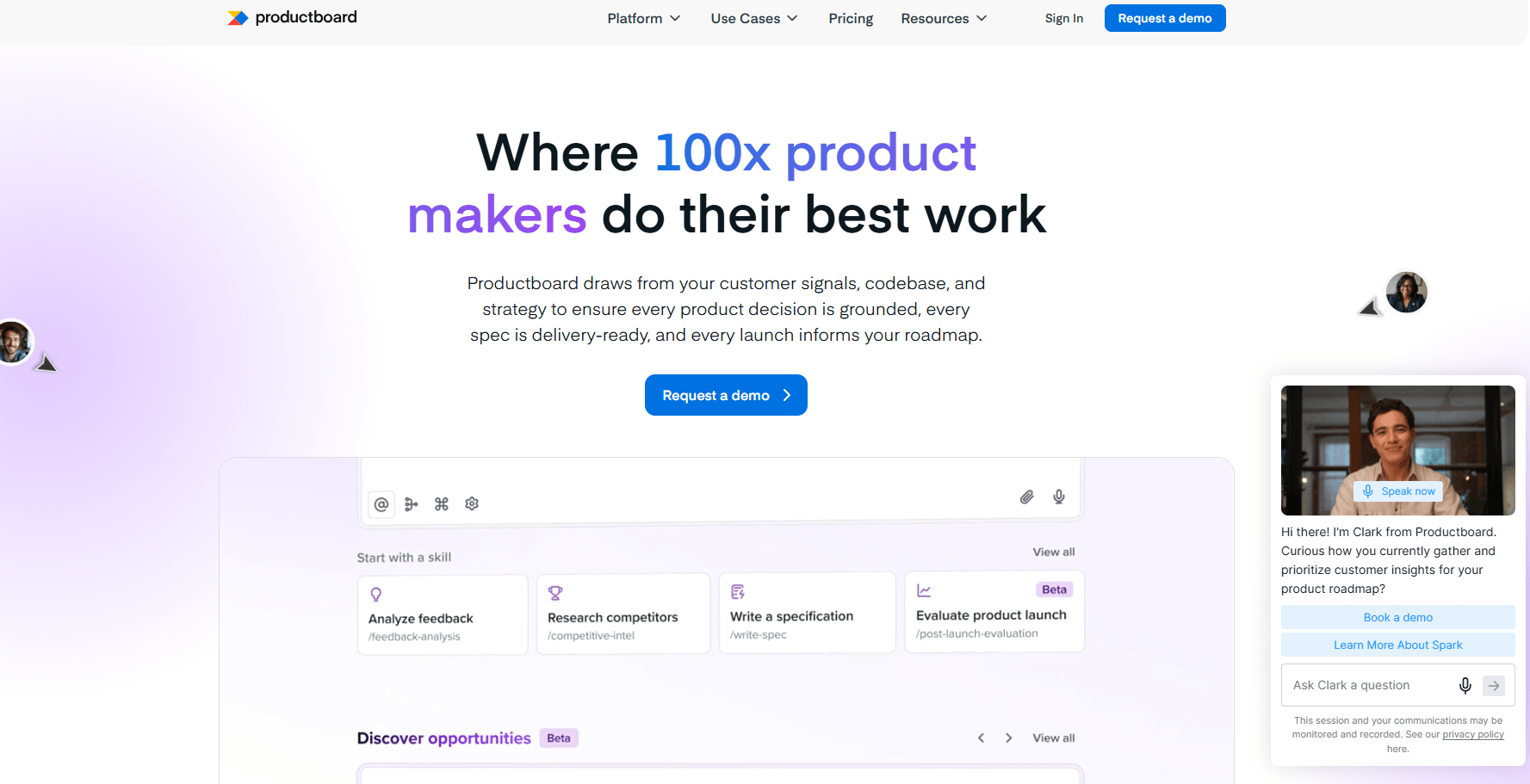
Productboard is an AI-powered product management platform that centralises customer feedback and connects it with feature ideas, product priorities and roadmaps. Feedback can be brought in from sources including customer portals, support tools, review platforms, meeting tools and collaboration systems.
Its AI capabilities are now an important part of the platform. Productboard can help teams analyse customer feedback, identify recurring patterns and opportunities, summarise insights and bring customer context into product specifications and other product management workflows. AI can also help automatically connect feedback with relevant feature ideas, reducing manual tagging and triage.
Pricing: Productboard offers Free, Plus, Business and Enterprise options. Plus starts at $19 per maker per month when billed annually, while Business starts at $59 per maker per month. See the latest packages on the Productboard pricing page.
Website: Productboard
6. Typeform
Best for: Teams that want highly customisable, conversational surveys for product research and feedback.
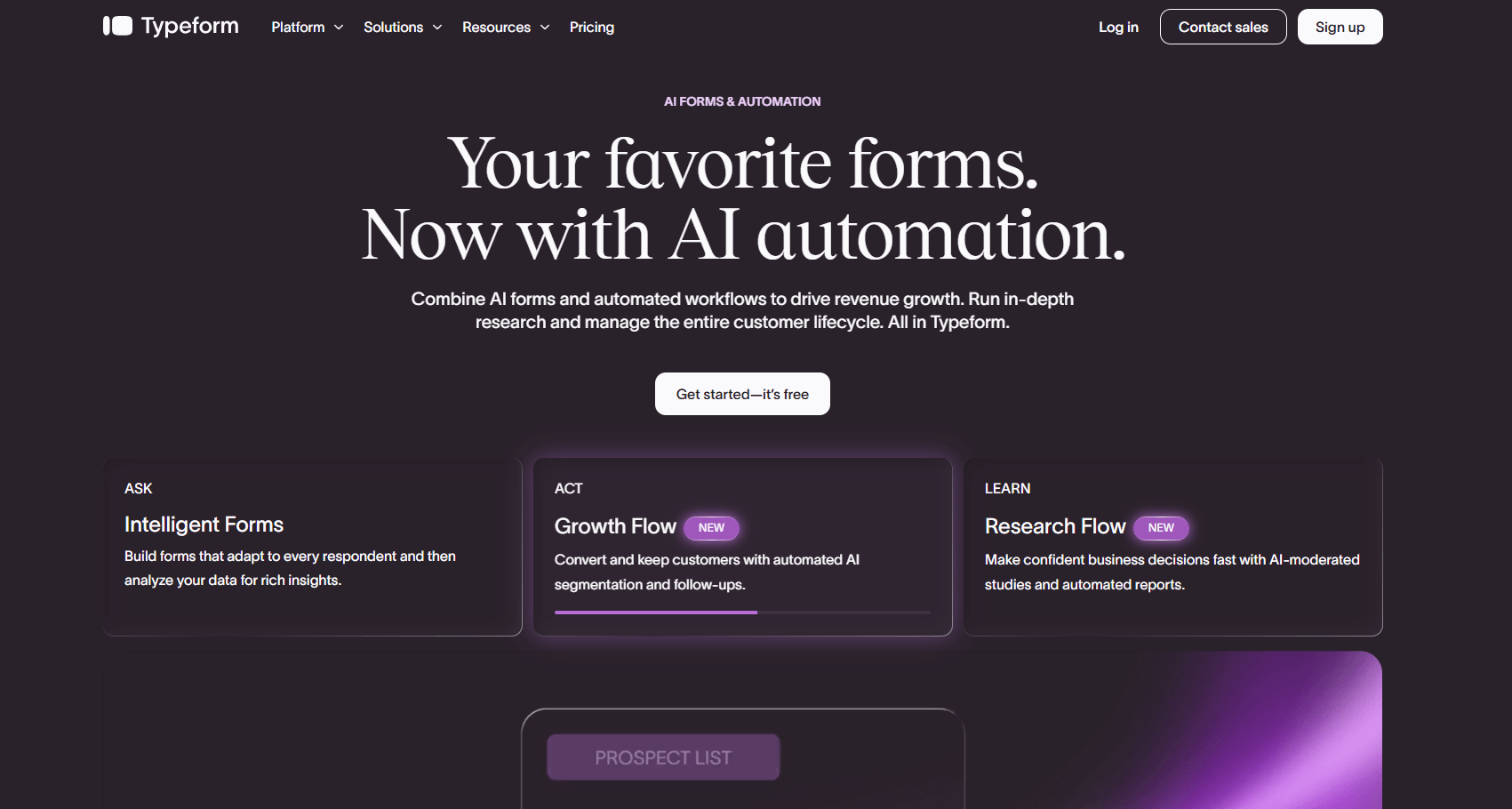
Typeform is a flexible form and survey platform that can be used for everything from product satisfaction and concept testing to feature feedback and customer research. Surveys can be shared through links or embedded into digital experiences, with conditional logic helping teams tailor questions based on previous responses.
The platform has expanded considerably beyond basic online forms and now includes AI-assisted form creation and analysis alongside broader research capabilities.
For product teams, Typeform is strongest when the goal is to create engaging research or feedback surveys. It is less specialised in contextual behavioural targeting and continuous digital feedback than dedicated product feedback platforms.
Pricing: Typeform offers a free plan with limited monthly responses alongside paid plans with higher response limits, greater customisation and additional functionality. Enterprise options are also available. See current pricing on the Typeform pricing page.
Website: Typeform
7. Userpilot
Best for: SaaS product teams that want to combine in-app feedback with product analytics and user engagement.
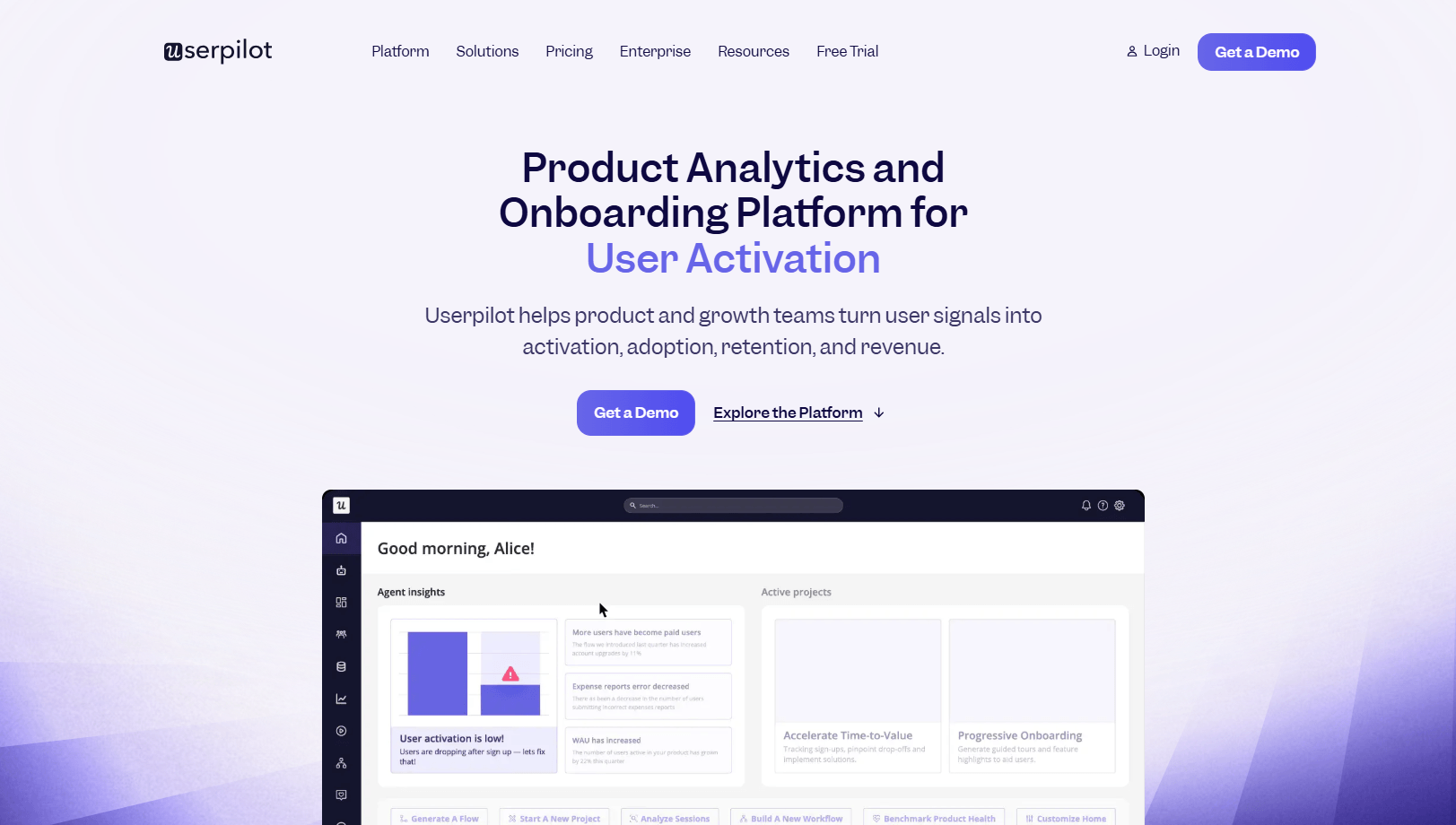
Userpilot is a product growth platform that combines product analytics, in-app experiences and user feedback. Teams can create NPS and other in-app surveys and target them at specific user segments based on attributes and product behaviour.
Its feedback capabilities extend beyond NPS. Userpilot provides survey analysis capabilities for qualitative responses, while feedback can also be connected with CRM systems and other tools. Because surveys sit alongside product analytics and in-app engagement, teams can investigate feedback and then create targeted experiences in response to what they learn.
Pricing: Userpilot’s Starter plan starts at $299 per month and scales according to monthly active users. Growth and Enterprise plans provide additional analytics, engagement and scaling capabilities. See the latest plans on the Userpilot pricing page.
Website: Userpilot
8. Survicate
Best for: Product teams that want straightforward multi-channel surveys with strong in-product targeting.
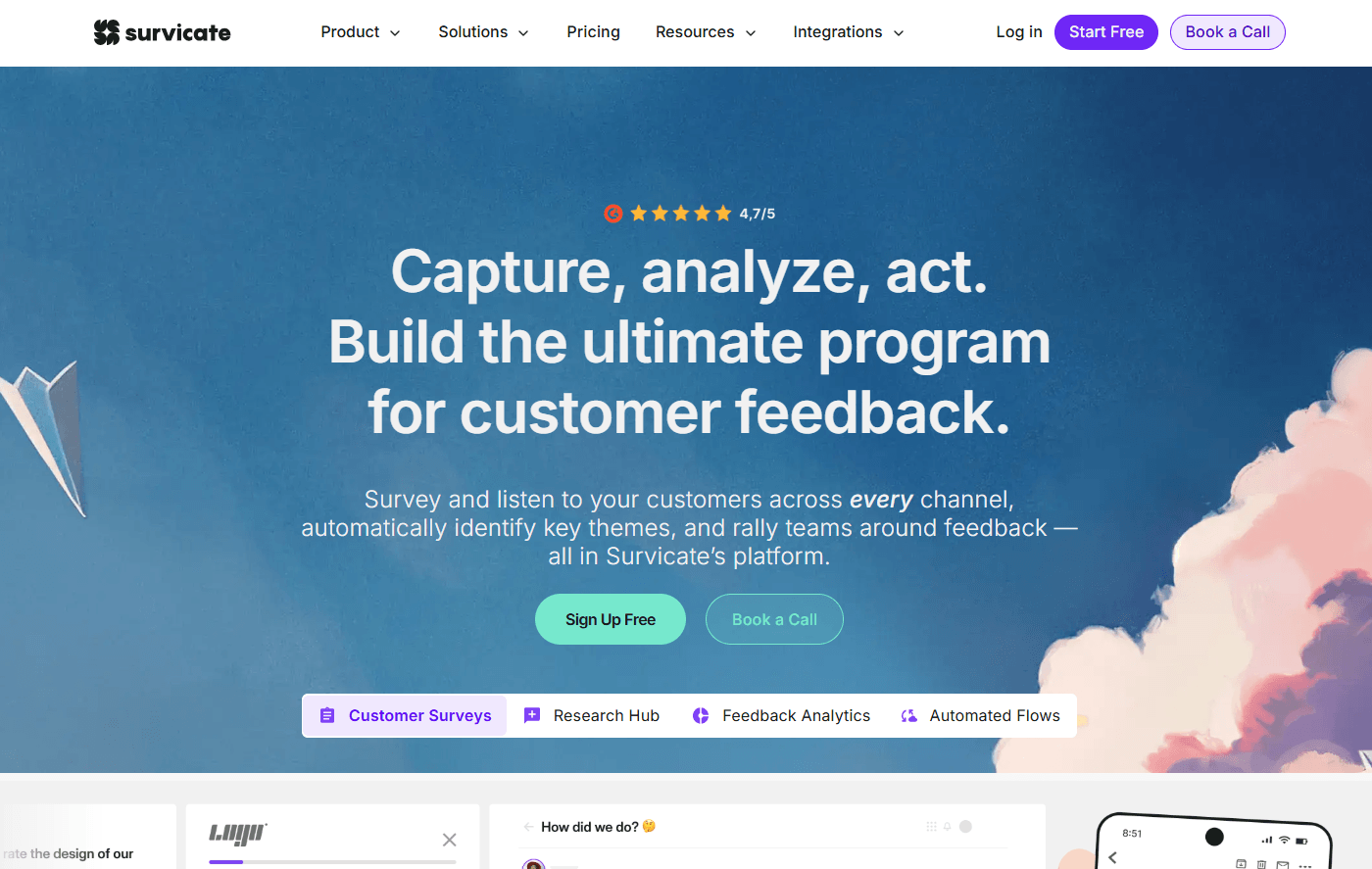
Survicate is a customer feedback platform for collecting feedback across websites, web apps, mobile apps, email and other channels. For product teams, its in-product surveys are particularly useful because they can be targeted using attributes, events and other conditions.
Teams can use surveys to measure metrics such as NPS, CSAT and CES, investigate new features, uncover friction or continuously gather product feedback. Survicate also offers a Research Hub and AI-assisted research capabilities for bringing feedback together, analysing qualitative responses and identifying recurring insights.
Pricing: The Growth plan starts at $114 per month when billed annually, with Pro and Enterprise options for larger or more advanced programmes. A free trial is also available. See the latest options on the Survicate pricing page.
Website: Survicate
9. Sprig
Best for: Product and UX teams that want to connect in-product feedback with user behaviour and research.
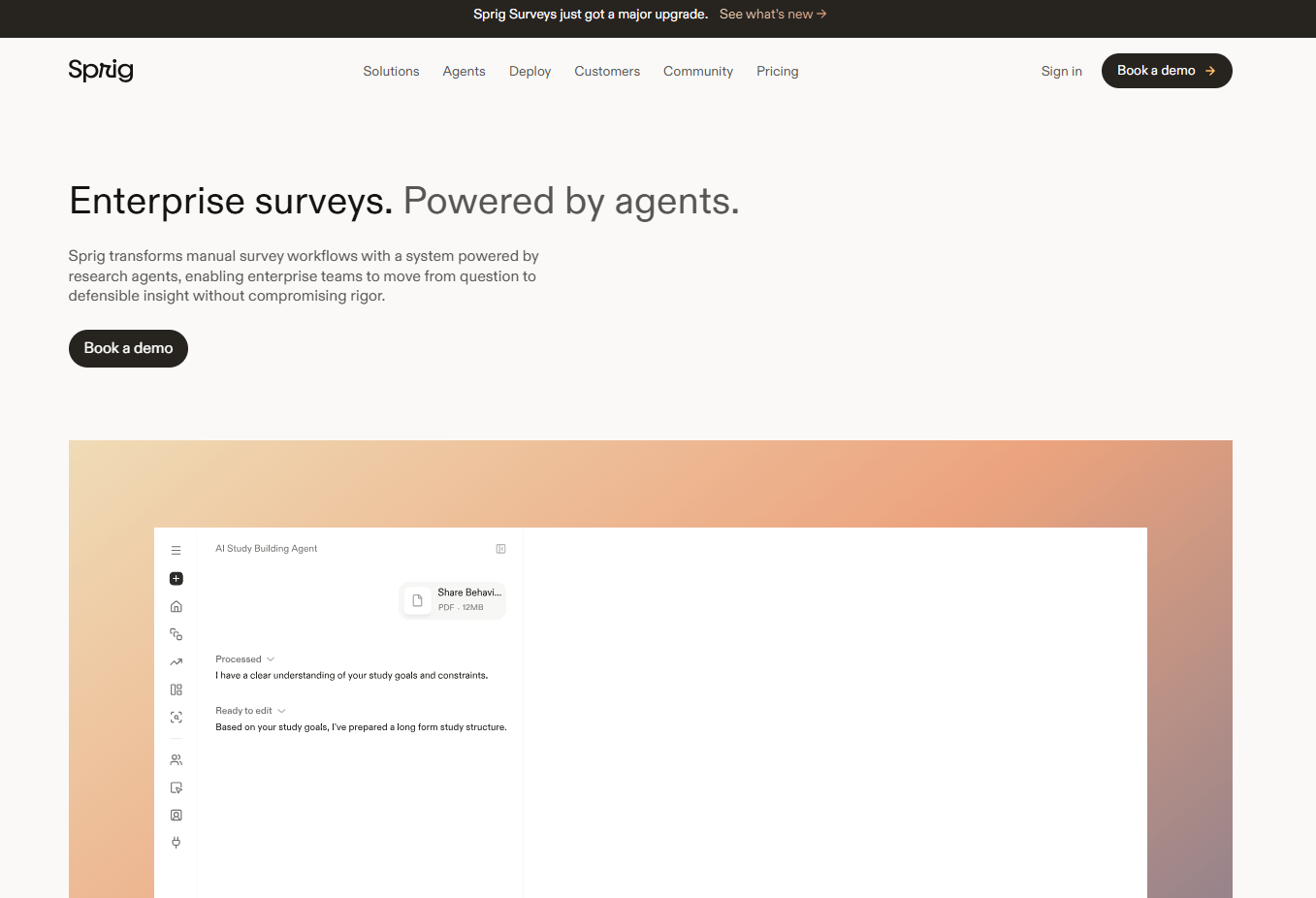
Sprig is a research platform designed to help teams understand what users think and how they behave inside digital products. It supports in-product surveys alongside research capabilities such as session replay and behavioural analysis.
One of Sprig’s useful differentiators is its ability to provide behavioural context around user feedback. Teams can investigate what a user was doing in a digital experience around the time they provided an answer, helping researchers go beyond the survey response itself.
The platform also uses AI to support research design and feedback analysis. This makes Sprig particularly useful for product discovery, UX research and investigating the behavioural context behind feedback, rather than simply tracking customer satisfaction scores.
Pricing: Sprig pricing scales according to research volume, enabled capabilities and deployment channels. See current information on the Sprig pricing page.
Website: Sprig
10. Gainsight PX
Best for: SaaS companies that want to combine product feedback with product analytics, adoption and customer success data.
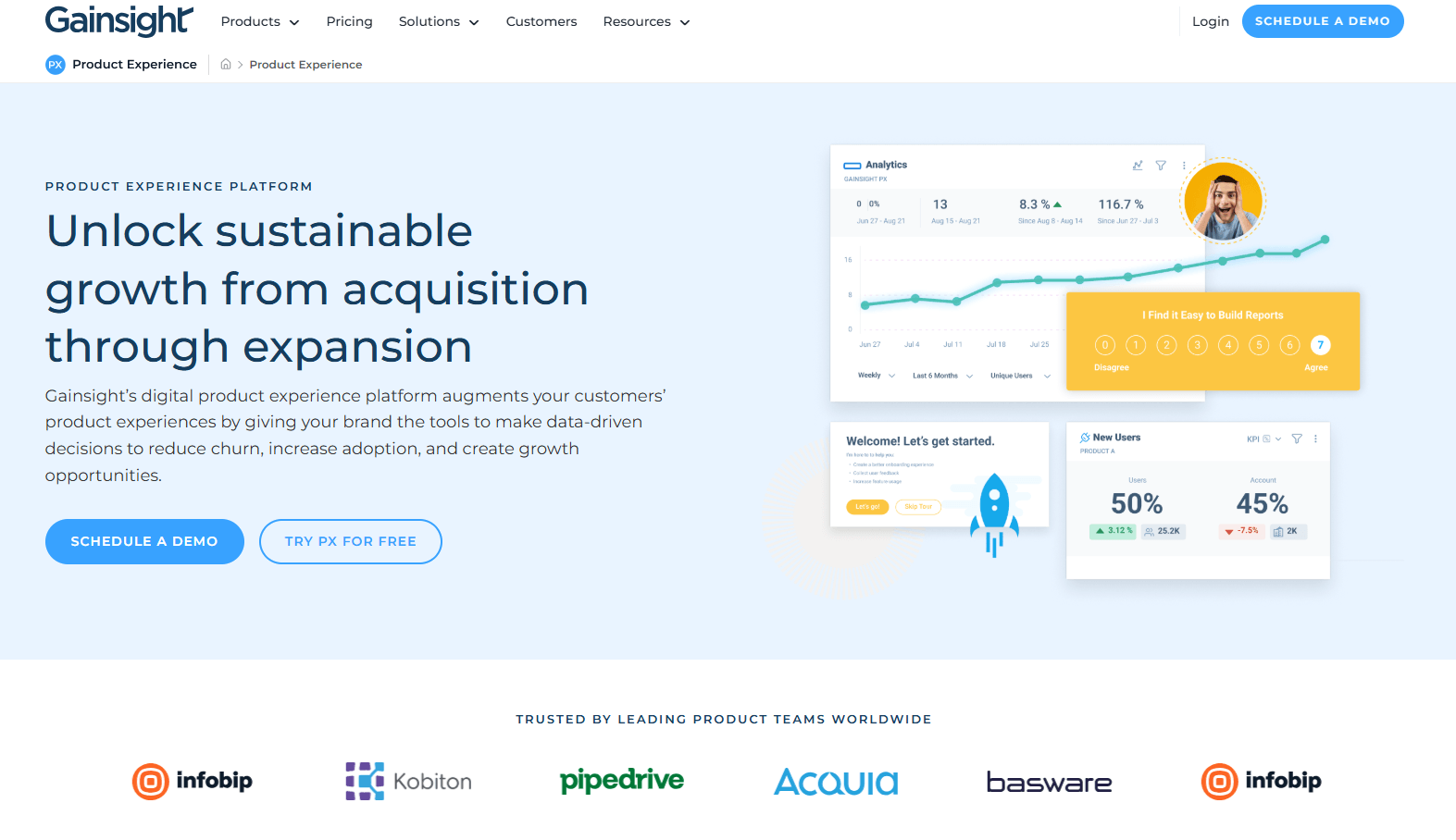
Gainsight PX is a product experience platform focused on understanding product usage and improving adoption. It combines behavioural analytics with in-app engagement and feedback, making it useful for product and customer success teams that want a broader view of how customers experience a SaaS product.
Teams can run in-app surveys using formats such as NPS, CSAT, CES, ratings and multi-question surveys. Feedback can then be viewed alongside behavioural and segmentation data to understand how sentiment differs between different types of users and product experiences.
Gainsight PX also supports onboarding journeys, in-app guidance and targeted interventions based on product behaviour. It is therefore broader than a dedicated product feedback tool, with its strength lying in connecting feedback with product adoption, retention and customer success workflows.
Pricing: Gainsight provides pricing based on the products and requirements selected. See the latest options on the Gainsight pricing page.
Website: Gainsight PX
11. ProdPad
Best for: Product teams that want to turn customer feedback into prioritised ideas and roadmap decisions.
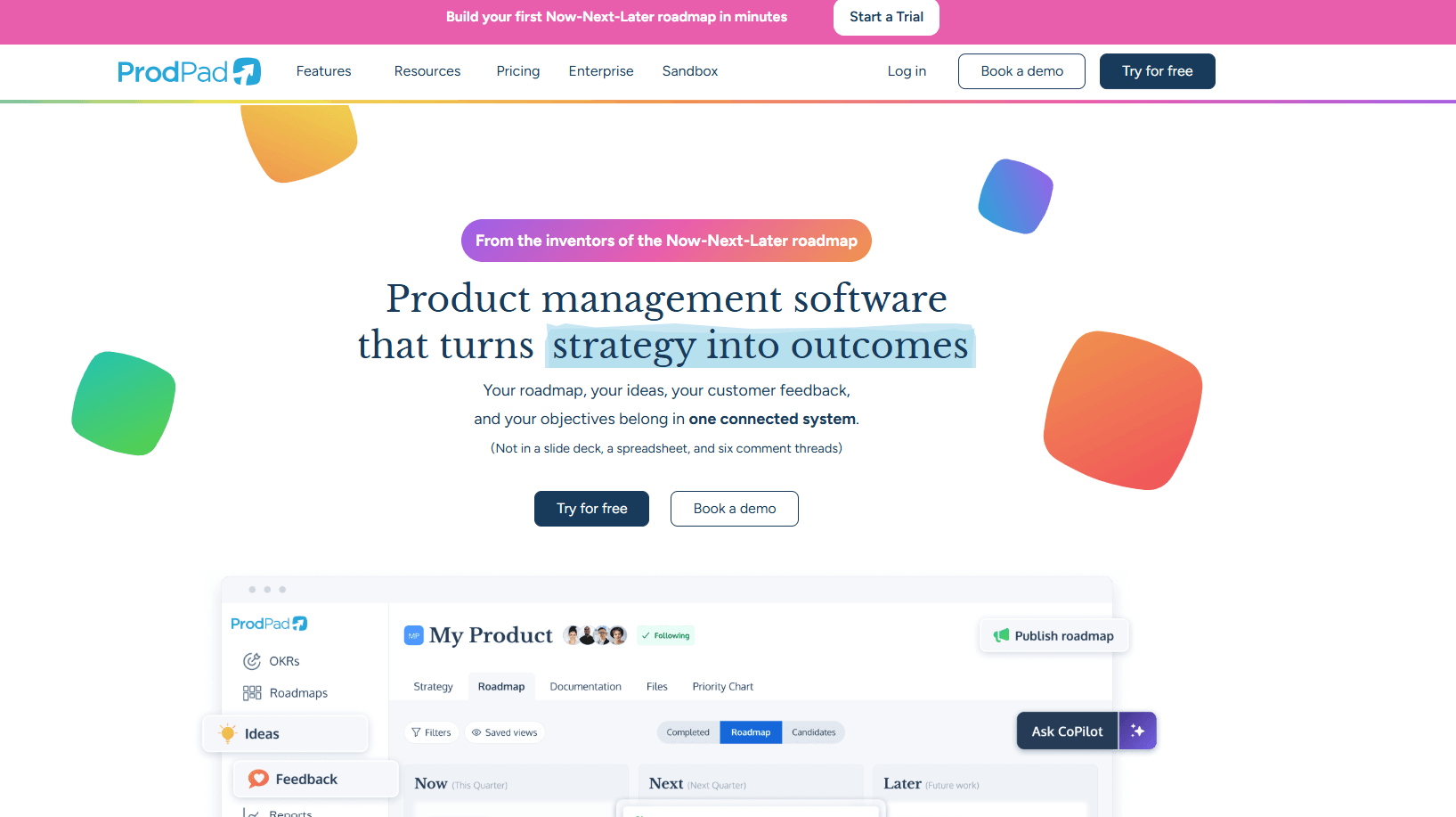
ProdPad is a product management platform that brings customer feedback, product ideas, prioritisation and roadmaps together. Feedback can be captured through customer-facing portals, widgets, email, browser extensions and integrations with CRM and support systems.
Rather than treating feedback as an isolated dataset, ProdPad connects it directly with relevant ideas in the product backlog and roadmap. Its AI capabilities can help teams surface patterns and opportunities across incoming feedback, synthesise customer insights and support other product management tasks.
This makes ProdPad particularly useful for teams whose main challenge is not simply collecting survey responses, but turning a high volume of customer requests and insights into structured product decisions.
Pricing: ProdPad uses modular pricing, allowing teams to build a package around the product management capabilities they need. Annual subscriptions receive a discount compared with monthly billing. See the latest options on the ProdPad pricing page.
Website: ProdPad
12. Canny
Best for: SaaS teams that want to automatically collect feature requests and connect feedback with product priorities and revenue.
Canny is an AI-powered customer feedback management platform covering feedback collection, idea management, customer feedback boards, roadmaps and changelogs.
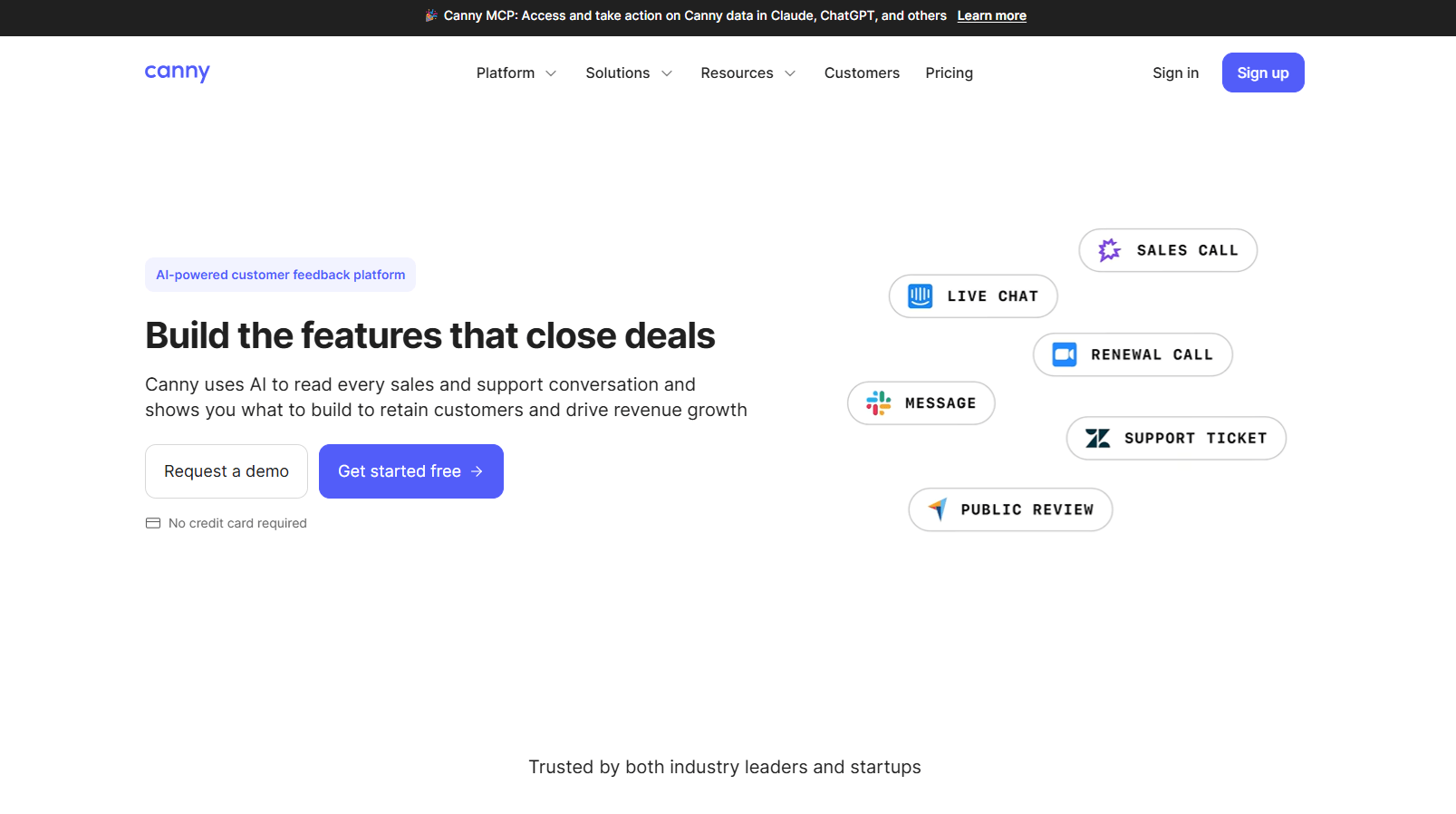
Its Autopilot functionality can automatically detect product feedback within sources such as support conversations and sales calls, capture it, merge duplicate requests and organise it into the appropriate product area. Teams can then analyse demand, segment feedback and connect requests with CRM and revenue data to understand which ideas matter most commercially.
Compared with Canny’s earlier positioning primarily as a feature-voting board, the current platform places much more emphasis on automated feedback capture and analysis across the wider customer conversation.
Pricing: Canny offers a Free plan for up to 25 tracked users. Pro starts at $79 per month when billed annually, while Business uses custom pricing. See the current plans on the Canny pricing page.
Website: Canny
13. UserVoice
Best for: B2B product teams that need to centralise large volumes of feature feedback and prioritise requests using customer and revenue context.
UserVoice is a customer intelligence and feedback management platform designed to bring product feedback from multiple sources into one place. It can centralise input from customer portals, support conversations, NPS responses, sales interactions and other customer touchpoints.
Feedback can be enriched with information such as account, segment, plan and revenue data, enabling teams to look beyond the number of requests and understand which customers or commercial opportunities sit behind them.
UserVoice also uses AI to help teams identify patterns and trends across large volumes of feedback and prioritise product opportunities. For larger B2B organisations, this combination of feedback, customer context and commercial weighting can be particularly valuable when multiple teams contribute product requests.
Pricing: UserVoice uses custom pricing based on factors such as feedback volume, tools and integrations rather than charging by seat. See the latest details on the UserVoice pricing page.
Website: UserVoice
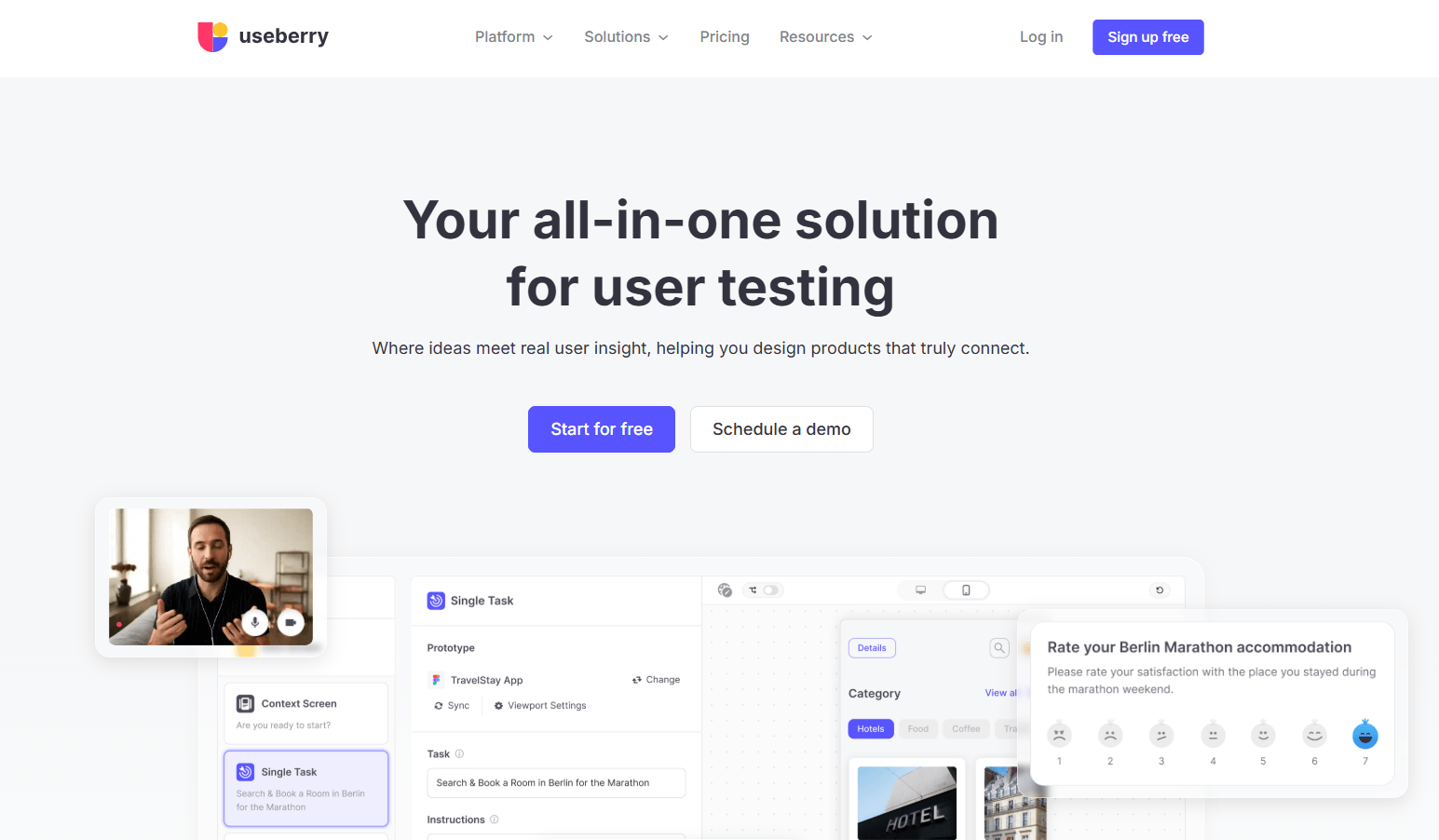
14. Useberry
Best for: UX and product teams running unmoderated usability tests on prototypes, websites and digital products.
Useberry is a remote UX research and usability testing platform. Rather than focusing primarily on continuous feedback collection, it helps teams actively test designs, prototypes, websites and product experiences before or after launch.
Teams can run task-based usability tests, first-click tests, preference tests, card sorting, surveys and other research studies. Results can include user paths, heatmaps, task completion data and survey responses, allowing teams to combine qualitative feedback with behavioural research.
This makes Useberry a strong option when product feedback is needed for validation and usability research, rather than as an always-on Voice of Customer programme.
Pricing: A Free plan is available with 10 responses per month. Growth starts at €83 per month when billed annually, with additional Business and Enterprise options available. See current pricing on the Useberry pricing page.
Website: Useberry
15. UserTesting
Best for: Enterprises that need in-depth human insight, usability testing and product validation with real participants.
UserTesting is a human insight and research platform that helps product, UX, marketing and digital teams gather feedback from real people. Teams can test concepts, prototypes, websites, apps and live product experiences to understand what users notice, misunderstand or struggle with before committing to major product decisions.
For product teams, UserTesting can be used throughout the development lifecycle, from validating early concepts and prototypes to investigating adoption problems in existing products. Its platform combines participant access and research workflows with AI-assisted analysis to help teams identify patterns across qualitative research.
Compared with tools focused on always-on surveys or feature requests, UserTesting is best suited to deeper research questions where teams need to observe, hear from and investigate the behaviour of real users.
Pricing: UserTesting offers both test-based consumption and team-based unlimited subscription models. Pricing is tailored to research usage and requirements rather than published as a standard monthly rate. See the latest options on the UserTesting plans and pricing page.
Website: UserTesting
So, which product feedback tool is right for you?
The best product feedback tool depends on what you want to learn, where you want to collect feedback and how you plan to use the insights.
If your priority is gathering contextual feedback directly from websites, web apps or mobile apps, look for strong targeting, customisable surveys and analysis capabilities. If you mainly need to manage feature requests, prioritise tools with voting, roadmapping and customer segmentation. And if your focus is product discovery or usability research, dedicated testing and research platforms may be a better fit.
Before choosing a platform, consider factors such as:
- Feedback channels: Do you need website, in-app, mobile, email or research-based feedback?
- Targeting: Can you reach specific users based on behaviour, journey stage, device or customer segment?
- Analysis: Can the tool help you identify themes, sentiment and recurring issues at scale?
- Actionability: Can feedback be connected to dashboards, alerts, product decisions or workflows?
- Integrations: Will the platform work with the analytics, CRM, support and product tools you already use?
- Scalability: Does it support the number of users, teams, feedback volumes and governance requirements you expect?
There is no single product feedback platform that is best for every team. The right choice is the one that fits your feedback strategy and makes it easier to turn customer input into better product decisions.
If your goal is to collect highly targeted feedback across your website, web app, mobile app or email channels and analyse it in one place, Mopinion is designed specifically for that. You can also compare Mopinion plans or start a free trial to explore the platform for yourself.
Ready to see Mopinion in action?
Want to learn more about Mopinion’s all-in-1 user feedback platform? Don’t be shy and take our software for a spin! Do you prefer it a bit more personal? Just book a demo. One of our feedback pro’s will guide you through the software and answer any questions you may have.
Frequently Asked Questions
A product feedback tool is software that helps teams collect, organise and analyse feedback about a product or digital experience. Depending on the platform, this can include website and in-app surveys, feature requests, NPS or CSAT surveys, bug reports, usability tests and open-text feedback.
The best product feedback tool depends on your use case. Mopinion is well suited to contextual website, web app, mobile app and email feedback, while tools such as Canny, Productboard and UserVoice focus more heavily on feature requests and product prioritisation. Platforms such as Sprig, Useberry and UserTesting are better suited to product research and usability testing.
Start by identifying where you want to collect feedback and what you want to do with it. Consider feedback channels, targeting options, analysis and AI capabilities, integrations, product context, collaboration features, pricing and scalability. A tool designed for feature requests, for example, may not be the best choice for collecting feedback directly inside a mobile app.
A survey tool primarily helps teams create and distribute questionnaires. Product feedback software often goes further by connecting responses with product context, user behaviour, customer segments, feature requests, analytics or product management workflows. Some platforms offer both survey and broader product feedback capabilities.
Yes. Many product feedback platforms can collect feedback directly within websites, web apps and mobile apps. In-app feedback is particularly useful because teams can ask users for input while they are interacting with a specific feature, page or journey, providing more context than a general survey sent later.
AI can help product teams process large volumes of qualitative feedback by summarising responses, detecting recurring topics, analysing sentiment, identifying similar requests and surfacing trends. This reduces the amount of manual tagging and review required while helping teams identify patterns across customer feedback more quickly.
Useful product feedback can include feature requests, usability feedback, satisfaction scores, bug reports, onboarding feedback, open-text comments and feedback about specific product journeys or features. The most useful mix depends on the decisions your product team is trying to make.